Side Laps
Open Side Laps
Sealant at the side laps cracks after years of hot afternoons and cold nights. Water then wicks along the rib and drips through wherever the overlap has opened.
As a Waterbury metal roof coating contractor, we clean, prime, seal, and coat commercial metal roofs on mills, shops, warehouses, and schools in Waterbury and nearby towns.
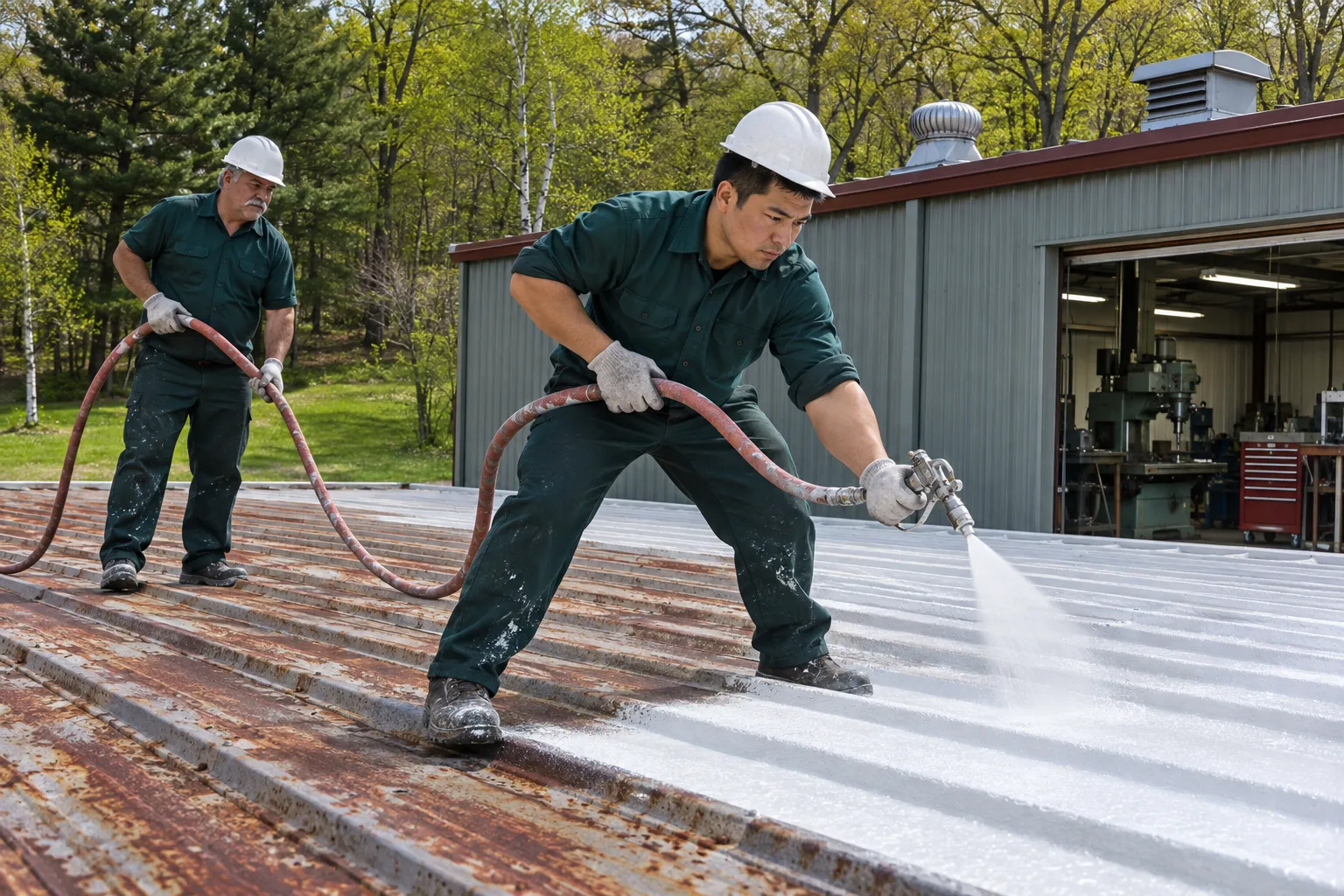
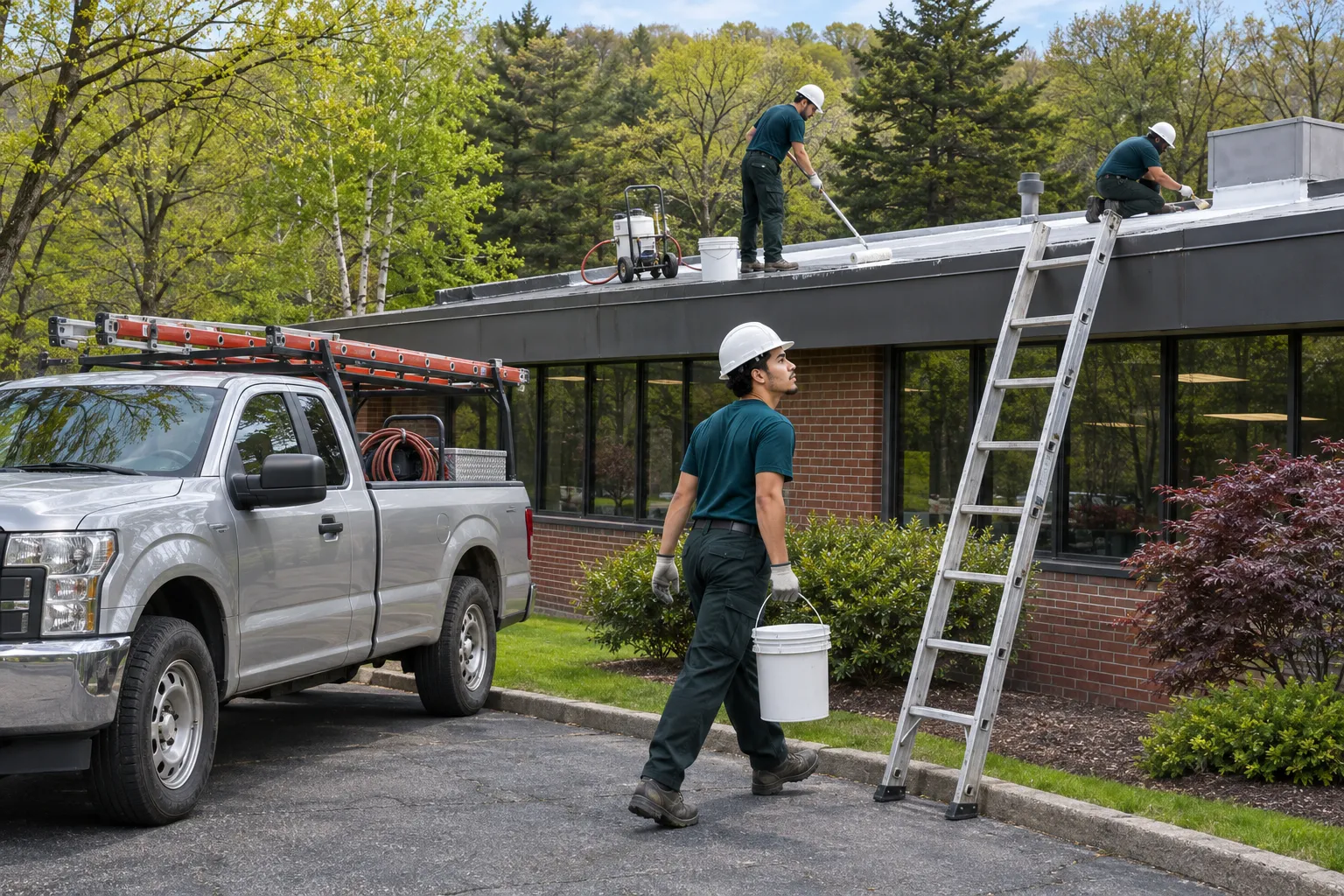
Most Waterbury metal roof coating jobs begin with the same few failures, on old mill roofs and newer steel shops alike. These are the ones we find most.
Sealant at the side laps cracks after years of hot afternoons and cold nights. Water then wicks along the rib and drips through wherever the overlap has opened.
Exposed-fastener roofs loosen as the steel grows and shrinks. Washers dry out, screw heads lift, and every lifted screw becomes a small open hole over your inventory or machines.
Surface rust shows first at panel ends, gutters, and anywhere snow sits for weeks. Caught early, it gets brushed and primed; left alone, it eats through the steel.
Exhaust fans, vents, and rooftop units cut the metal into odd shapes. Their flashing joints open long before the flat field of the panels gives out.
Snow that melts by day and refreezes at night backs water under the laps at the low edge of the roof, right where an ice dam holds it in place.
Tar, tape, and caulk from old repairs leave a patchwork across the panels. A coating will not grip that mix until it is cleaned off or primed to match.
Coating works on steel that is still solid. Find the row that looks like your roof to see where most jobs start.
| Roof Condition | Coat Now | Repair, Then Coat | Replace Panels |
|---|---|---|---|
| Chalky paint, light surface rust, screws still tight | Coat Now | Repair, Then Coat | Replace Panels |
| Rust at laps and gutters, a handful of loose screws | Coat Now | Repair, Then Coat | Replace Panels |
| Drips around curbs, fans, or skylights | Coat Now | Repair, Then Coat | Replace Panels |
| Tar and caulk patches over solid steel | Coat Now | Repair, Then Coat | Replace Panels |
| Pinholes or rust-through on a few panels | Coat Now | Repair, Then Coat | Replace Panels |
| Soft panels, sagging purlins, or wet insulation below | Coat Now | Repair, Then Coat | Replace Panels |
A roof visit confirms which row fits your building; the dots show where jobs on that kind of roof usually land.
Five steps take a worn metal roof to a coated one. The order holds on a small shop or a four-story mill.
We walk every panel row, test screws and laps by hand, look over gutters and curbs, and take moisture readings where insulation sits under the steel. You get a written repair list first.
Rusted-through panels get cut out and replaced, stripped screws get oversized replacements, and loose flashing is refastened so the topcoat only covers solid metal.
Pressure washing strips dirt, chalk, and loose scale. Wire brushing follows at heavy rust, then a rust-inhibiting primer goes on every bare or rusted spot.
Laps, end joints, and screw heads get seam tape or fabric set in base coat. Those are the spots where panels move most, so they carry extra material.
The topcoat is rolled or sprayed in passes to the thickness the coating maker lists, checked in mils with a wet-film gauge as each pass goes down.
Call us and tell us where the water shows up inside. We will say what to check before the next storm and set up a roof visit.
Five systems cover the roofs we see most. Each card lists what has to be true before that system goes on.
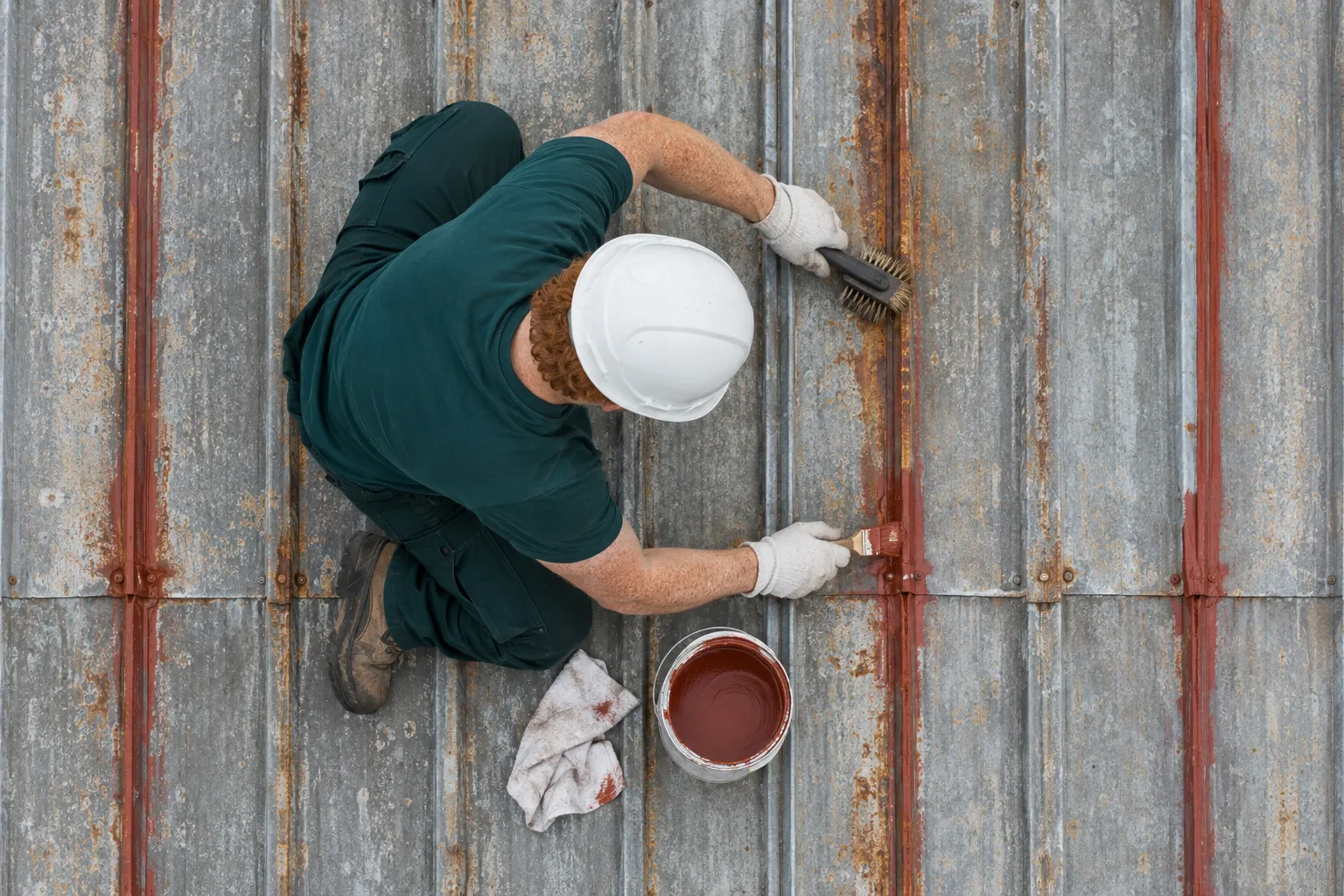
Primer, seam reinforcement, and a full topcoat over exposed-fastener or standing-seam steel on shops, mills, and warehouses.
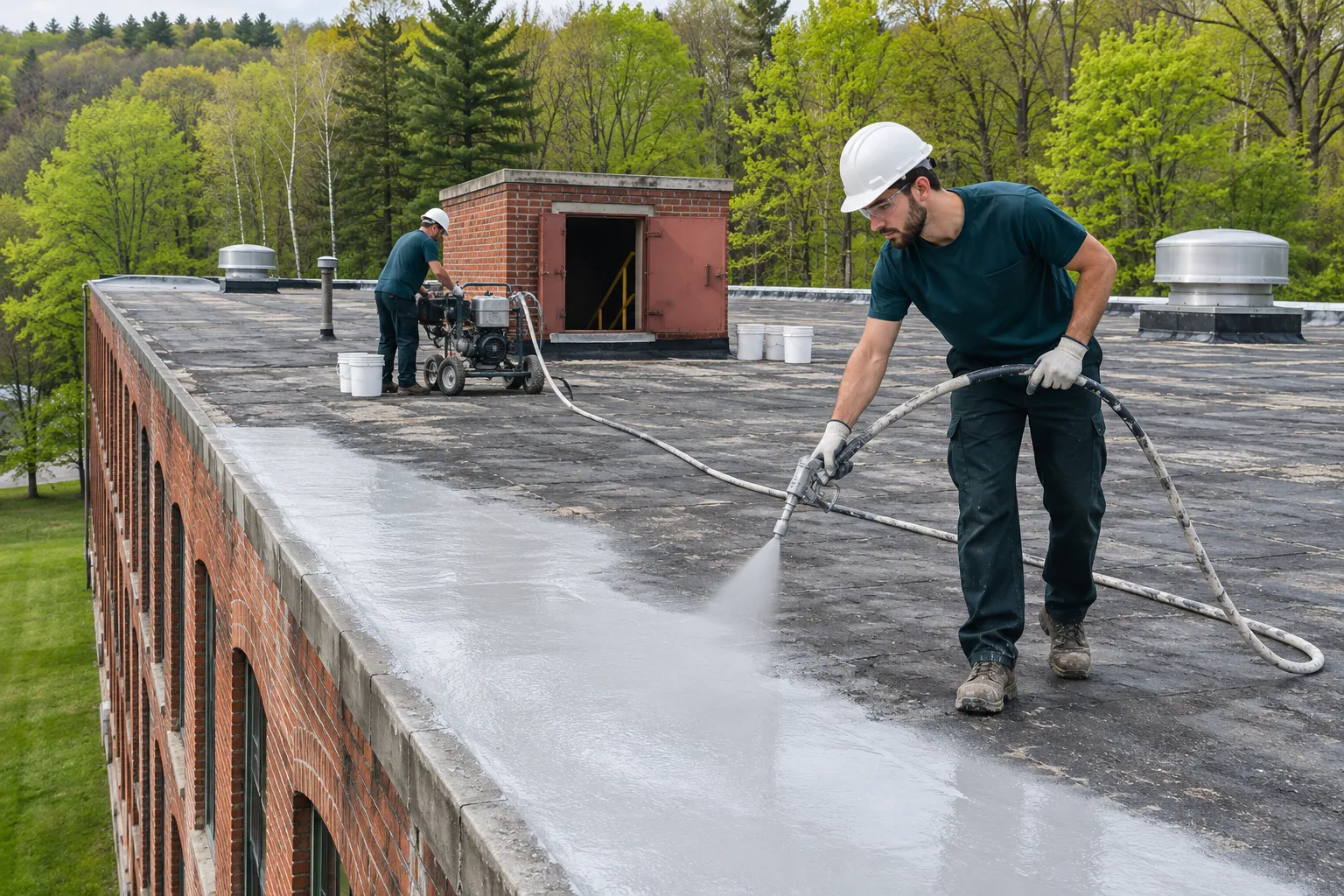
A moisture-resistant coat for low-slope metal sections, gutters, and valleys where water lingers after rain or snowmelt.
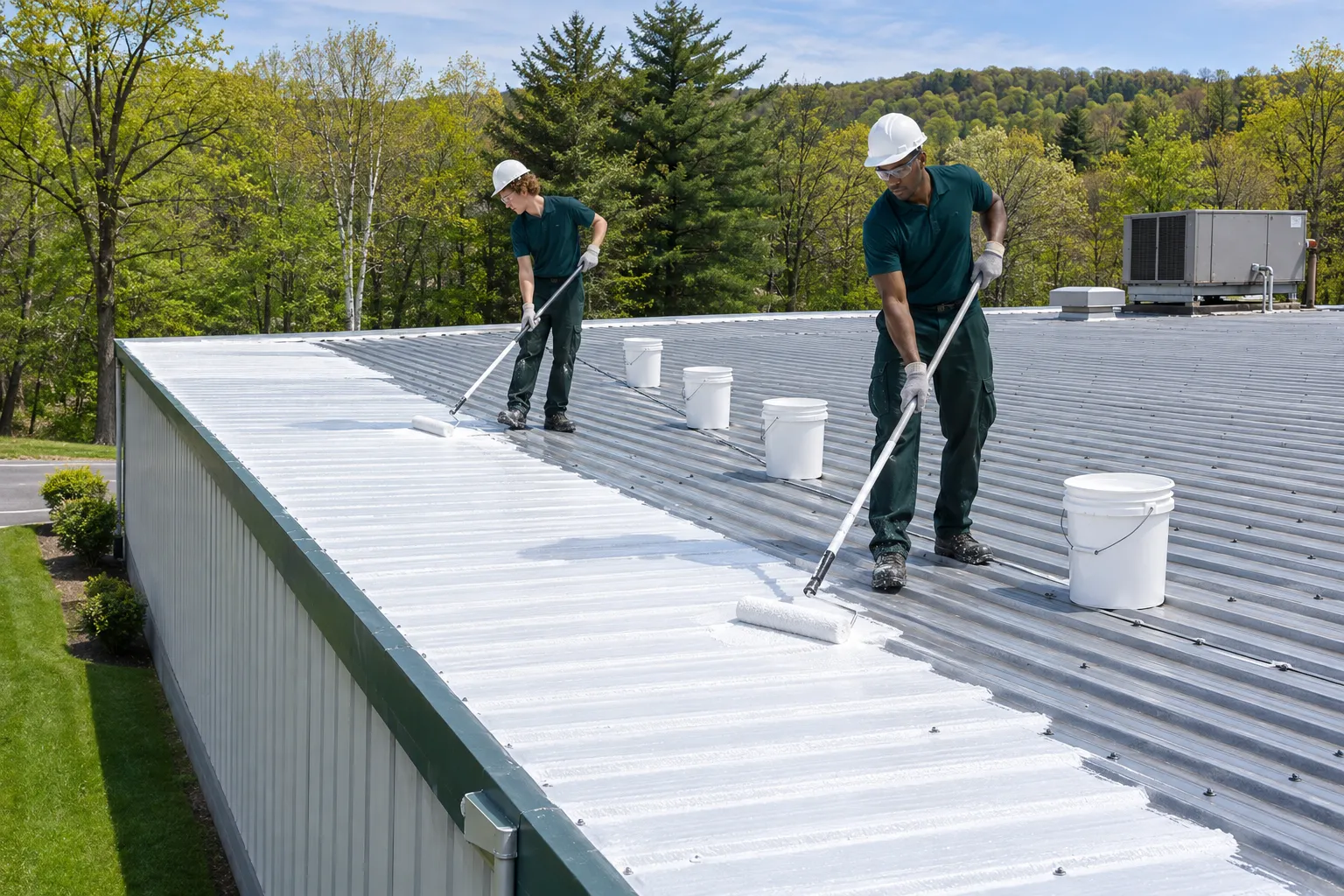
Water-based reflective coating for sloped metal roofs that shed water fast, put down in warm, dry weather.
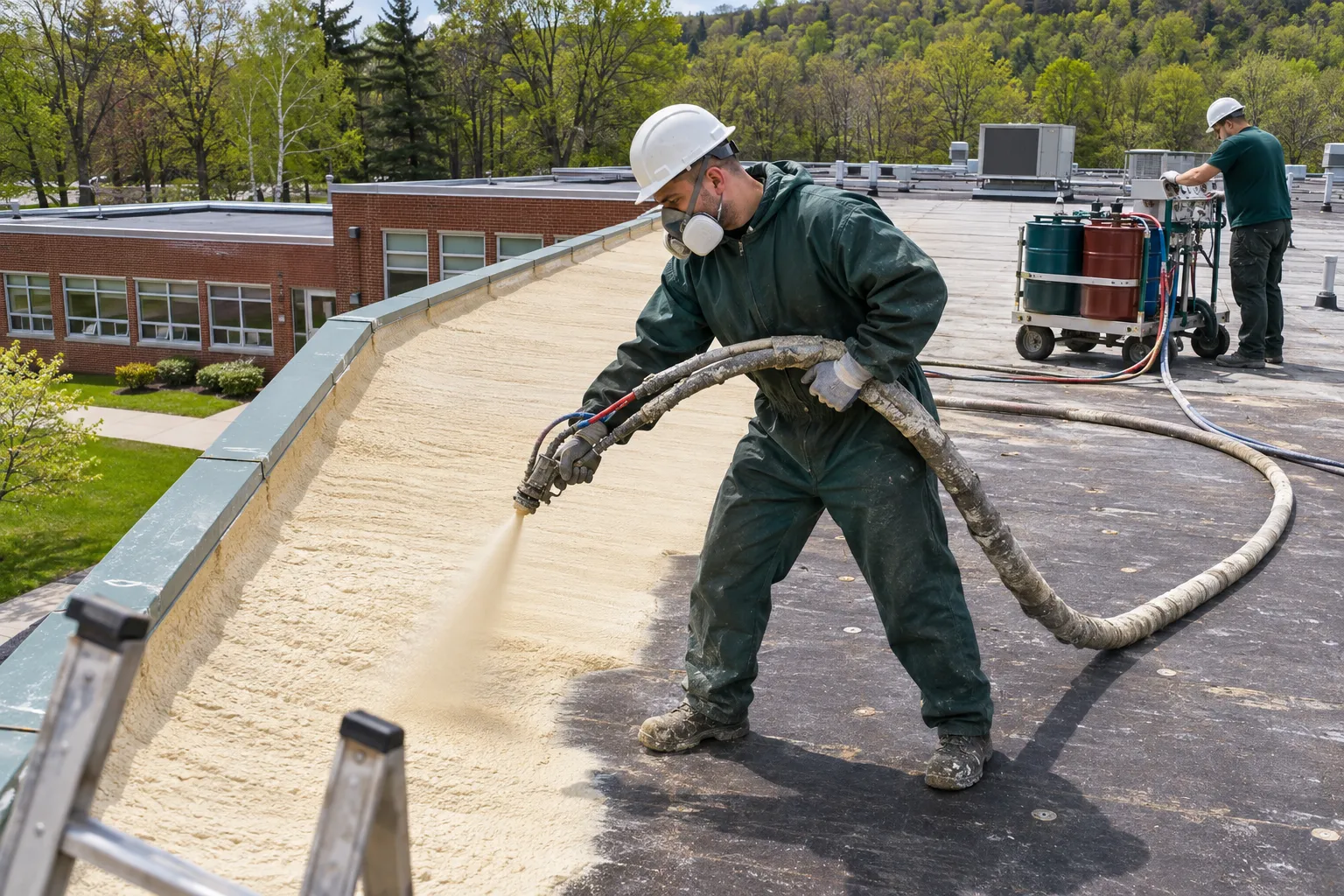
Sprayed foam that fills ribs and laps, adds insulation, and gets a protective topcoat, often used to build slope on flat areas.
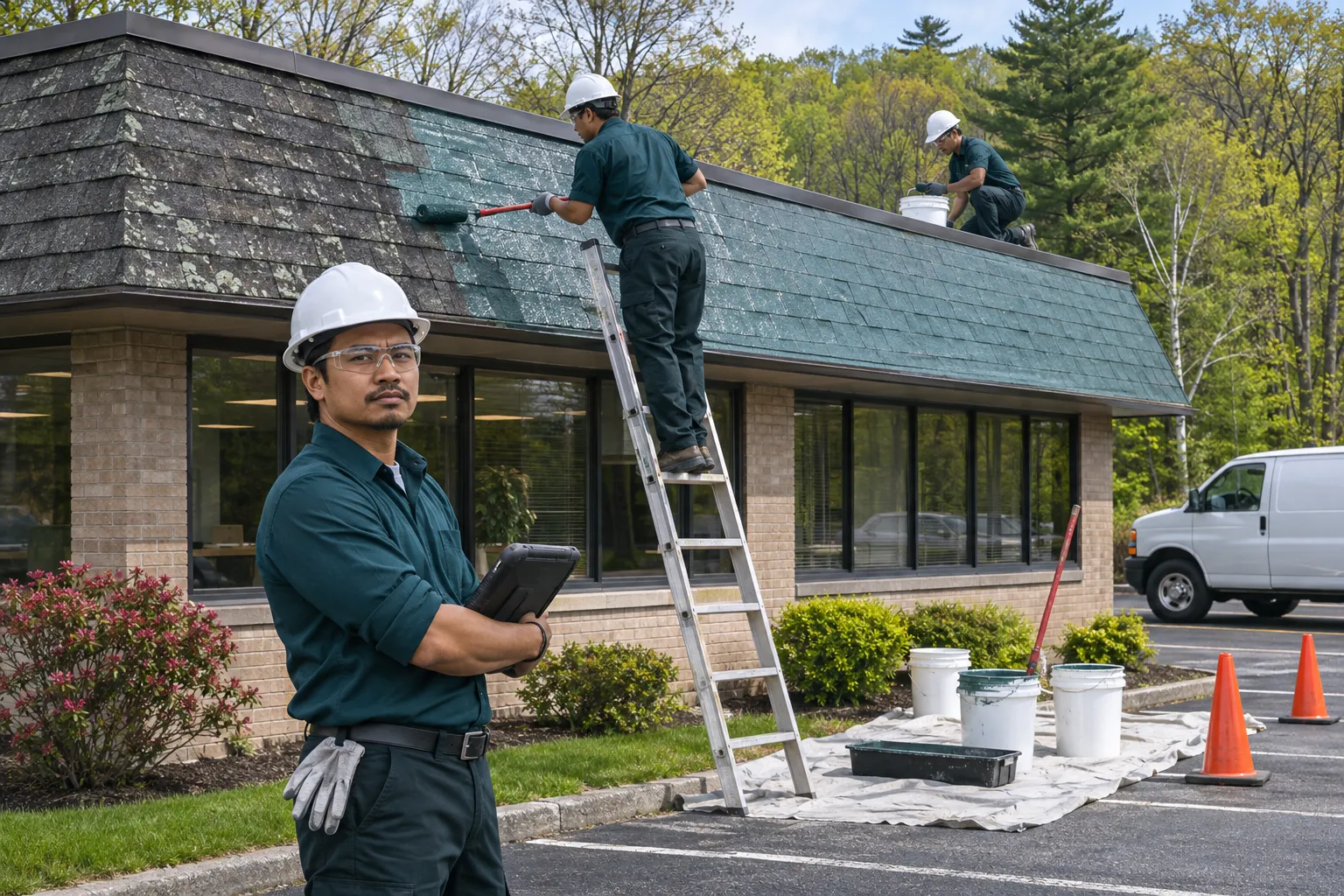
A coating made for asphalt shingles on offices, churches, and small retail buildings whose shingles still lie flat.
A coating keeps the steel you already own in service. Here is what changes on the roof once it is on.
Fabric and base coat bridge every side lap and cover each screw head, the two places where most metal roof leaks begin.
Primed and coated steel keeps exposed rust from spreading, so a panel with light rust today stays on the roof instead of rusting through.
Coating goes over the existing panels, so the building stays closed in and work inside goes on while the roof is coated above it.
Light-colored coatings reflect sunlight that bare or dark steel soaks up, which keeps heat off the panels on July afternoons.
When a coating wears, it can be washed and recoated with a compatible product, so the roof stays in service without stripping it back to metal.
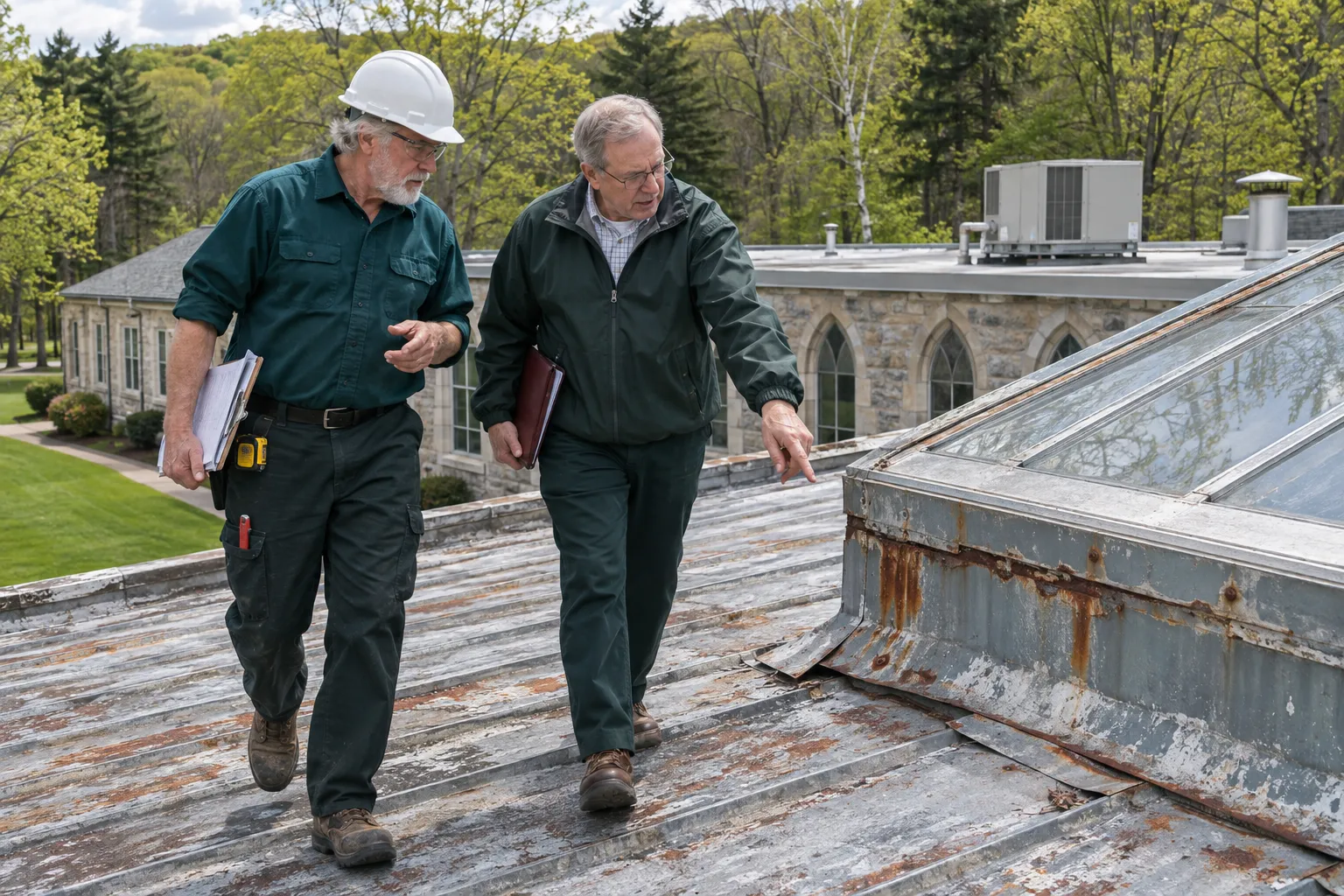
Mills, plants, shops, barns, and schools are the metal roofs we coat most in Waterbury and the towns below. Building somewhere else? Call us or send us a message.
Older plant and warehouse roofs here often carry years of patch layers that get cleaned off before coating.
Retail and office buildings with sloped metal roofs, where occupied space below sets the work schedule.
Shop and storage buildings where gutters, eave trim, and low edges collect water and rust first.
Manufacturing roofs with exhaust fans and vents, coated around shipping doors and shift changes.
Contractor shops and storage buildings with exposed-fastener panels, where ladder or lift access shapes the job.
Barns and equipment buildings with long exposed-fastener panels and open framing we check before coating.
Smaller commercial and farm roofs where the coating window is planned around spring rain and early fall frost.
Church halls, schools, and offices where coating is scheduled around services, classes, and the people inside.
Village-center commercial buildings where staging space is tight and the roof edge sits close to the sidewalk.
Larger industrial roofs coated one section at a time so the building below keeps running.
Properties with several buildings, where each roof gets its own condition notes and coating order.
Rural properties where materials, lifts, and wash water are planned before the first day on the roof.
Roofs coated years ago that now need washing, spot repair, and a fresh compatible topcoat.
Straight answers to what building owners ask most before a coating job.
Four jobs, in order: wash the panels, treat the rust, seal seams and screw heads, then apply a fluid coating across the whole surface. The finished coat is one continuous layer over laps and fasteners, which is where metal roofs leak first.
Yes, as long as the rust has stayed on the surface. Loose scale comes off with brushing or washing, a rust-inhibiting primer goes on what remains, and any panel with holes or soft spots gets replaced before the topcoat.
Plan on roughly $2.50 to $4.00 per square foot of roof area for coating, against about $5 to $8 per square foot to replace the panels. Rust, loose screws, roof height, and access move a job within that range, and the roof visit sets the real number.
On a roof whose panels are still solid, coating runs about half of what replacement does and skips tear-off and disposal. Widespread rust-through or damaged framing changes that math, which is why we check the steel before quoting.
That depends on the system, the dry film thickness, how well the steel was prepared, and upkeep. Clear gutters, tight screws, and a look at the roof after each winter keep a coating working longer, and most systems can be washed and recoated instead of removed.
Each swing between thaw and hard freeze makes the panels grow and shrink, which works screws loose and pulls at laps. Reinforcing those spots before the topcoat lets the coating flex with the steel, and a spring check catches any screw that moved over winter.
Ask the City of Waterbury Department of Inspections before work starts, because the answer turns on scope. Coating paired with panel replacement or structural repair is more likely to need a permit, and the 2022 Connecticut State Building Code covers applications filed from October 1, 2022.
Tell us about the roof, or run the numbers first with the ballpark estimate. Either way, the next step is a walk on the roof.