Paint
Chalky, Faded Panels
Factory paint breaks down in sunlight and leaves a powder that rubs off on your hand. Washing removes it so acrylic grips the panel below.
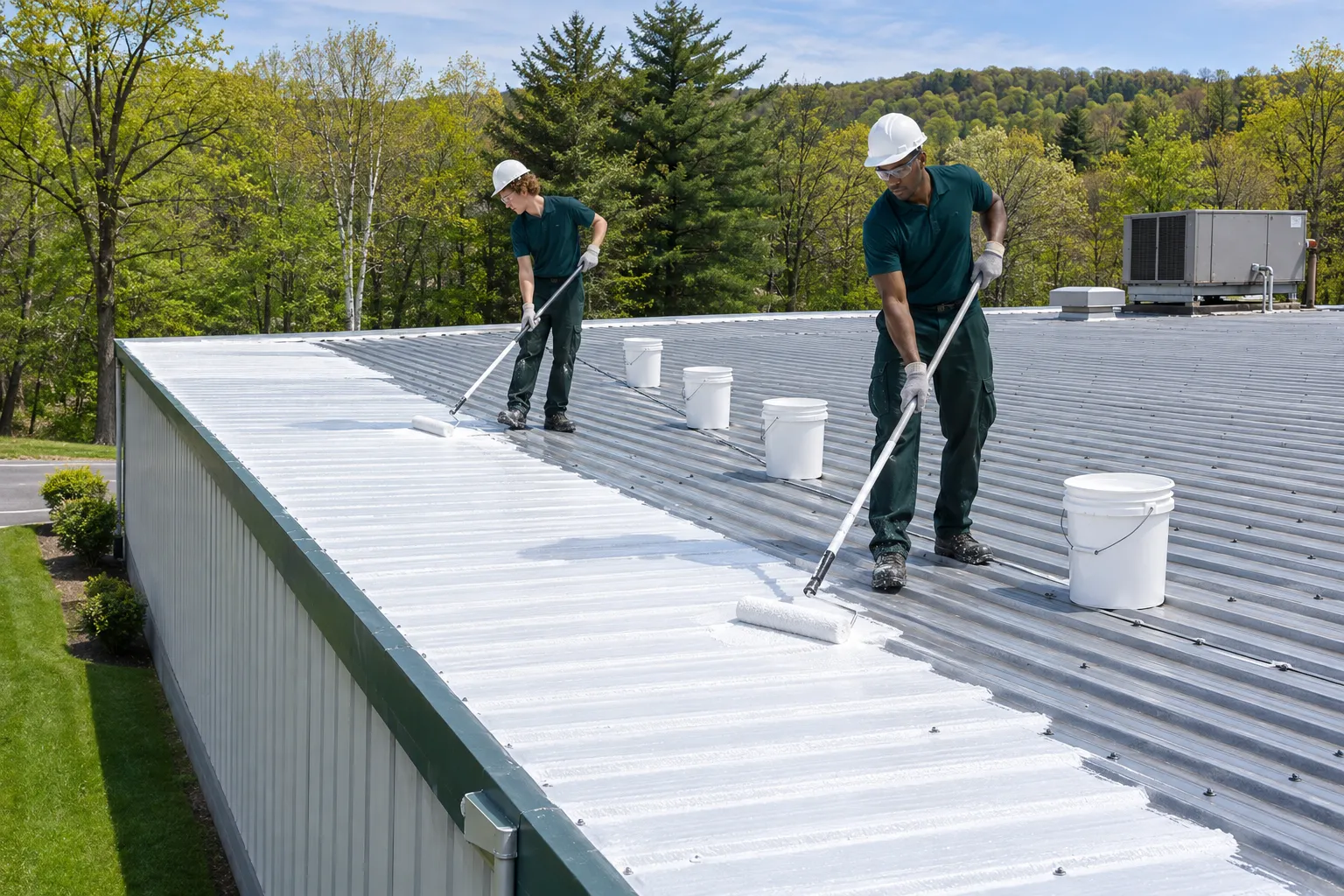
As a Waterbury acrylic roof coating contractor, we put water-based reflective coatings on sloped commercial metal roofs, scheduled for the dry, warm stretch of the year.
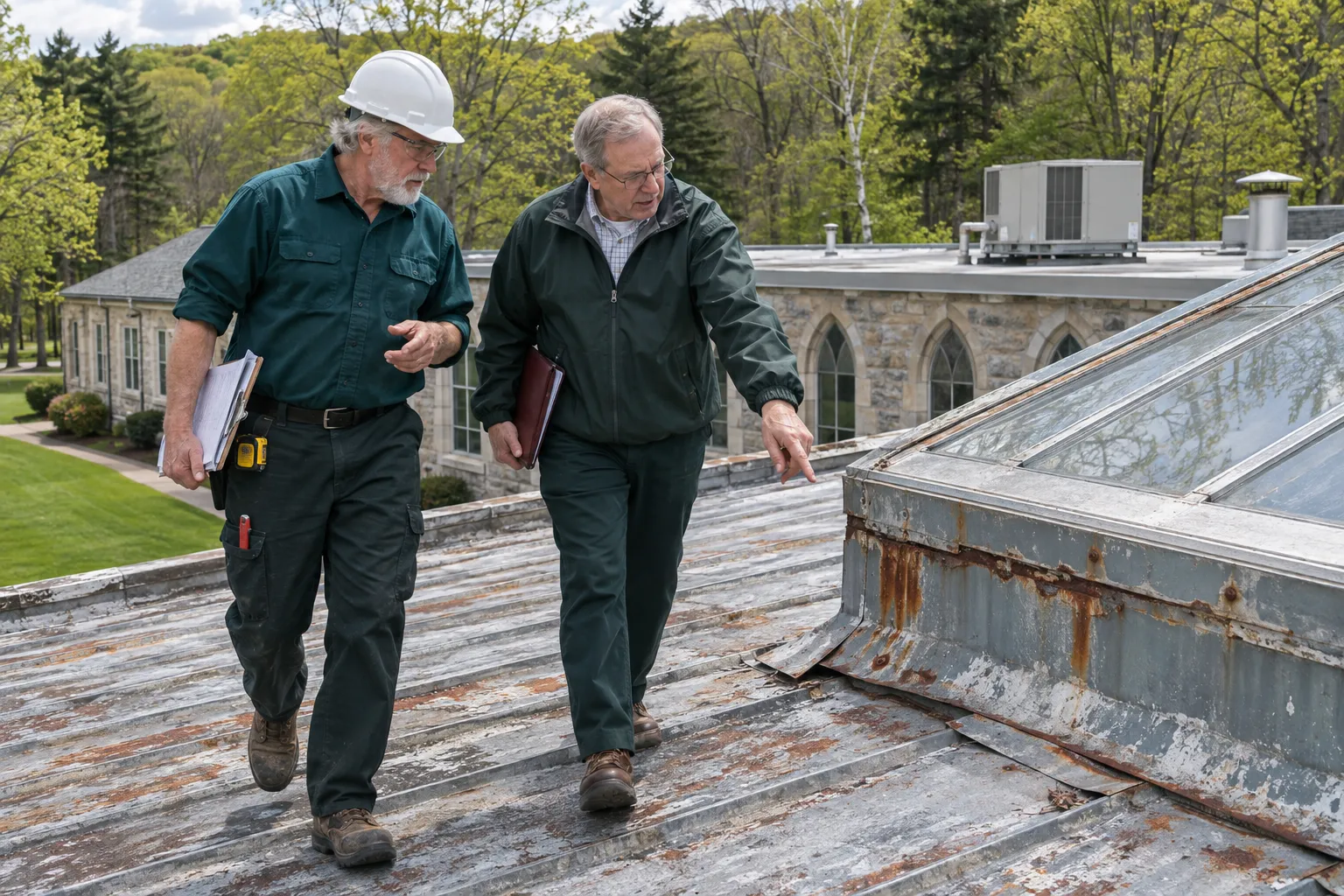
Waterbury acrylic roof coating fits metal that drains quickly. Rows with standing water or failed panels point to a different system or repairs first.
| Roof Condition | Acrylic | Silicone | Repair First |
|---|---|---|---|
| Pitched panels dry within an hour of rain | Acrylic | Silicone | Repair First |
| Faded factory paint, light rust at screws | Acrylic | Silicone | Repair First |
| Flat strip along the eave that holds puddles | Acrylic | Silicone | Repair First |
| Old silicone coating on the roof now | Acrylic | Silicone | Repair First |
| Loose trim and open ridge caps | Acrylic | Silicone | Repair First |
| Rusted gutters with holes | Acrylic | Silicone | Repair First |
Acrylic bonds to most primed metals and older acrylic coats, which keeps the recoat choices open later.
Acrylic answers the wear that shows up on sloped steel roofs exposed to full sun and winter swings.
Factory paint breaks down in sunlight and leaves a powder that rubs off on your hand. Washing removes it so acrylic grips the panel below.
Orange rings around each screw show a washer letting moisture sit. Primer and a dab of sealant cover every head before the acrylic coats.
Wind lifts ridge trim and pulls end laps apart. Those joints get refastened and taped because acrylic stretches but does not span open gaps.
Dark steel above a shop or loading area heats the space under it in July. A white acrylic topcoat reflects much of that sunlight back off the roof.
Acrylic is one choice among several. Compare how each handles the conditions on your roof.
| System | Roof Pitch | Cure Needs | Color Choices |
|---|---|---|---|
| Acrylic | Roof PitchSloped, fast-draining | Cure NeedsWarm air, dry hours after | Color ChoicesWhite and many colors |
| Silicone | Roof PitchLow slope and gutters | Cure NeedsCures in cooler, damp air | Color ChoicesWhite and a few grays |
| Metal coating system | Roof PitchAny steel roof | Cure NeedsPrimer plus chosen topcoat | Color ChoicesFollows the topcoat |
| Shingle coating | Roof PitchAsphalt shingle slopes | Cure NeedsDry shingles, mild weather | Color ChoicesMostly neutral tones |
Acrylic gives sloped steel a light, flexible coat. Here is what it changes on the roof.
White acrylic reflects sunlight that dark steel absorbs, so panels run cooler on clear summer afternoons.
Fabric set in the base coat ties side laps and end laps together, the joints that open first on pitched panels.
Acrylic usually costs less per gallon than silicone, which helps on large pitched roofs that drain well anyway.
A worn acrylic roof can take fresh acrylic or silicone later, so the next coat is matched to how the roof is used then.
Acrylic dates fill with the warm, dry weeks. Call us to get the roof walked early, while repairs can still be done ahead of the coating window.
Acrylic depends on weather as much as prep. The schedule below follows the forecast.
Pitch, drainage, ridge caps, screws, and rust are checked panel by panel, and any flat strip that holds water is marked for another system.
Loose trim is refastened, stripped screws swapped, and rusted-through sheets replaced so the acrylic only goes over firm steel.
Chalk and dirt are washed off, the roof dries fully, and rust-inhibiting primer covers red or bare spots.
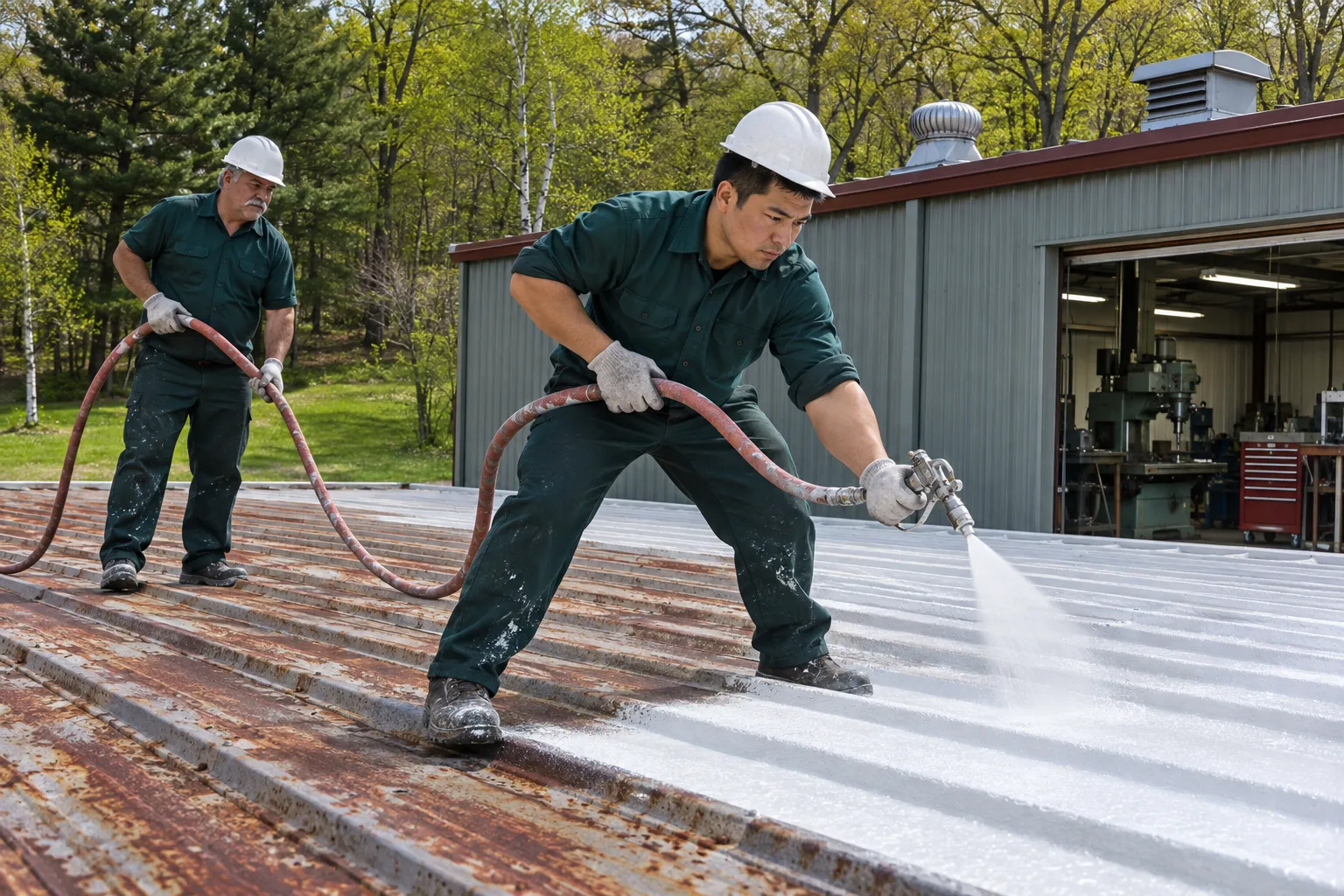
A first acrylic coat goes on with fabric pressed into laps, ridge joints, and curb flashing.
A second coat in a contrasting color shows any missed spot, and the film is gauged so it reaches the maker thickness.
When part of the roof drains slowly or carries shingles, one of these covers it.
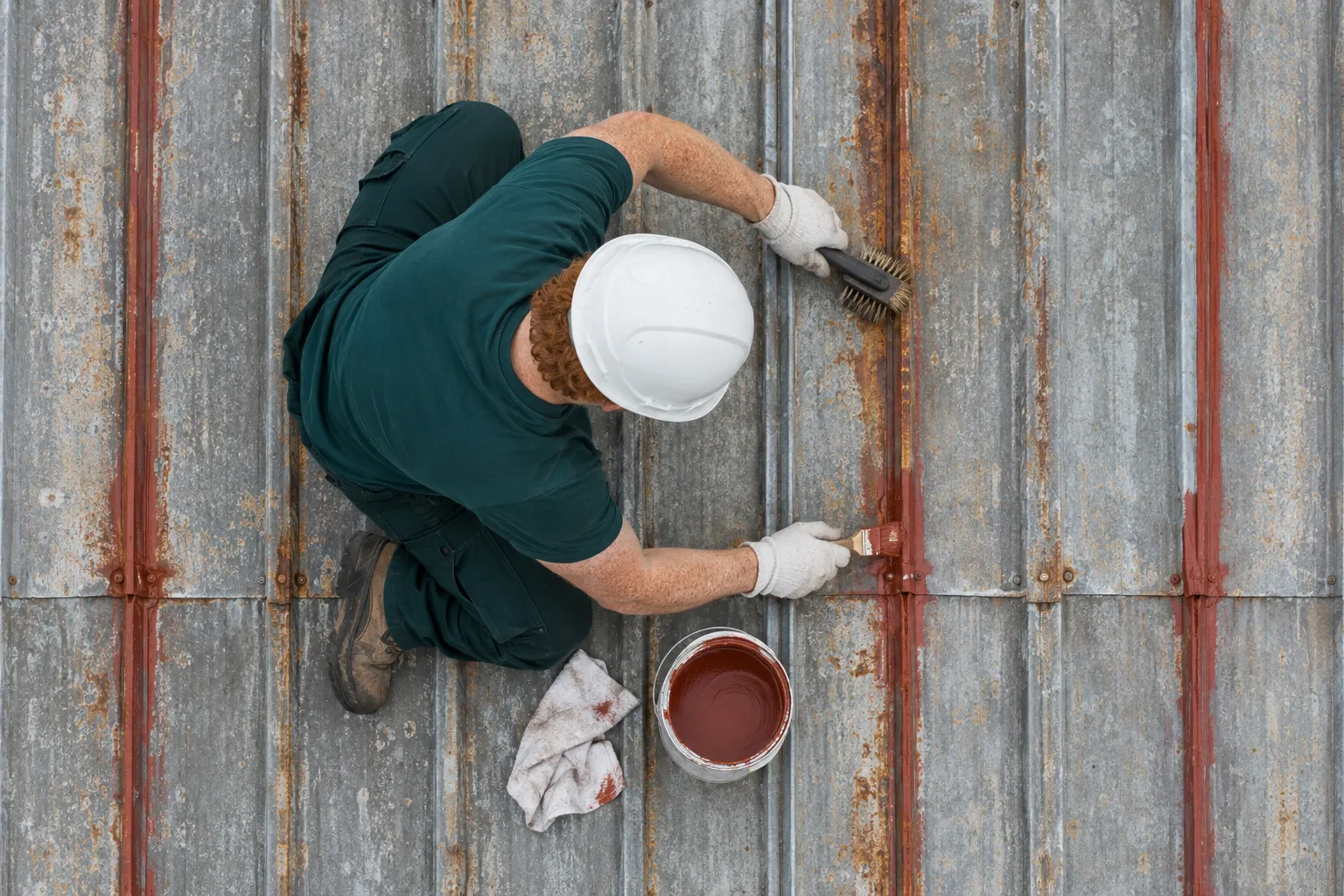
The screw, lap, and rust work under every acrylic job, explained step by step for steel roofs.
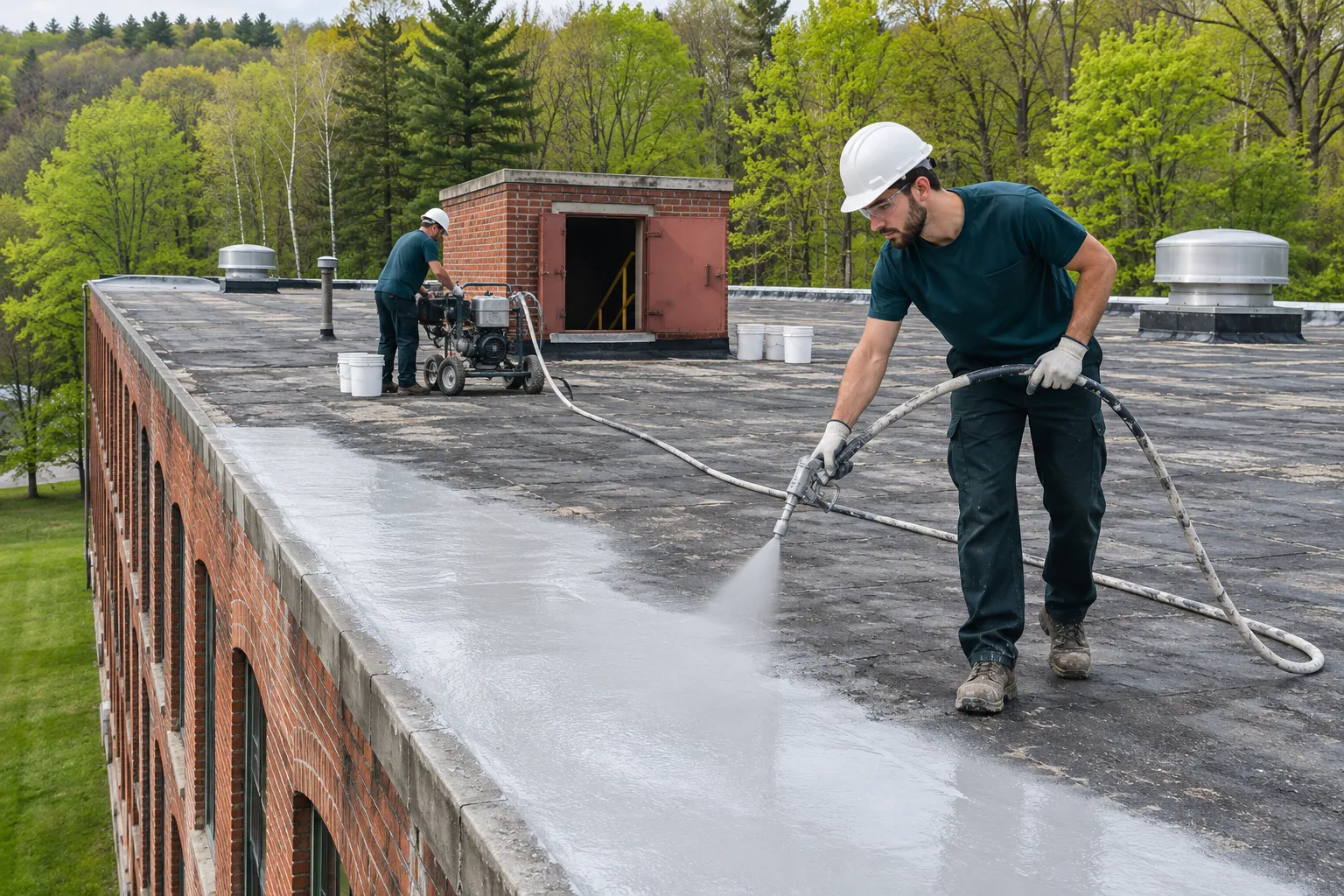
Covers the low eave strips and gutters on a building whose main slopes get acrylic.
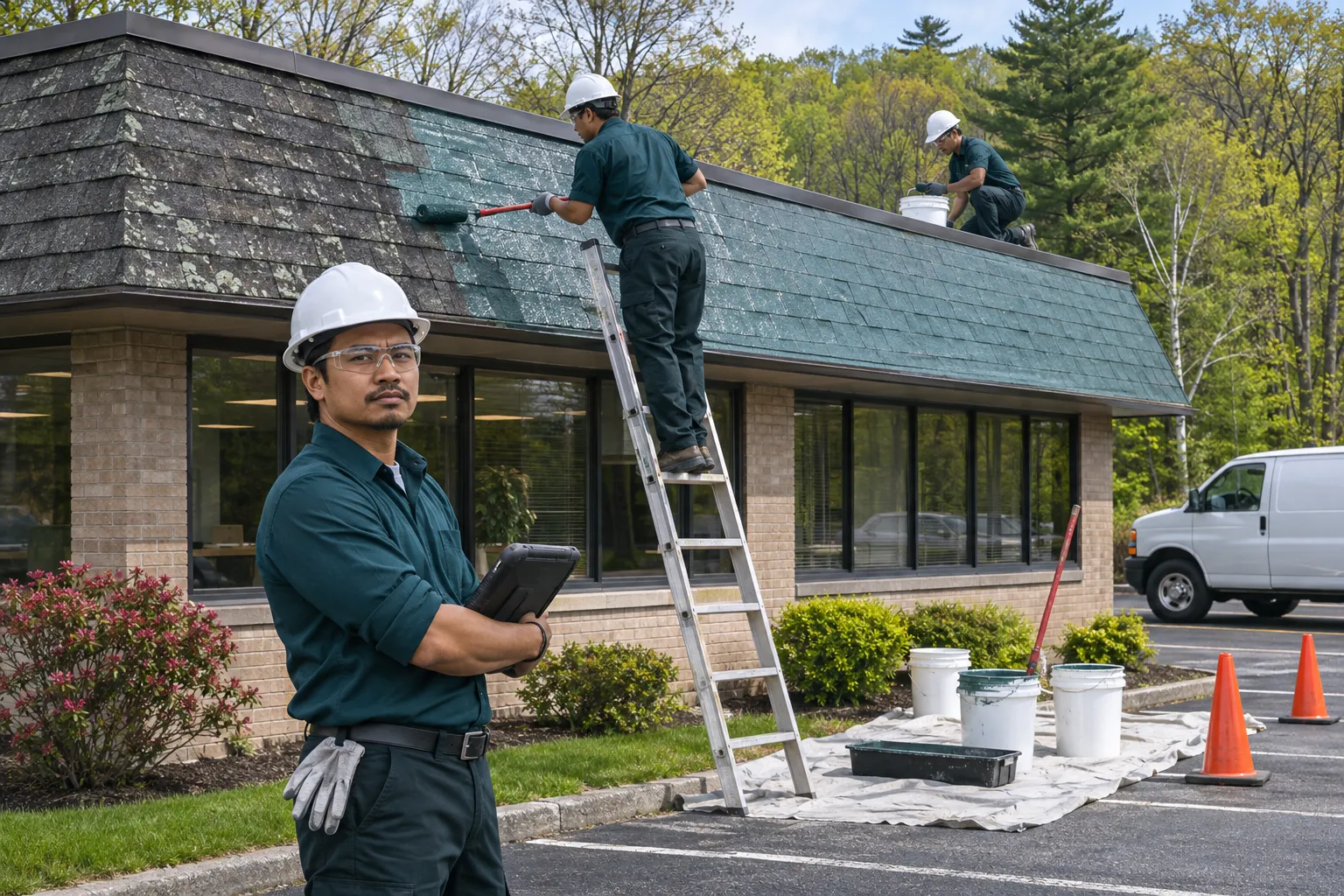
For the shingled office or entry wing attached to a metal shop or warehouse.
Common questions about acrylic on Connecticut metal roofs.
It works well on metal that drains. Acrylic is water-based, bonds to primed steel, stays flexible as panels expand and contract, and comes in white or colors. We keep it off areas where puddles sit for days, and seams and screws are sealed before it goes on.
Acrylic needs dry hours and temperatures above the maker minimum to cure, and rain or heavy dew too soon can wash it off. That limits acrylic to the warmer months here, and it softens under standing water, so slope matters more than with silicone.
Its life follows film thickness, slope, drainage, and upkeep. Acrylic weathers slowly from the top down, so a thicker build and a look after each winter extend it. Thin spots at seams and screws get touched up before the steel shows, and the whole roof can be recoated later.
Plan on a primer plus at least two acrylic coats, often in two colors so full coverage is easy to see. The number follows the dry film thickness the maker sets, and laps and screw rows get fabric and extra material.
Fresh acrylic rarely bonds well to silicone, so a silicone roof is recoated with silicone. If you are unsure what is on your roof now, a small adhesion test during the roof visit settles it before anything is ordered.
White reflects the most sunlight and is the usual pick for shops and warehouses, but light gray, tan, and some darker tones are made too. Darker colors run hotter on the panels in summer, so we talk through trade-offs if the roof is visible from the street.
Get a ballpark for your square footage, or call to book a roof walk ahead of the warm-weather coating window.