Ponding
Water Rings on Flat Sections
Dirt rings show where puddles sat and dried. Silicone tolerates that standing water better than water-based coatings, which soften when they stay wet.
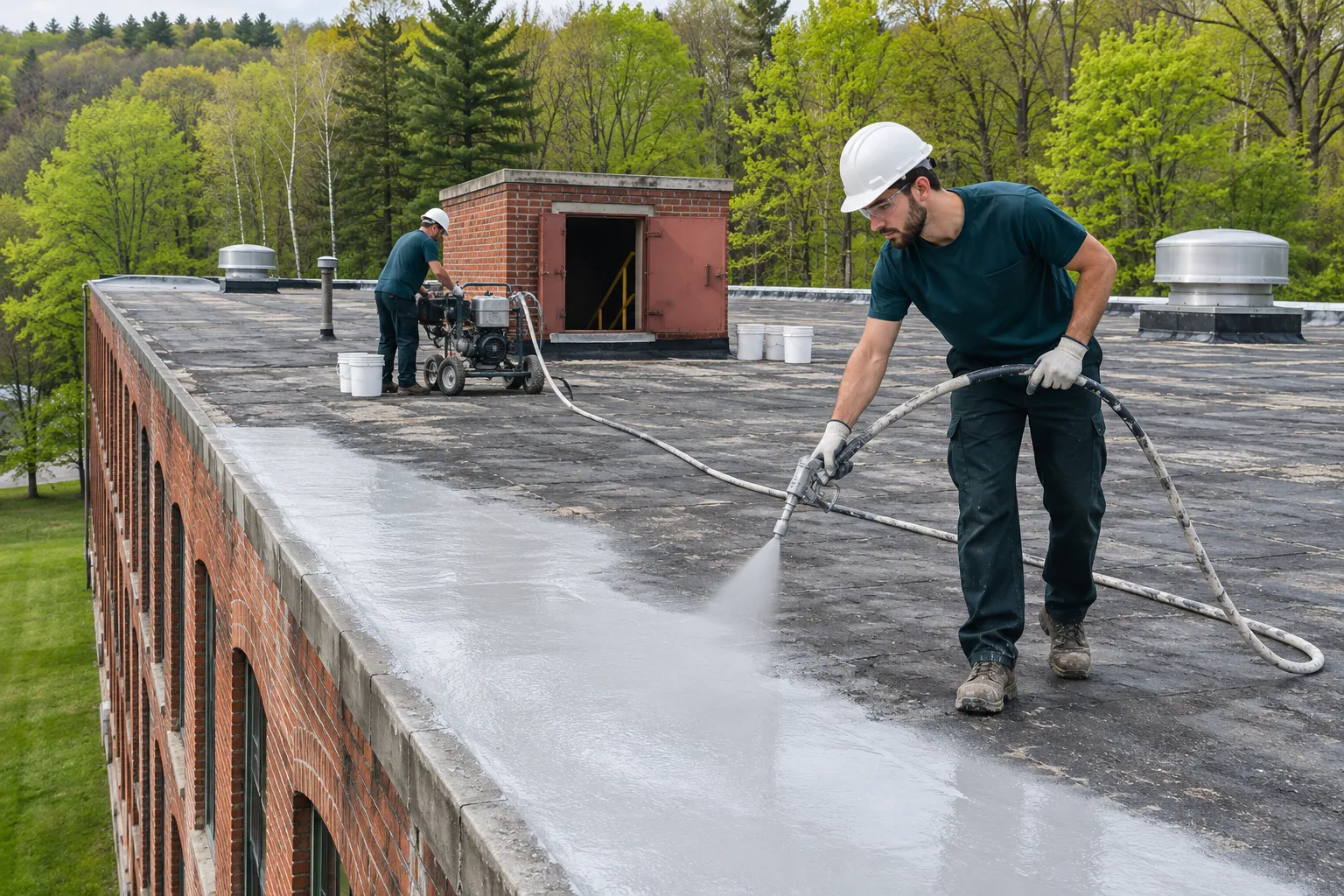
As a Waterbury silicone roof coating contractor, we coat low-slope metal and gutter areas that hold water after rain or snowmelt, over primed and taped steel.
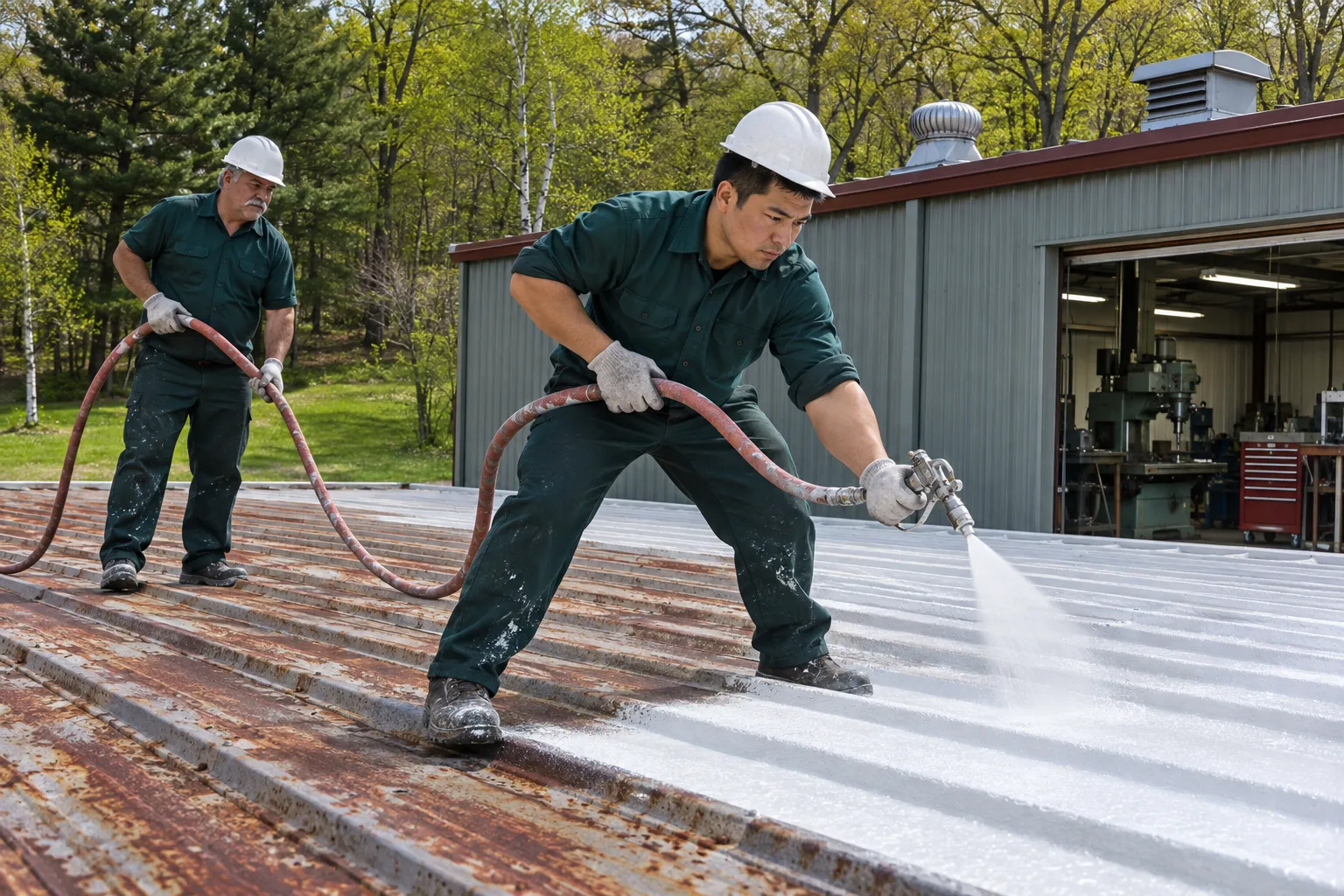
Waterbury silicone roof coating earns its place where water sits. Match your roof to a row to see whether silicone, another system, or repairs come first.
| Roof Condition | Silicone | Acrylic | Repair First |
|---|---|---|---|
| Puddles that stay a day after rain | Silicone | Acrylic | Repair First |
| Low-slope steel next to a taller wall | Silicone | Acrylic | Repair First |
| Steep panels that drain within minutes | Silicone | Acrylic | Repair First |
| Old acrylic coat peeling in sheets | Silicone | Acrylic | Repair First |
| Box gutters with open seams | Silicone | Acrylic | Repair First |
| Heavy foot traffic to rooftop units | Silicone | Acrylic | Repair First |
Silicone sticks well to clean silicone, so the choice made today shapes every recoat after it.
These are the spots on a metal roof where silicone is the system we reach for first.
Dirt rings show where puddles sat and dried. Silicone tolerates that standing water better than water-based coatings, which soften when they stay wet.
Internal gutters on mill buildings hold meltwater against their seams. Fabric-reinforced silicone lines the trough after the seams are cleaned and patched.
Snow drifts against a higher wall and melts slowly onto the lower roof. That strip stays wet for days and gets an extra silicone pass.
Chalky, thin silicone can be washed and recoated with fresh silicone. Peel tests at a few spots confirm the old coat still grips the steel.
Silicone is one of several coatings for metal. Here is how it compares on the roofs we see.
| System | Standing Water | Dirt Pickup | Later Recoats |
|---|---|---|---|
| Silicone | Standing WaterHandles it well | Dirt PickupHolds dirt; washing restores brightness | Later RecoatsSilicone over silicone |
| Acrylic | Standing WaterSoftens if it sits wet | Dirt PickupStays cleaner | Later RecoatsAcrylic or silicone over it |
| Urethane base system | Standing WaterFair once topcoated | Dirt PickupDepends on the top layer | Later RecoatsMatched to the topcoat |
| Foam with silicone top | Standing WaterGood where foam builds slope | Dirt PickupLike silicone | Later RecoatsSilicone recoat over foam |
Silicone gives slow-draining metal a coat that stays put. Four gains stand out on Waterbury roofs.
Silicone stays firm under water that lingers after a storm, so low spots and gutter lines keep their protection.
High-solids silicone builds thickness quickly, so many roofs need fewer passes and fewer days with lifts on site.
Cold weather leaves silicone rubbery in January, so it bends with panels instead of cracking at the laps when the steel shrinks.
Years from now, a wash and a fresh silicone coat renew the roof without grinding off the first layer.
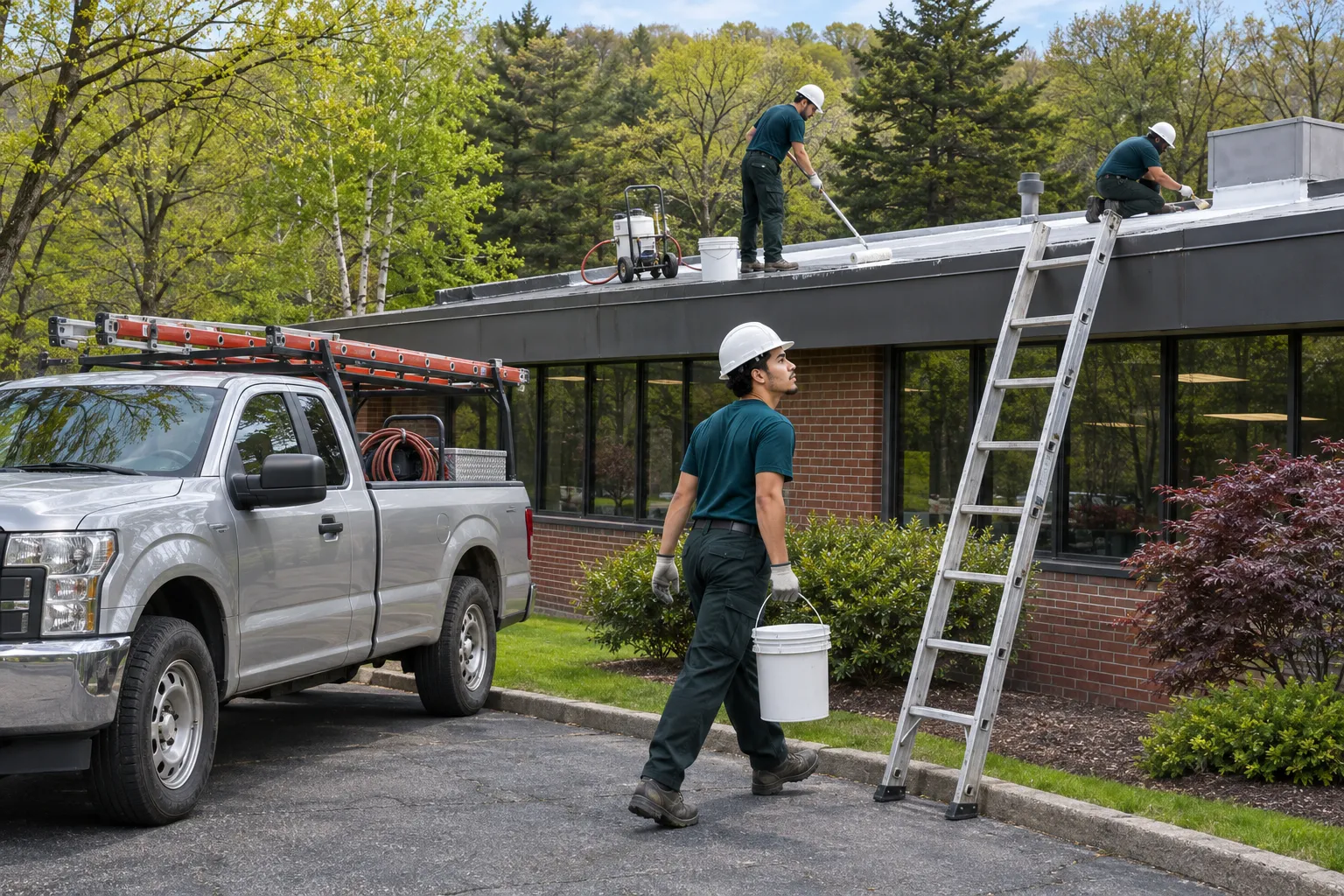
Call us and describe where it collects. Standing water near drains or gutters tells us what to check first on the roof visit.
Silicone needs a clean, dry surface and the right primer. Each step below sets up the next.
Puddle marks, drain heights, gutter seams, and fastener rows are mapped first, along with moisture readings in any area that stays wet after rain.
Clogged drains and gutters are cleaned out, open seams patched, and rusted panels replaced, because silicone covers steel without filling holes.
Panels are pressure-washed and left to dry, then primed where rust or old coatings could bleed through or block adhesion.
Seams, curbs, and fastener rows get reinforcing fabric bedded in silicone, with extra width where water sits longest.
Silicone goes down to the specified dry thickness, thicker in ponding zones, and is gauged as it is applied.
One roof can carry two systems when its slopes differ. These are the usual partners.
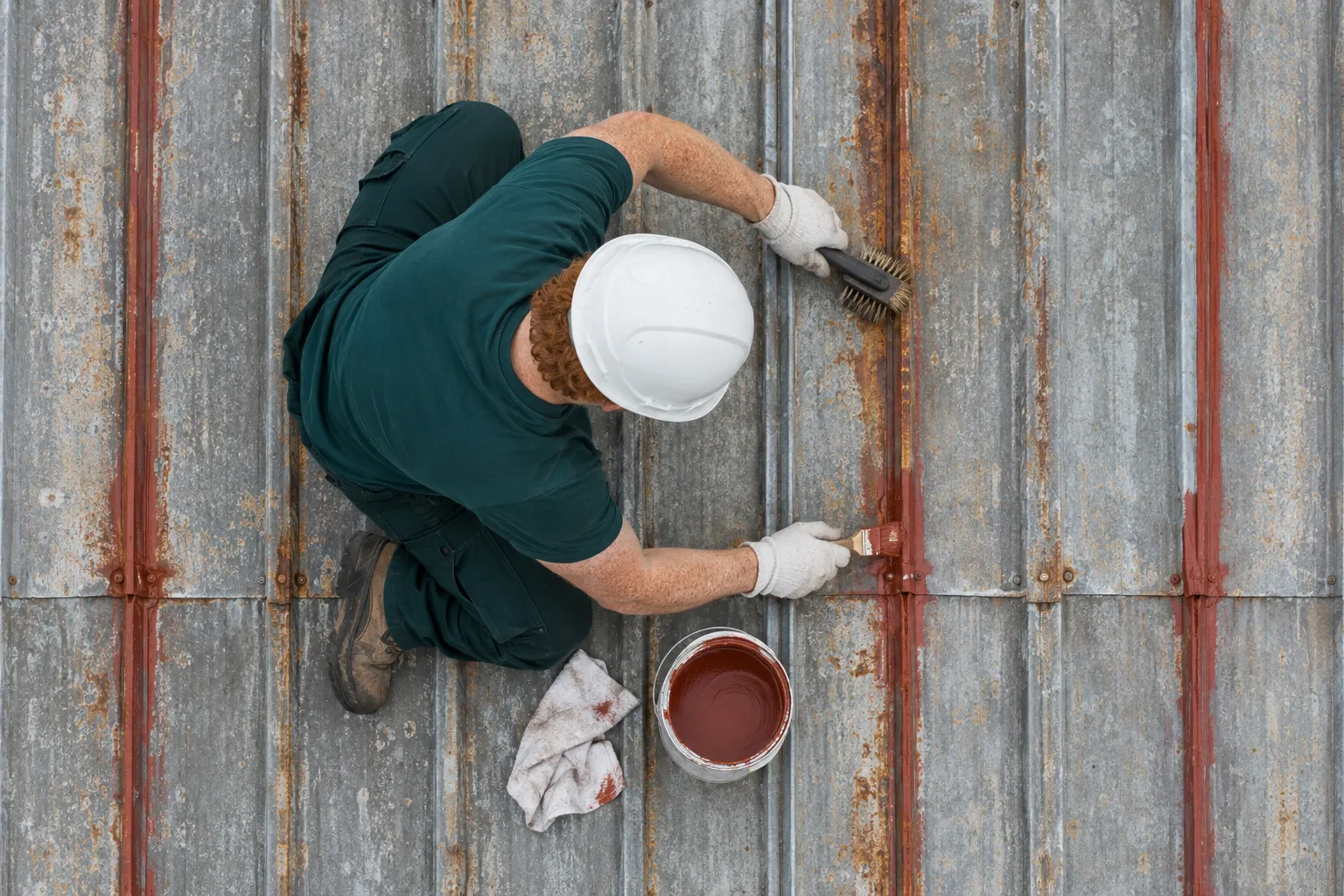
Rust priming, screw work, and lap sealing that every metal roof gets before silicone or acrylic.
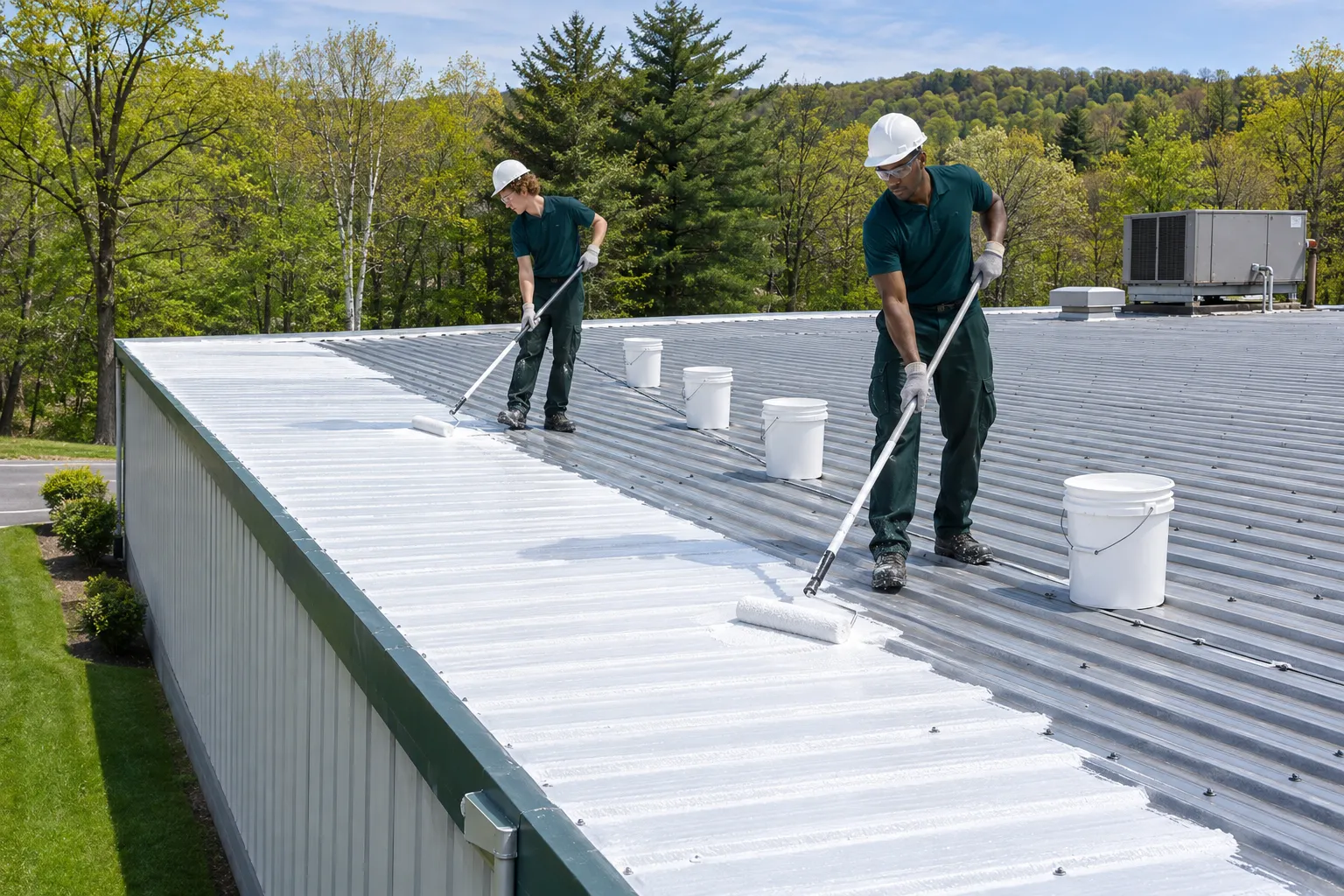
Used on the pitched part of a building whose flat wing gets silicone, so each slope has its own fit.
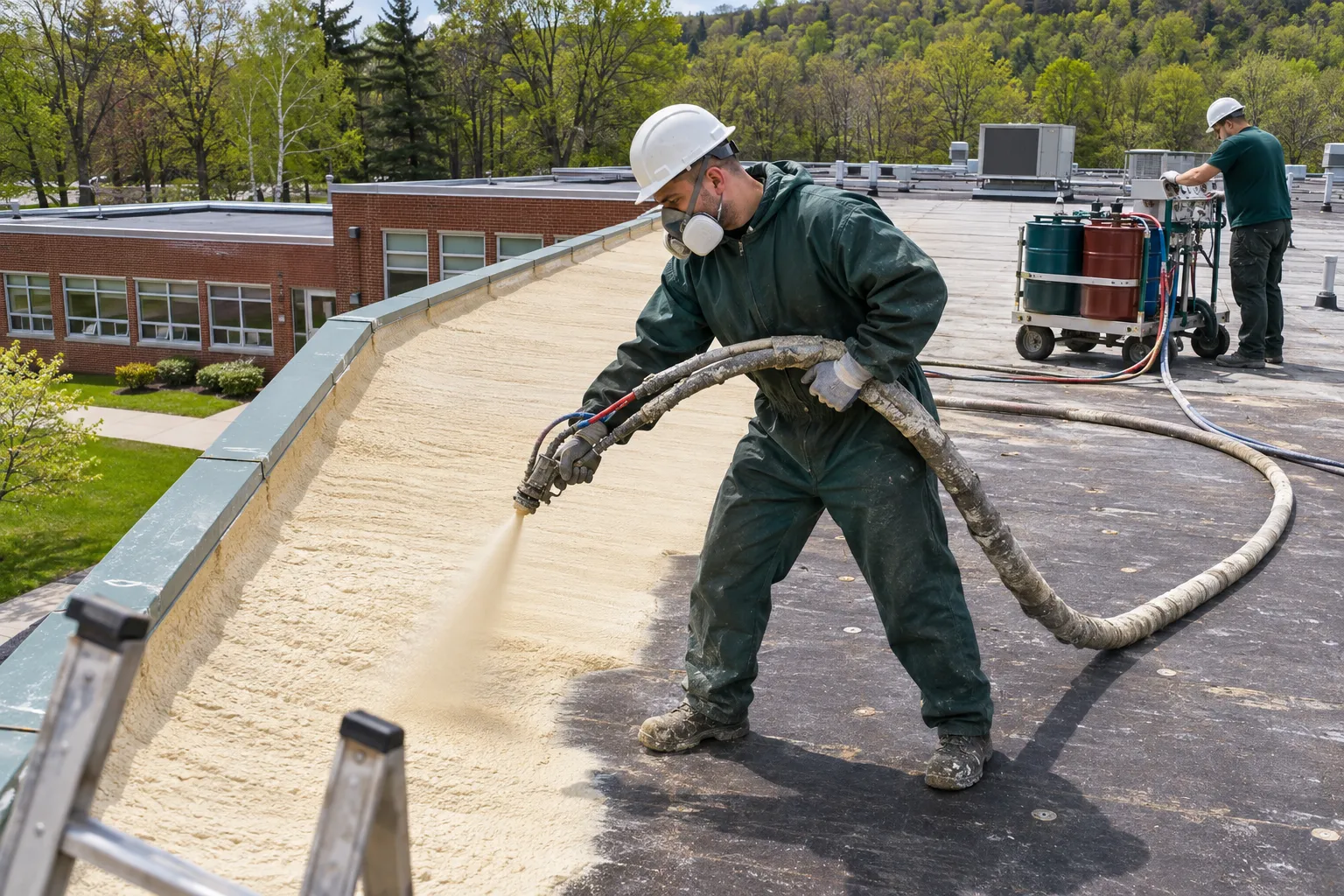
Foam can raise low spots toward drains before a silicone top, which cuts down where water collects.
What owners ask before choosing silicone for a metal roof.
Yes. Silicone is the coating we pick most for low-slope steel and gutter lines because it resists water that sits after rain or snowmelt. It goes over cleaned, primed panels to a set thickness, and a yearly rinse keeps its white surface reflecting sunlight.
Three trade-offs come up most. Silicone picks up dirt, gets slick when wet, and takes only silicone when it is recoated. It also costs more per gallon than acrylic. Walk pads to rooftop units handle the slick surface on roofs visited often.
Its life follows thickness, prep, and how much ice and foot traffic the roof sees. Freeze-thaw cycles work hardest on seams and screws, so those get reinforced first, and clear drains plus a check after heavy snow help silicone stay in service longer.
Silicone wins where water sits: low slopes, gutters, and valleys. Acrylic suits pitched panels that drain fast and usually costs less per gallon, though it needs warm, dry days to cure. Many buildings use both, matched to each slope.
Most metal roofs get one or two silicone passes over the primer, set by the dry film thickness the maker lists. Ponding areas and lap fabric take extra material, and a gauge reading during each pass confirms the target is met.
Usually, once the old acrylic is washed and any loose or peeling areas are scraped back to a firm edge. A primer made for that change of chemistry goes on first, and a small adhesion patch during the roof visit shows whether the old coat will hold the new silicone.
Point us to the spots where water collects, and we will map the low areas and price silicone for them.