Exhaust
Residue Around Exhaust Fans
Oily or dusty exhaust settles on the panels downwind of each fan. Coating will peel from that film unless it is washed off with a degreaser first.
We take on Watertown metal roof coating for manufacturing and warehouse buildings, sealing every exhaust fan and vent while shifts and shipping keep moving below.
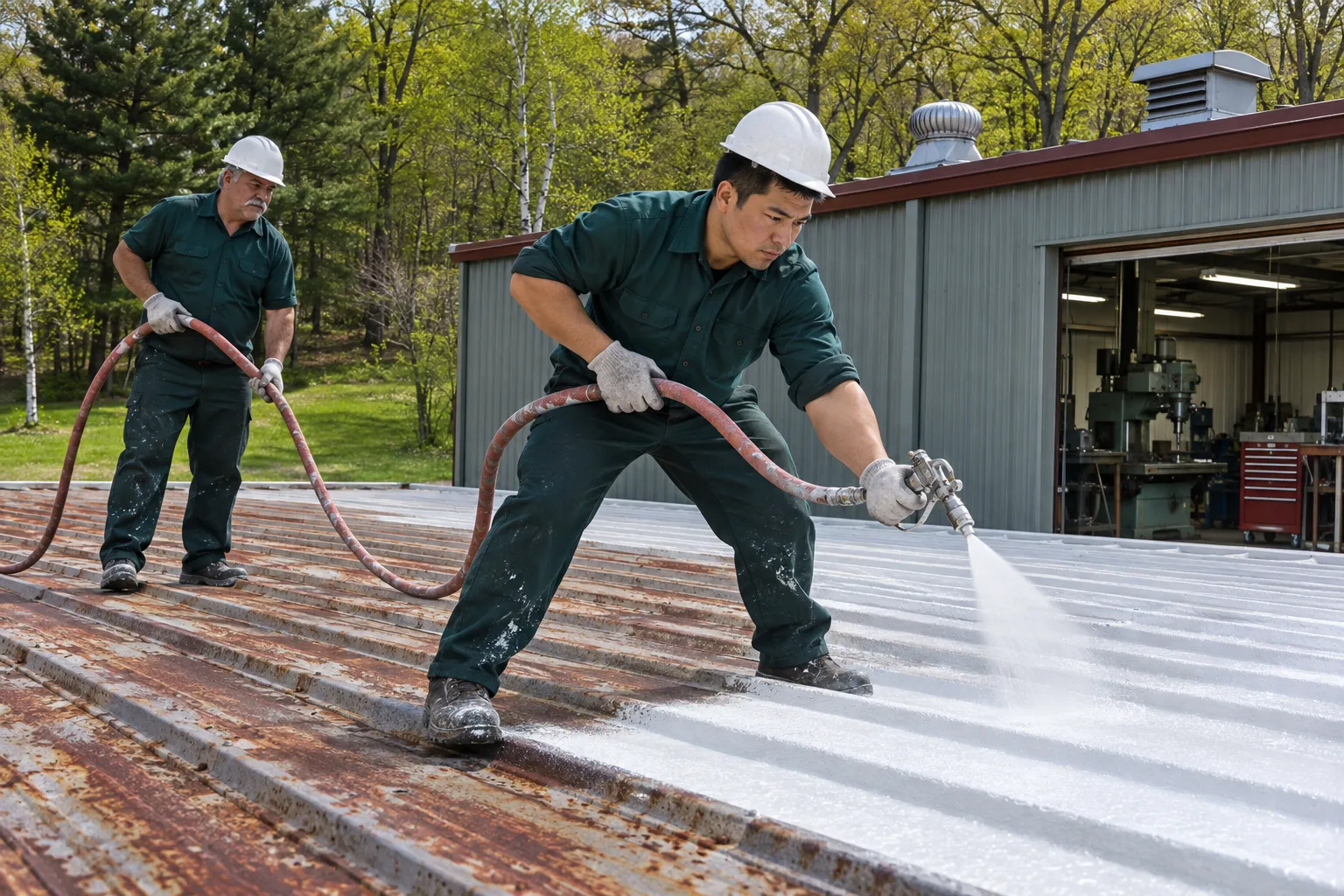
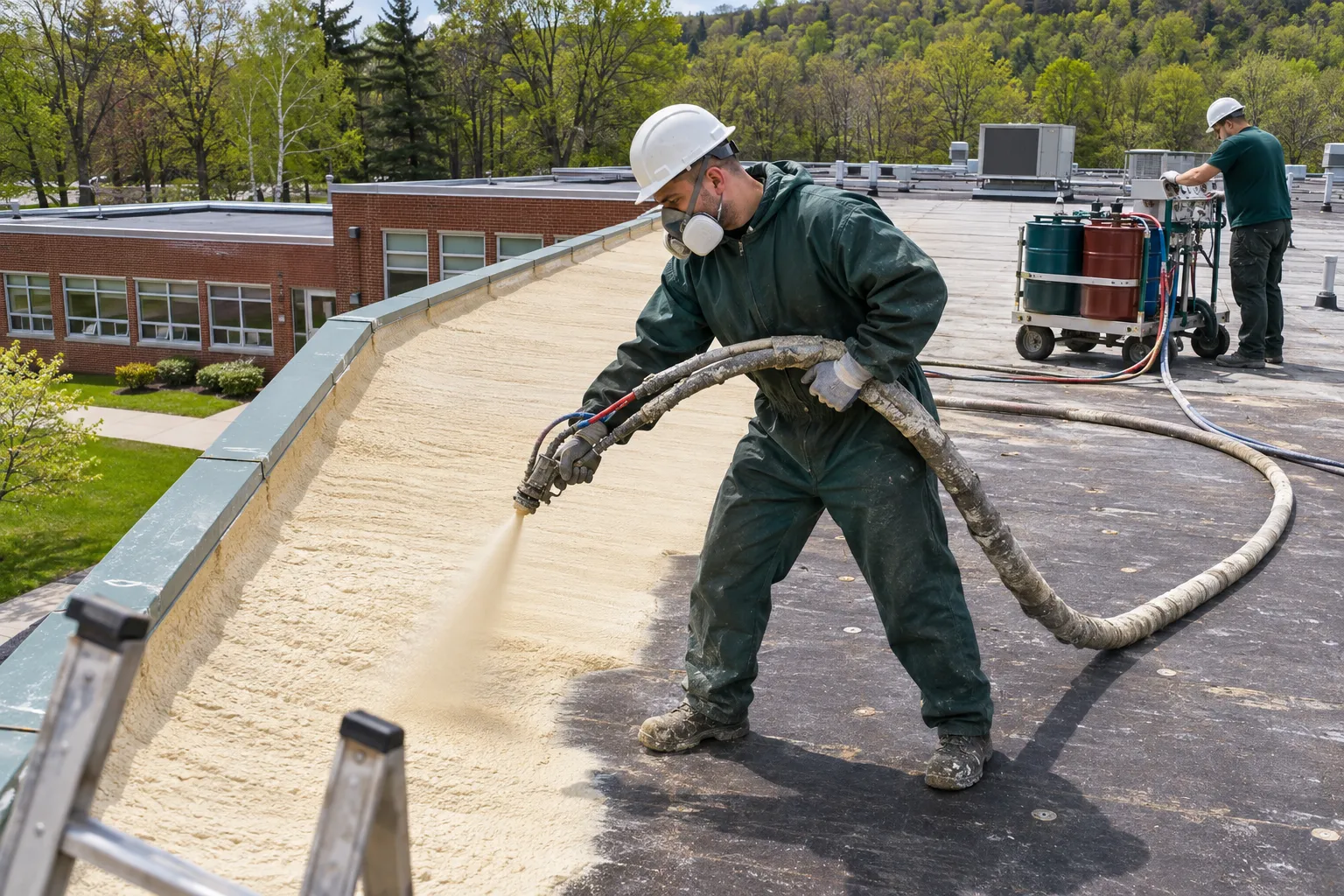
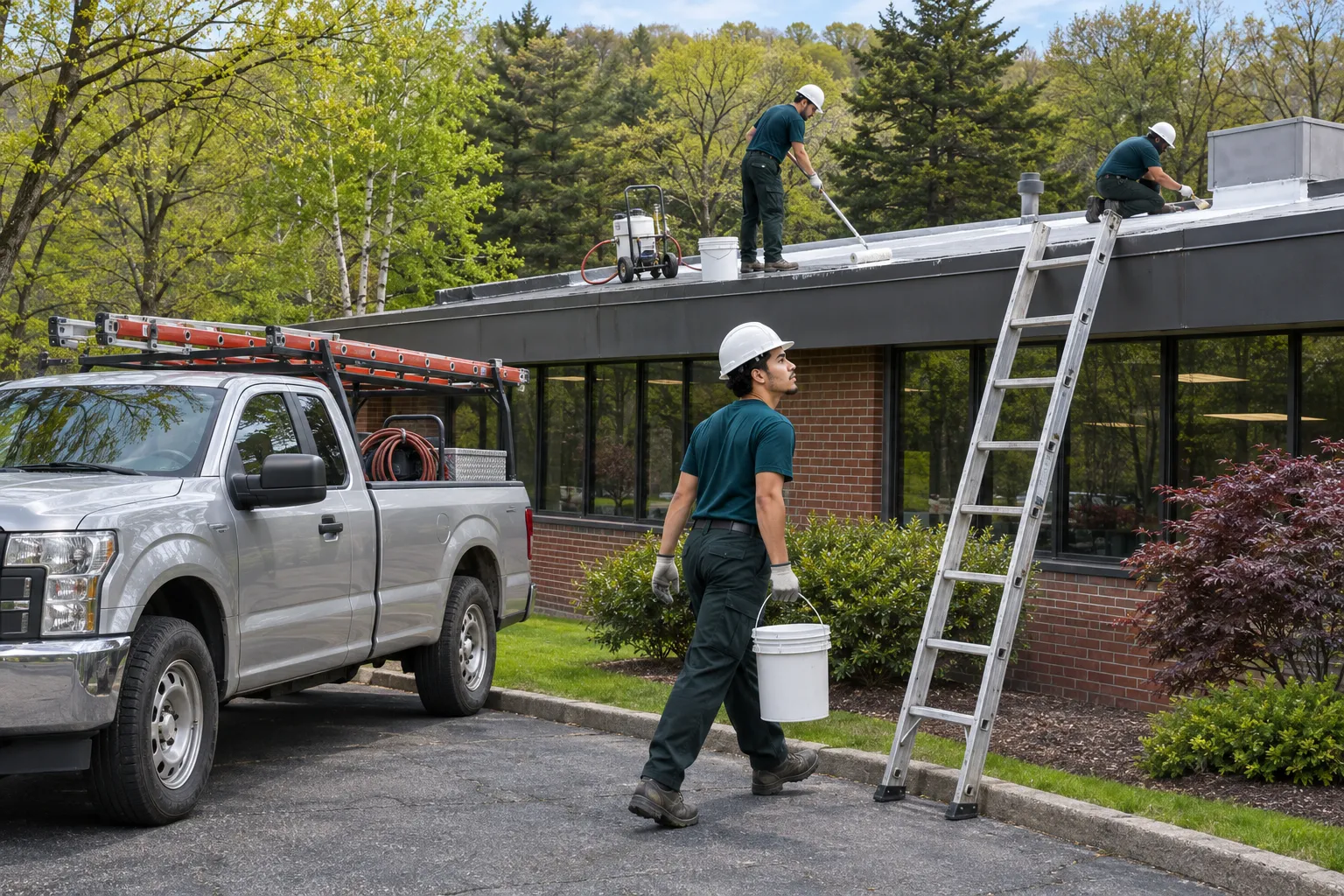
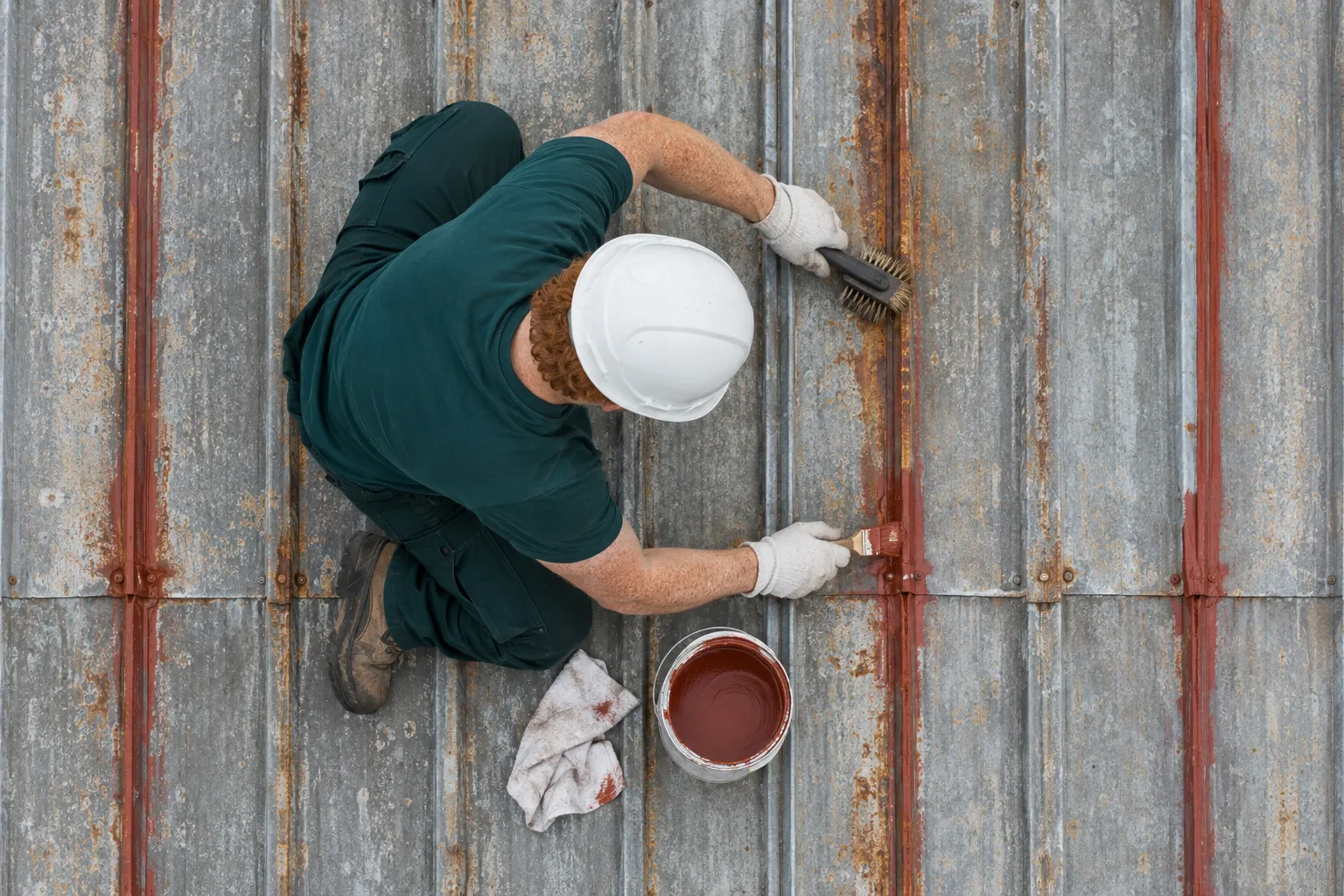
A Watertown metal roof coating job on an active plant is planned around three things: what the rooftop exhaust puts out, when trucks use the shipping doors, and when each shift starts. Fans that run during coating can blow dust into wet film, and some exhaust leaves oily residue on the panels.
We map every fan and vent, ask which ones can be shut down and when, and set staging well clear of the docks.
Plant roofs wear faster around equipment than anywhere else. Five conditions come up most.
Oily or dusty exhaust settles on the panels downwind of each fan. Coating will peel from that film unless it is washed off with a degreaser first.
Vibration from running fans works at the curb flashing for years. Cracked sealant around the curb base lets water drop onto the plant floor.
Rubber boots around process vents dry out under heat and sun. Split boots leave a ring of open steel around each pipe.
Panels near heavy equipment take constant vibration, and their screws back out faster than in quiet areas of the roof.
Fiberglass skylight panels in older plant roofs yellow and crack. Their laps with the steel are a common leak line above work areas.
For a plant, a roof that stops dripping on equipment is worth more than any brochure figure.
Coating works from above in planned sections, so machines, inventory, and shifts stay in place under the roof.
Fan curbs, vent boots, and skylight laps are all detailed in one project instead of patched one leak at a time.
Loose screws around vibrating equipment get replaced with oversized fasteners and new washers before coating locks them in.
When new equipment cuts a hole through the roof, the patch uses the same coating, so it blends into the system already there.
Plant roofs differ in slope, residue, and equipment load. Here is how the five systems line up.
| System | Where It Works | Plan For |
|---|---|---|
| Metal Roof Coating | Where It WorksExposed-fastener plant roofs with surface rust | Plan ForDegreasing around fans |
| Silicone Roof Coating | Where It WorksLow spots that hold water near equipment | Plan ForWalk pads to serviced units |
| Acrylic Roof Coating | Where It WorksSloped warehouse wings that drain well | Plan ForDry weather through the cure |
| Spray Foam Roofing | Where It WorksFlat plant roofs with many penetrations | Plan ForFans and intakes shut during spraying |
| Shingle Roof Coating | Where It WorksShingled office fronts on plant buildings | Plan ForSoft decking near old vents |
Call us with the bay or machine where it lands. We will check the fan curbs and vents above that spot and plan a roof walk around your shifts.
Five steps, each scheduled with the plant manager before work begins.
We walk the roof with someone who knows the equipment, note every fan and vent, and test screw hold near vibrating units.
Fan pauses, dock hours, and quiet times go into a written schedule so no shift is surprised by work on the roof overhead.
Exhaust residue is scrubbed off, rust is brushed, and primer goes on each prepared section before the fans restart.
Curbs, pipe boots, and skylight laps get fabric and base coat, with extra thickness where vibration is heaviest.
Topcoat passes follow the shutdown schedule, finishing one area of the roof before moving equipment downtime to the next.
Plants and shops in Watertown and the towns below are in our service area. For a building elsewhere, call us or send us a message.
Plant and warehouse roofs with old patch layers.
Sloped metal roofs over occupied shops and offices.
Shop roofs where gutters and eaves rust first.
Exposed-fastener shops and storage buildings.
Barns and equipment sheds with long steel panels.
Coating planned around spring rain and fall frost.
Church halls and schools coated around their schedules.
Village-center roofs with tight staging space.
Large industrial roofs coated one section at a time.
Several roofs on one property, each with its own plan.
Rural roofs where materials and water are planned ahead.
Older coated roofs ready for a fresh topcoat.
What plant managers in town ask before coating a working roof.
Yes. Exposed-fastener panels and older standing-seam roofs on Watertown plants and warehouses both take coating once rusted laps and loose screws are fixed. We plan around shipping doors, rooftop exhaust, and shift times from the first visit.
Roof area sets the base, at about $2.50 to $4.00 per square foot. Degreasing around exhaust, the number of curbs and vents, and after-hours scheduling push a plant roof within that range.
Usually, yes. Only the fans in the section being primed or coated need to pause, and that window is planned with the plant manager. The rest of the building keeps running.
Call us with the building address and a contact who knows the rooftop equipment. We walk the roof with that person and bring back a schedule tied to your shifts.
It will if it is left on the panels. Oily or dusty film near fans gets scrubbed with a degreaser and rinsed, then the steel is primed so the coating grips clean metal.
Tell us about the plant roof and its equipment, or get a ballpark number for the area first. We will plan the work around your shifts.