Expansion Joints
Torn Expansion Joints
Long roofs move at their expansion joints, and the covers there split or pull loose, letting water straight into the building.

Beacon Falls metal roof coating for large plants and warehouses, split into sections so lines keep running and every section is sealed before we move on.
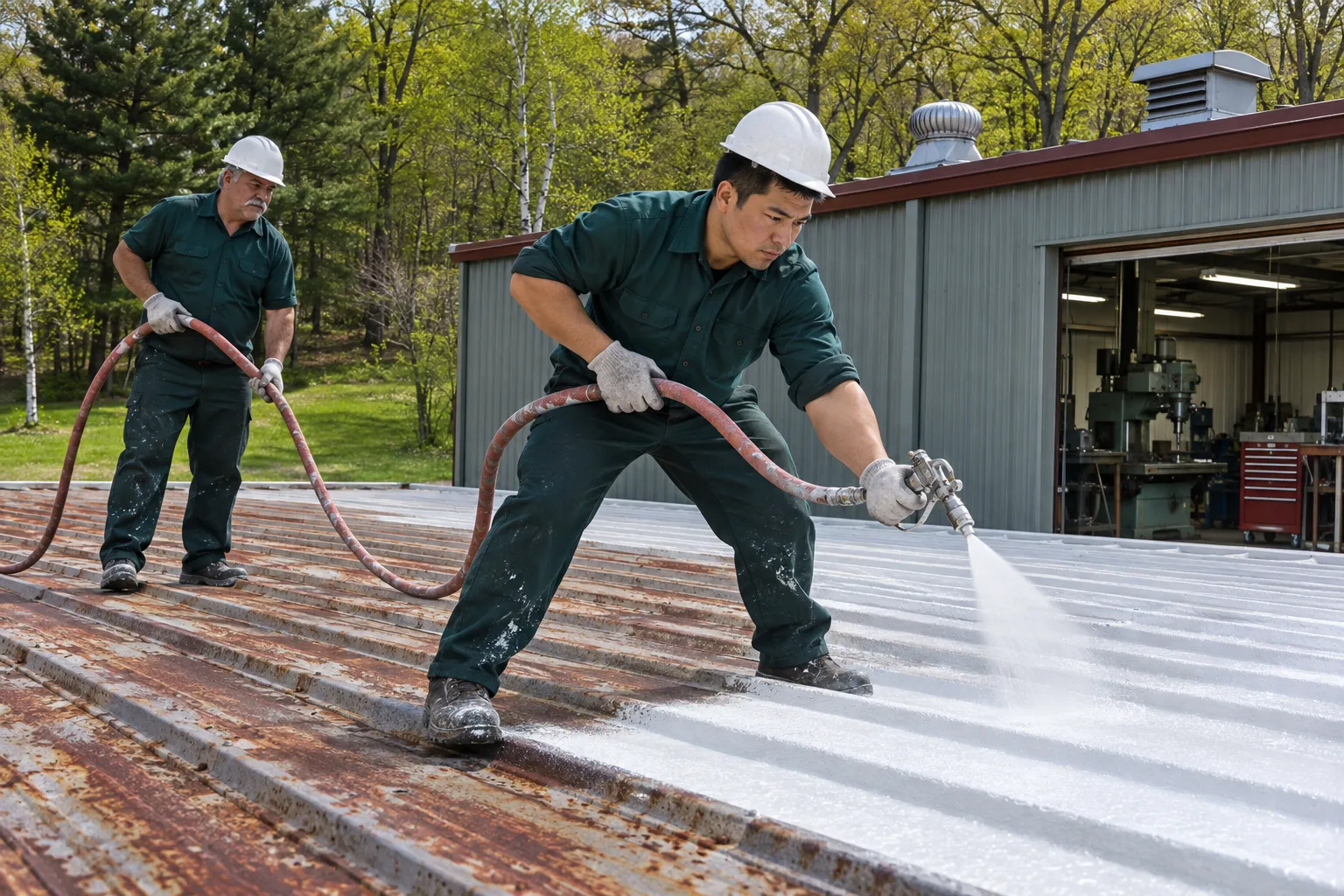
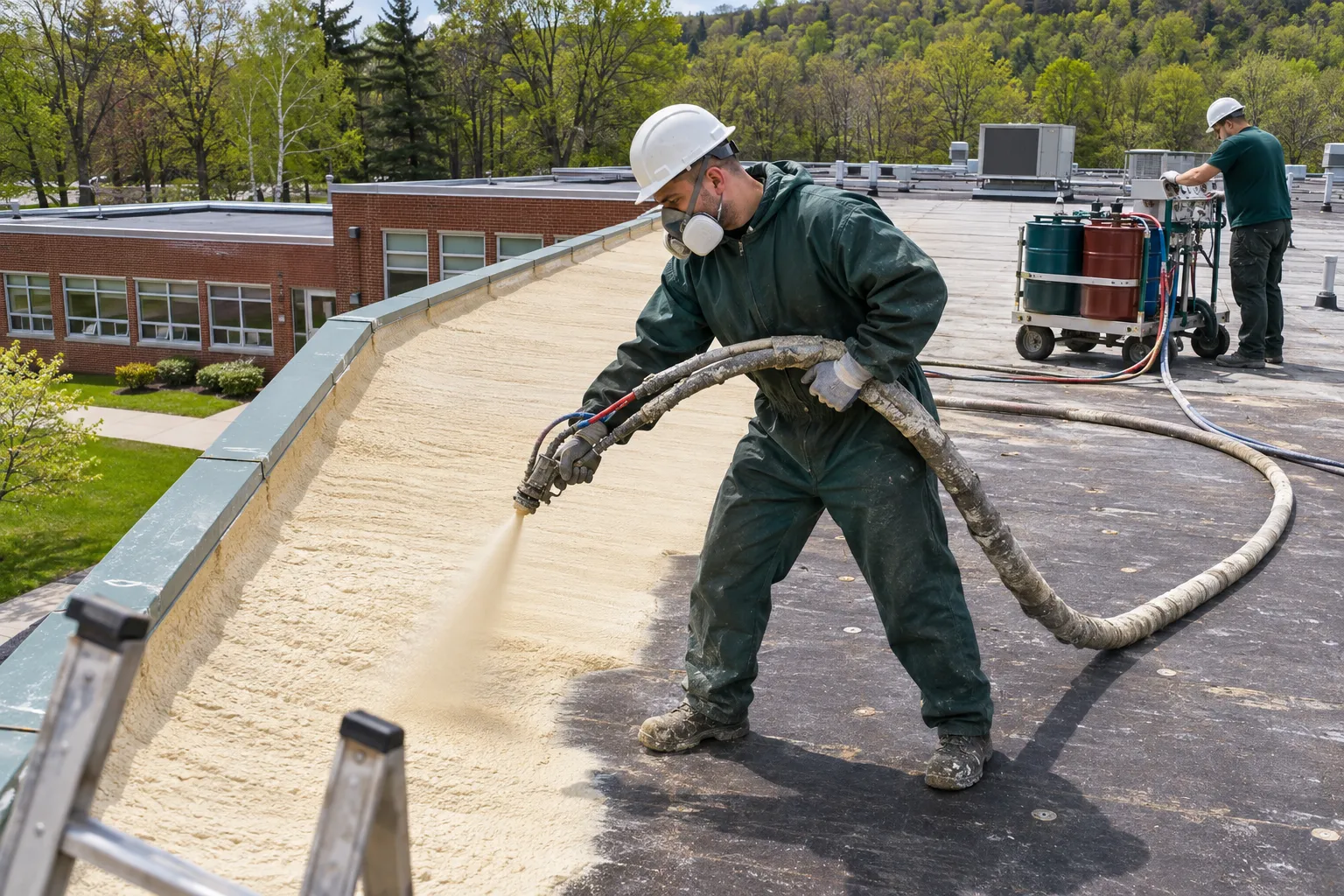
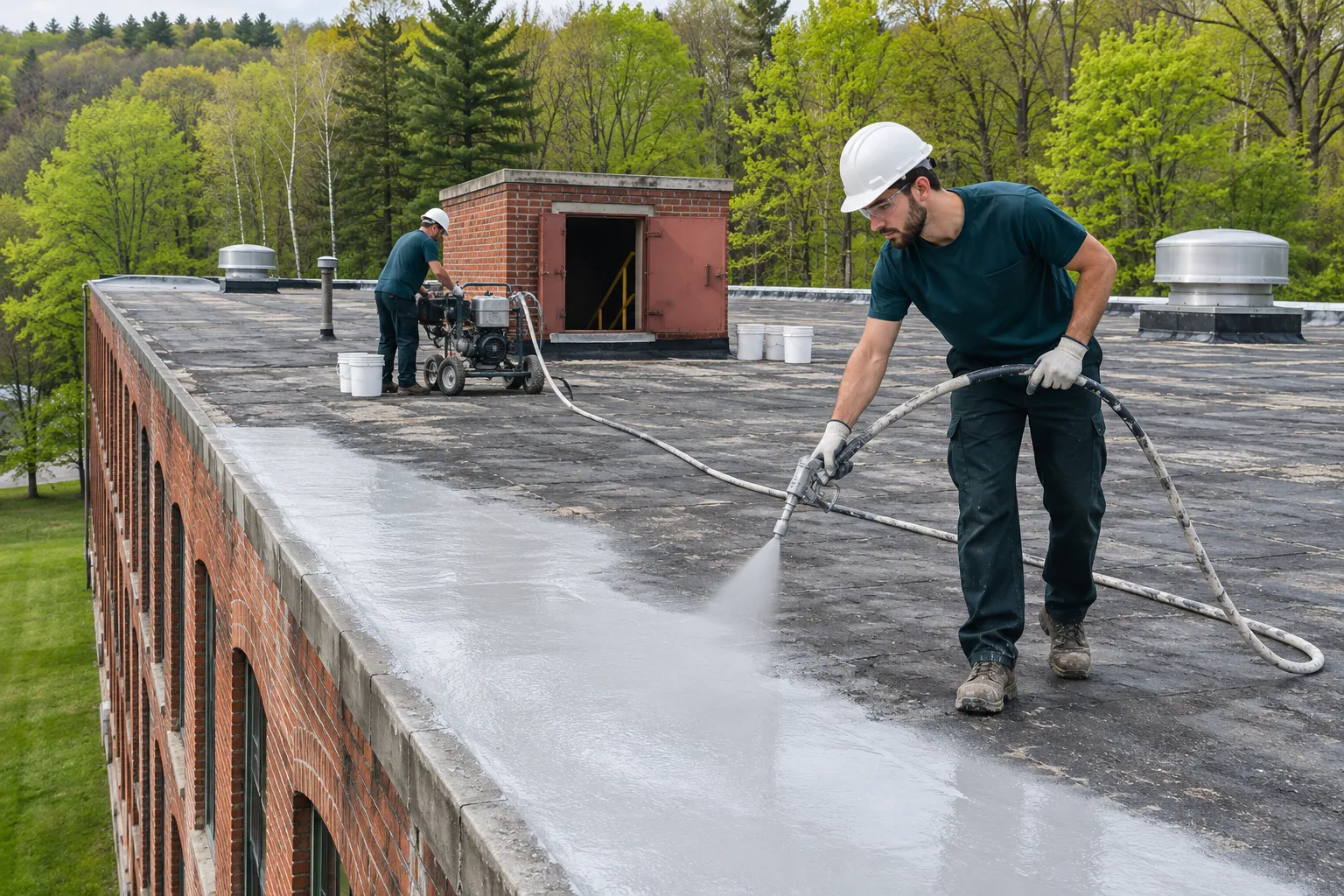
Beacon Falls metal roof coating on a big industrial roof works best as a series of smaller jobs. We divide the roof along expansion joints, firewalls, or bay lines, then finish each piece from wash to topcoat before opening the next.
That way the plant never has a large area of half-prepared roof overhead, and production below each section only deals with a few days of work.
Large roofs collect damage unevenly. Some bays need a full repair while others only need cleaning.
Long roofs move at their expansion joints, and the covers there split or pull loose, letting water straight into the building.
Process exhaust leaves oil and dust on the panels downwind of each fan, and coating will only grip there after a degreasing wash.
Maintenance staff walk the same routes to rooftop units, and those paths wear through paint and dent ribs until the laps open.
Valley gutters between bays fill with grit, hold water against their seams, and rust from the inside out.
Rows of translucent panels over the shop floor crack at their fasteners and need replacing before the roof around them is coated.
Meter readings across a big roof often find a few wet pockets under old leaks, which get opened and dried before coating.
On a big roof, coating in sections lets a plant fix everything without stopping work below.
Only one section has work over it at a time, so lines, shipping, and storage under the rest of the roof go on as usual.
Sections can be split across budget years, starting with the bays that leak worst and finishing the rest later.
Each section ties into the last with overlapped coating at the boundary, so the finished roof reads as one membrane.
A white topcoat on a huge steel roof cuts the heat that radiates down onto workers on summer afternoons.
The roof plan logs what was repaired and coated in each section, which helps with future upkeep and insurance questions.

A large roof often needs two systems: one for sloped bays and one for low or flat areas.
| System | Best On | Watch For |
|---|---|---|
| Metal Roof Coating | Best OnExposed-fastener and standing-seam plant roofs | Watch ForExhaust residue that needs degreasing |
| Silicone Roof Coating | Best OnValley gutters and low bays that hold water | Watch ForRecoats must stay silicone |
| Acrylic Roof Coating | Best OnSloped bays that shed water quickly | Watch ForShort cure windows in spring and fall |
| Spray Foam Roofing | Best OnFlat sections that need added insulation | Watch ForOverspray near loading docks and cars |
| Shingle Roof Coating | Best OnShingled front offices on the same lot | Watch ForCurled tabs or a soft deck |
Call us with the bay and what sits under it. We can patch that section first and fold it into the full coating plan later.
Five steps on the whole roof, repeated section by section.
We walk every bay, take moisture readings, and draw a section plan that marks joints, units, skylights, gutters, and wet spots.
Plant staff tell us which bays sit over sensitive work, and we set the section order and rooftop unit shutdowns around that.
Expansion joint covers, skylight panels, rusted gutters, and wet insulation in the active section get fixed first.
Residue near exhaust fans is washed off with a degreaser, then primer goes on rust and bare steel.
Laps and screws get fabric and base coat, the topcoat follows, and the boundary to the next section is left ready to overlap.
Our coating work covers Beacon Falls and the towns below. For a plant outside them, call us or send us a message and we will check the distance.
Plant and warehouse roofs with old patch layers.
Sloped metal roofs over occupied shops and offices.
Shop roofs where gutters and eaves rust first.
Factory roofs crowded with exhaust fans and vents.
Exposed-fastener shops and storage buildings.
Barns and equipment sheds with long steel panels.
Coating planned around spring rain and fall frost.
Church halls and schools coated around their schedules.
Village-center roofs with tight staging space.
Several roofs on one property, each with its own plan.
Rural roofs where materials and water are planned ahead.
Older coated roofs ready for a fresh topcoat.
Questions facility staff ask before a large coating job.
Square footage sets the base, at about $2.50 to $4.00 per square foot as a ballpark. Expansion joints, skylight rows, wet insulation, and exhaust cleanup add to it, and splitting the job into sections lets you spread that cost out.
We do, along with Waterbury and the nearby towns. Call or send a message with the building size and a contact for plant access, and we will set a roof walk around your shifts.
Phased work is how we approach any roof this size. Each section is finished before the next opens, and the plan can stretch over one season or several.
Most units stay on. Intakes near the active section get covered while primer and coating cure, and only a few units need a short shutdown when work sits right next to them.
Each day ends with the open work sealed. Laps are taped or base-coated before we leave, and topcoat only goes down with a dry forecast long enough for it to cure.
Share the roof size and which bays leak. We will draw up a section plan that keeps your plant running.