Steel Roofs
Commercial metal roof coating →Commercial Metal Roof Coating
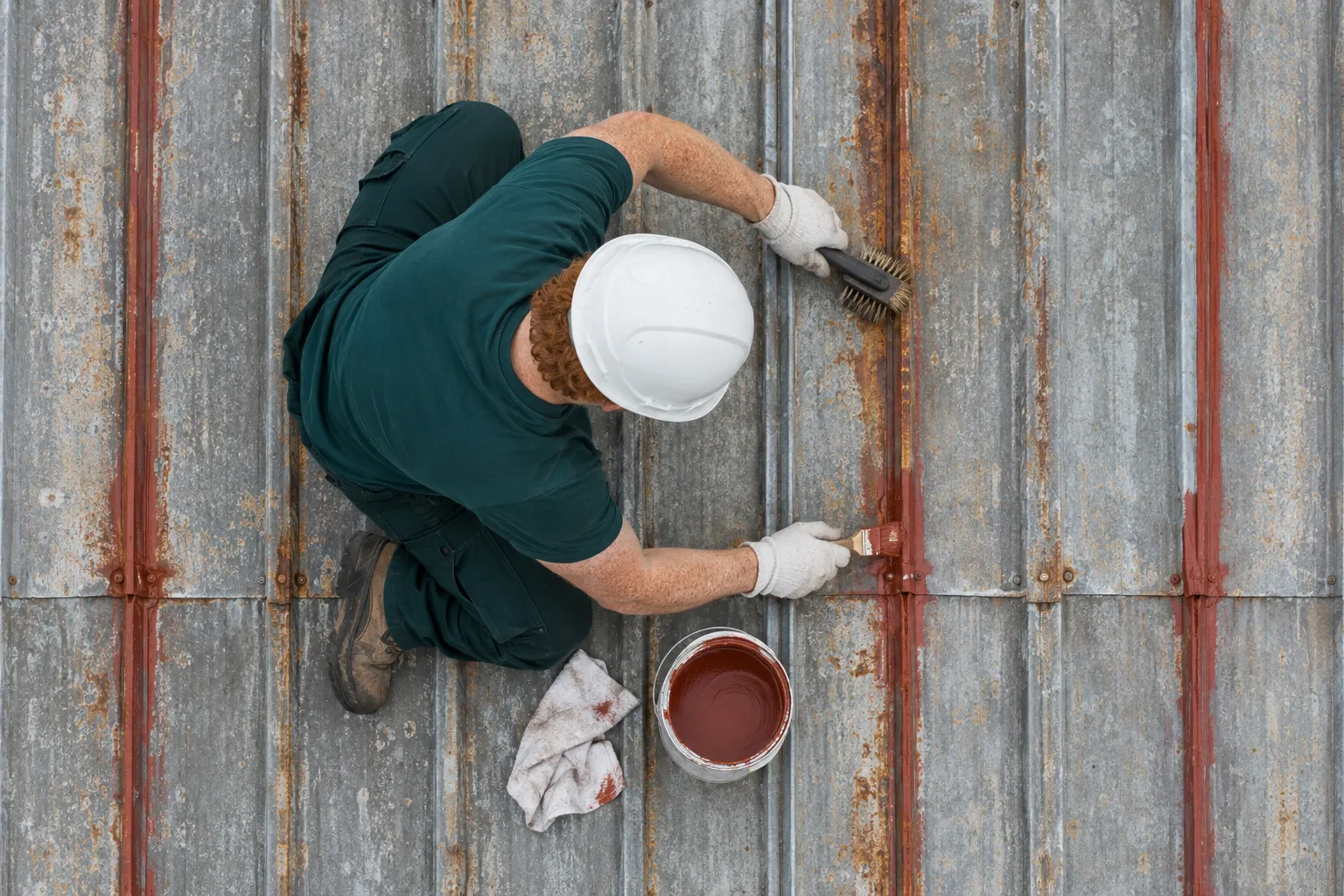
Rust primer, upsized screws, taped laps, and a full topcoat over exposed-fastener or standing-seam panels. This is the base work under every metal coating we apply.
We offer metal roof coating services in Waterbury for shops, mills, warehouses, and offices, from rust priming and seam work to silicone, acrylic, foam, and shingle coatings.
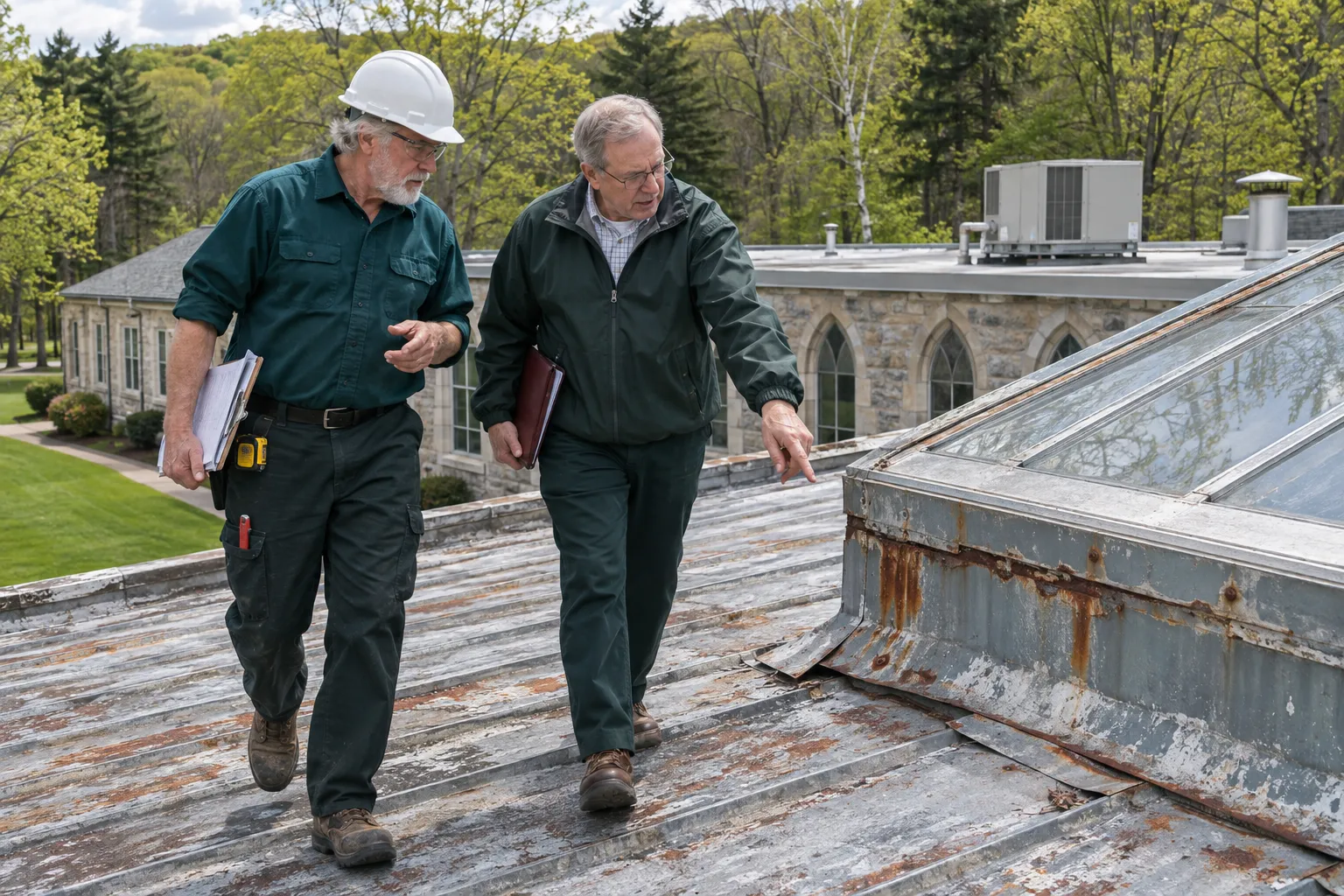
Each of our metal roof coating services in Waterbury starts with the same roof walk. The system you end up with depends on what that walk finds.
Rust primer, upsized screws, taped laps, and a full topcoat over exposed-fastener or standing-seam panels. This is the base work under every metal coating we apply.
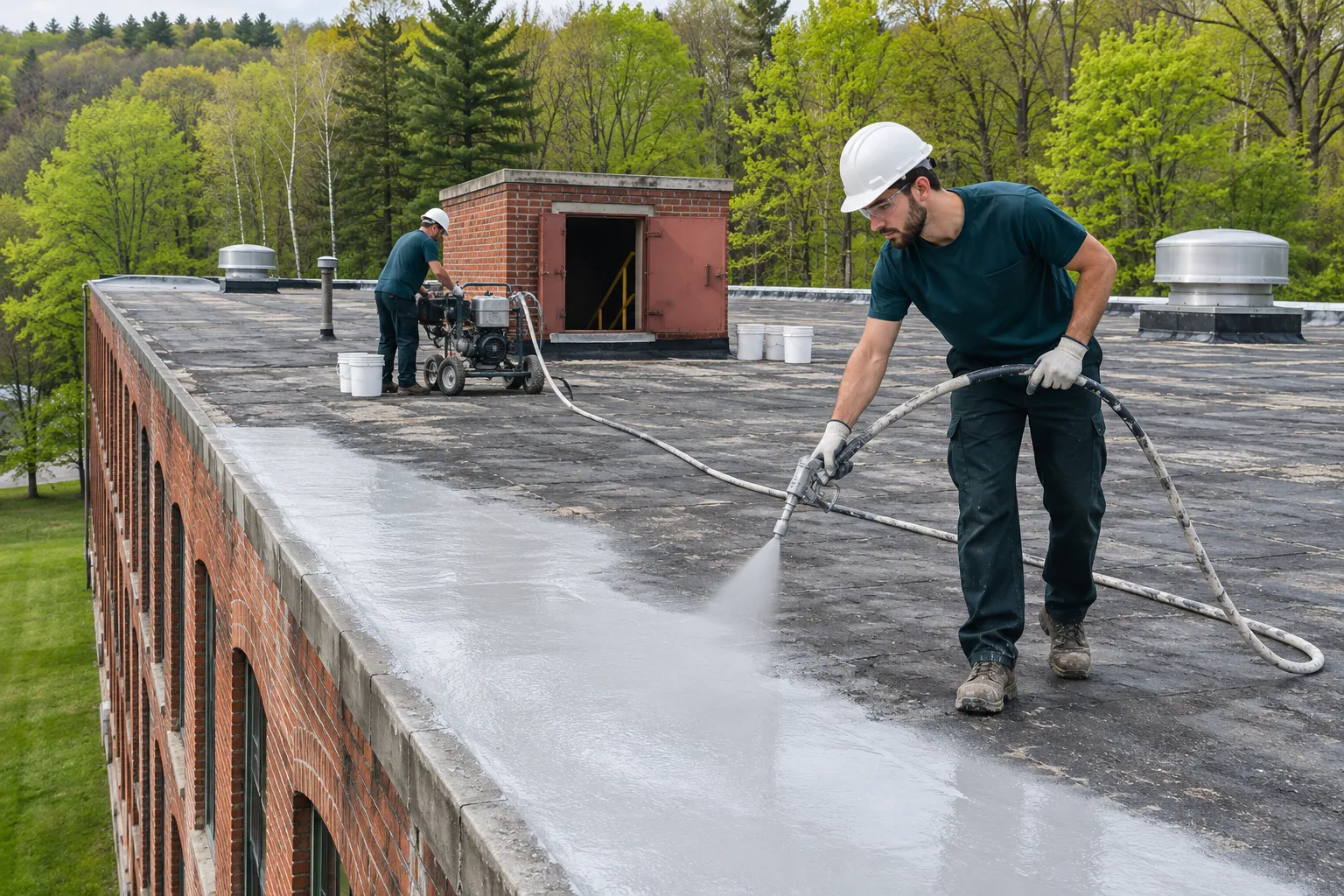
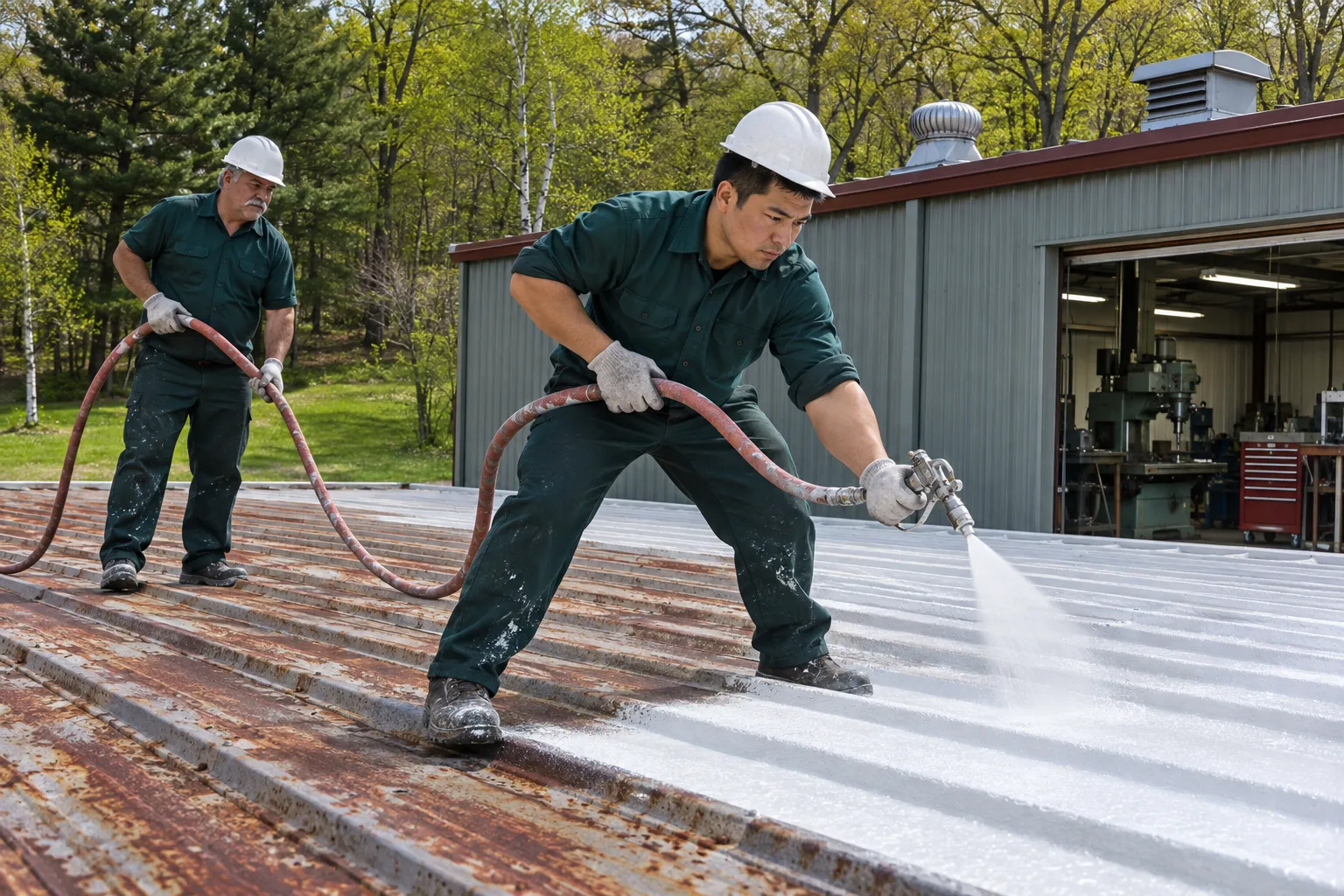
Picked for low-slope steel, box gutters, and valleys where puddles last a day after rain. Recoats later stay silicone.
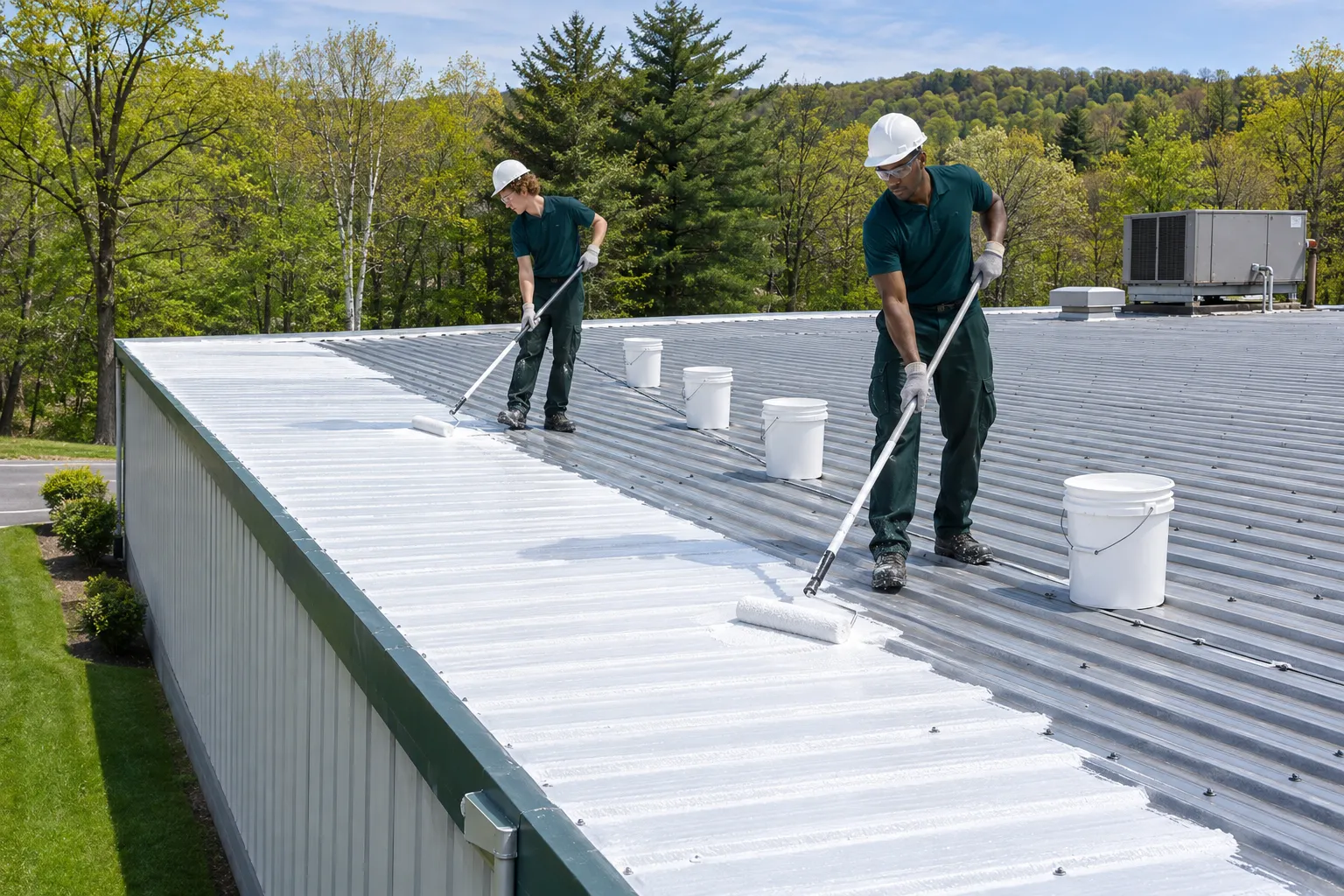
Water-based and reflective, for sloped metal that sheds water fast. Applied in warm, dry weeks, usually in two contrasting coats.
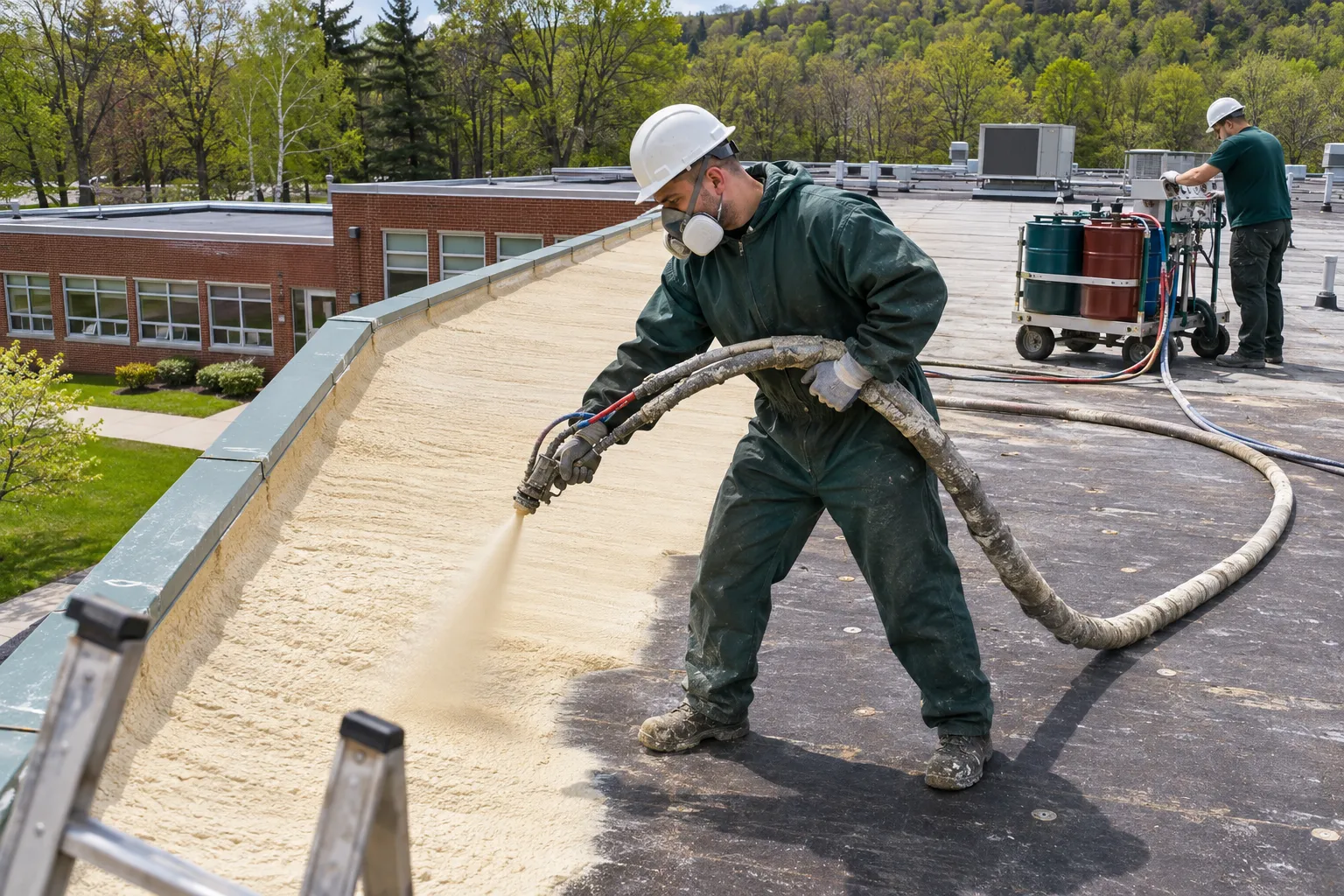
Polyurethane foam sprayed over dry metal or membrane to fill ribs, add insulation, and build slope toward drains, then topcoated.
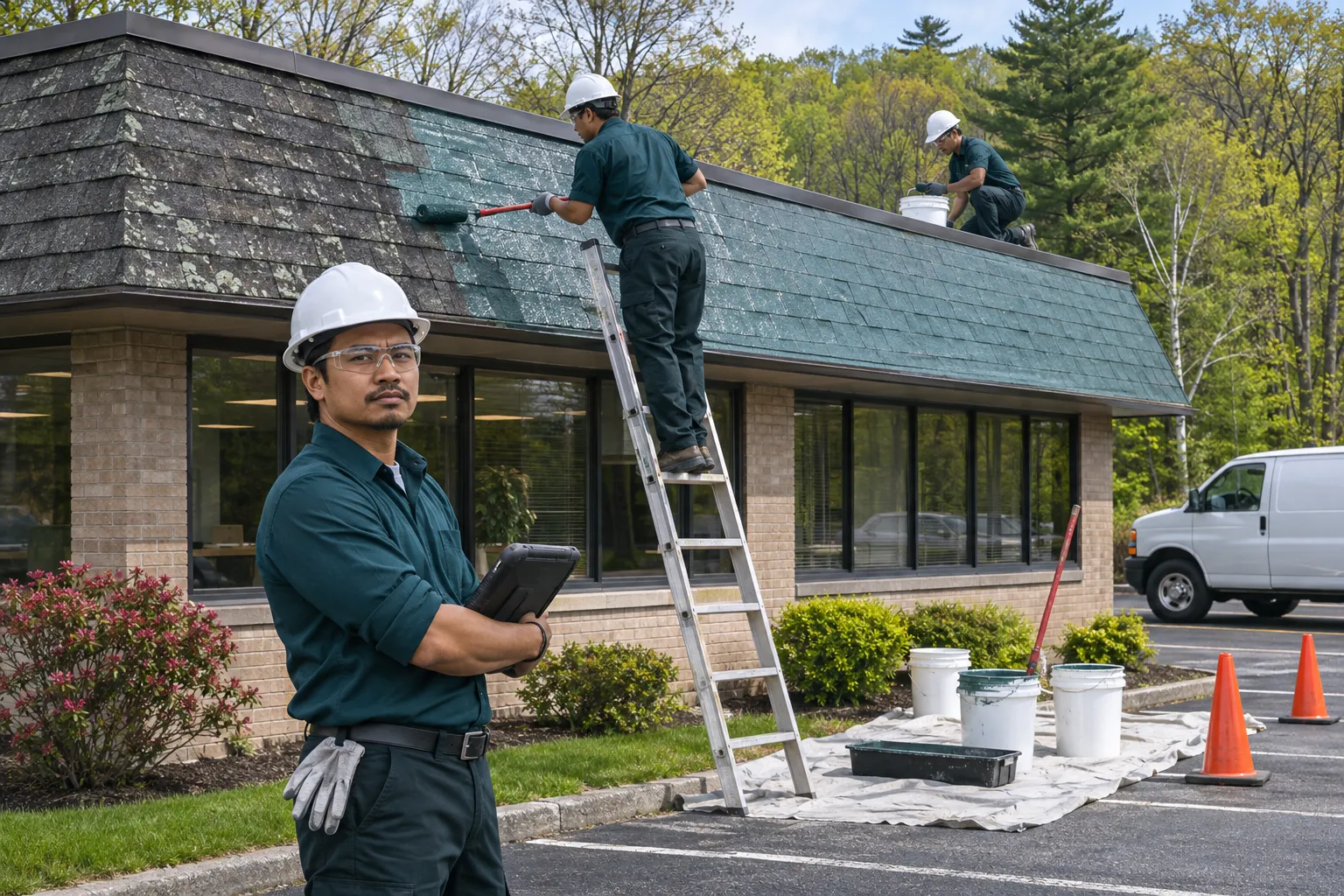
A coating made for asphalt on offices, churches, and retail wings whose shingles still lie flat and stay nailed down.
Read across from the roof you have. A full dot means that system is the usual answer; an empty one means we would pick something else.
| Roof Condition | Silicone | Acrylic | Spray Foam |
|---|---|---|---|
| Pitched metal panels, quick drainage | Silicone | Acrylic | Spray Foam |
| Low-slope metal with puddles after rain | Silicone | Acrylic | Spray Foam |
| Flat roof with drains set too high | Silicone | Acrylic | Spray Foam |
| Bare steel over a heated shop | Silicone | Acrylic | Spray Foam |
| Old silicone coating already on the roof | Silicone | Acrylic | Spray Foam |
| Tight lot with cars parked at the walls | Silicone | Acrylic | Spray Foam |
Every option sits on top of the same prep: rust treatment, screw work, and sealed laps.
Call us with the roof type and how it drains. Most owners know after one short call which system the roof visit will focus on.
Whatever system goes on top, these four steps come first and in this order.
A full roof walk checks screws, laps, gutters, curbs, drains, and insulation moisture, and ends with a written repair list and a system recommendation.
Rotted-out panels, stripped fasteners, cracked skylights, and open flashing are fixed first, since coating seals surfaces and leaves holes as they are.
Washing removes chalk, dirt, and loose scale, and primer goes where rust or an old coating needs it for the topcoat to grip.
The chosen system goes down in measured passes, checked with a wet-film gauge so it meets the thickness its maker lists.
Short answers that help owners narrow down a system before the roof visit.
Start with how the roof drains. Panels that shed water fast suit acrylic, low spots and gutters suit silicone, and flat roofs with poor drainage or no insulation suit spray foam. Every metal roof gets rust and seam work first, so the commercial metal roof coating service sits under all of them.
Yes, and it happens often. A mill with a pitched main roof and a flat loading-dock wing might get acrylic on the slopes and silicone on the flat section, with both laid over the same rust primer and taped seams.
We also coat asphalt shingle roofs on commercial buildings and spray foam over older membrane roofs that test dry. Single-ply and built-up membranes get looked at case by case during the roof visit.
Think of it as restoration. Repairs fix the failed spots, and the coating then covers the whole surface so the roof works as one waterproof layer again, without tearing off the panels.
Small shop roofs can be prepped and coated in a few working days of good weather. Large mill or warehouse roofs run longer and are often done section by section, and the schedule follows the forecast more than the calendar.
Get a ballpark for your roof size, or call to book a walk and a written system recommendation.