Fasteners
Coating Exposed-Fastener Metal Roofs
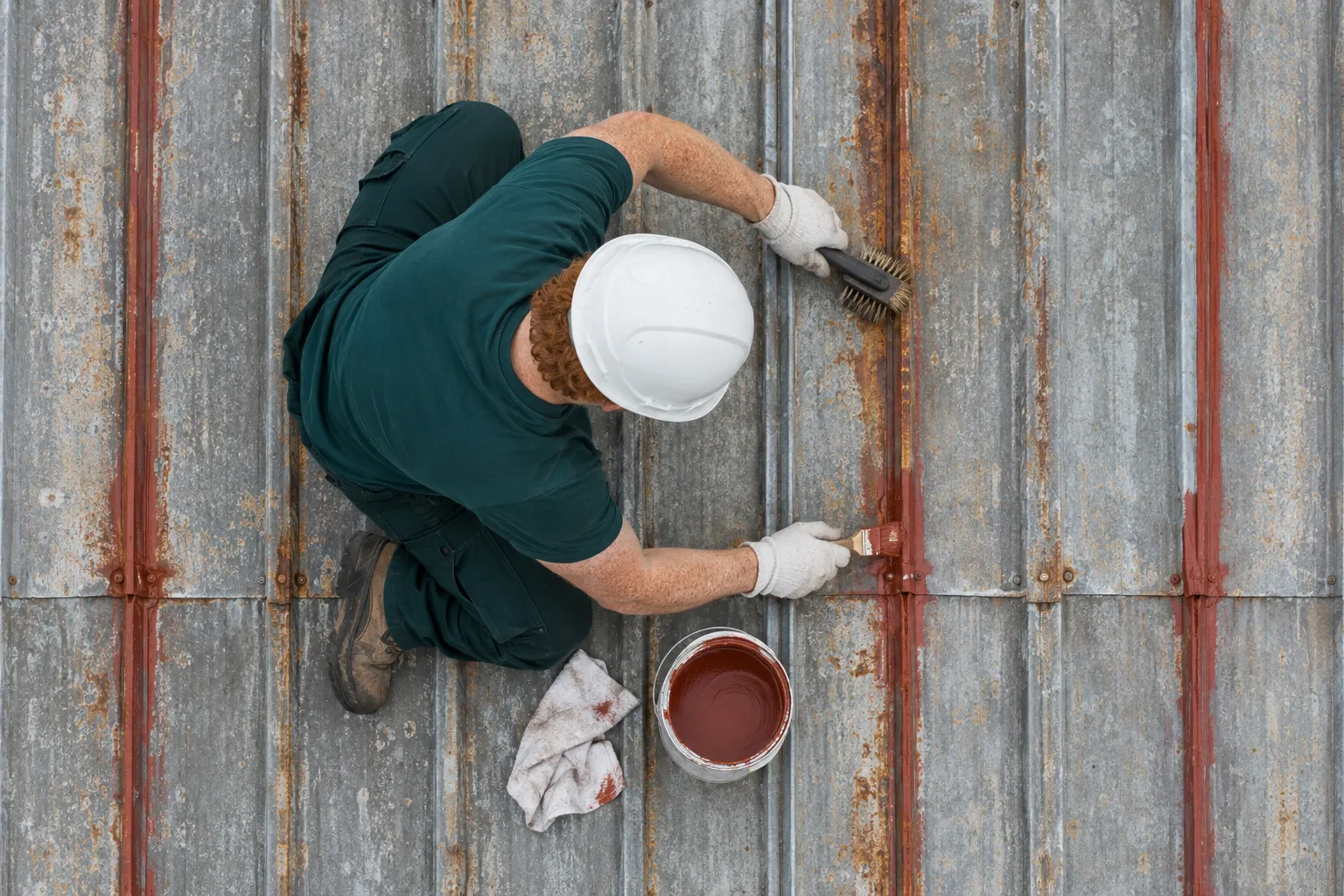
Thousands of screws hold a through-fastened roof down, and each washer is a rubber seal that ages. Loose ones get snugged, stripped ones get a larger diameter, and every head gets sealed.
As a Waterbury commercial metal roof coating contractor, we restore steel roofs on shops, mills, and warehouses by priming rust, sealing laps, and coating the full surface.
Waterbury commercial metal roof coating suits steel that still holds a screw. The rows below show where most panel roofs land after the first walk.
| Roof Condition | Prime and Coat | Repair, Then Coat | Replace First |
|---|---|---|---|
| Faded paint and chalk over firm panels | Prime and Coat | Repair, Then Coat | Replace First |
| Red rust at end laps, gutters, and fastener rows | Prime and Coat | Repair, Then Coat | Replace First |
| Screws spinning in their holes | Prime and Coat | Repair, Then Coat | Replace First |
| Holes rusted through a few panels | Prime and Coat | Repair, Then Coat | Replace First |
| Purlins bowed or rusted at the clips | Prime and Coat | Repair, Then Coat | Replace First |
| Wet, matted insulation under most of the deck | Prime and Coat | Repair, Then Coat | Replace First |
Where a row reads Repair, Then Coat, the repairs are priced as their own line so you can see what the steel needs before the topcoat.
Machine shops, brass-era mill buildings, and steel warehouses share a short list of metal roof problems. Each one gets fixed before coating.
Thousands of screws hold a through-fastened roof down, and each washer is a rubber seal that ages. Loose ones get snugged, stripped ones get a larger diameter, and every head gets sealed.
Rust streaks below an end lap mean water has sat between the two sheets. That overlap gets cleaned, primed, and covered with seam tape before any coating touches it.
Oil mist and heat from shop exhaust break down flashing and sealant faster than open roof areas. Those curbs are cleaned with a degreaser and rebuilt with fabric.
Translucent panels set in a metal roof yellow and split. Coating stops at their edges, so cracked ones get swapped for matching profiles while the screws around them are reset.
Internal and eave gutters on older buildings catch leaves, grit, and meltwater. Their seams open first, so they get cleared, patched, and coated as part of the roof.
Each system below can go over primed steel. Drainage and roof pitch usually decide between them.
| System | Best On | Why Owners Pick It | Plan For |
|---|---|---|---|
| Acrylic | Best OnSloped panels that drain fast | Why Owners Pick ItBright reflective finish and easy recoats | Plan ForWarm, dry days to cure |
| Silicone | Best OnLow-slope sections and gutters | Why Owners Pick ItHolds up where water lingers | Plan ForSilicone-only recoats later |
| Urethane base with acrylic top | Best OnRoofs walked often for equipment | Why Owners Pick ItTougher base layer under a reflective top | Plan ForTwo products on one schedule |
| Spray foam | Best OnFlat or near-flat steel decks | Why Owners Pick ItFills ribs and adds insulation | Plan ForOverspray control and a topcoat |
| Rust primer alone | Best OnPanels too far gone to coat yet | Why Owners Pick ItSlows rust while replacement is budgeted | Plan ForA topcoat within a season or two |
A coated metal roof keeps its panels, its framing, and its schedule. These are the gains owners notice first.
Fabric at every lap and coating across the field joins hundreds of separate sheets into one surface that sheds water as a single piece.
Each sealed screw head is one less spot where a dried washer can let a drip through onto stock, tools, or office ceilings.
Your existing steel stays in place, so the budget goes to repairs and coating instead of tear-off, dumpsters, and new sheet metal.
White and light-gray topcoats keep summer sun from baking dark steel, which shops under a low roof deck feel right away.
Call us with the building address and where the drips land. We can tell you what to cover now and when we can walk the roof.
Steel roofs get the same five steps in the same order, whether the building is 4,000 or 80,000 square feet.
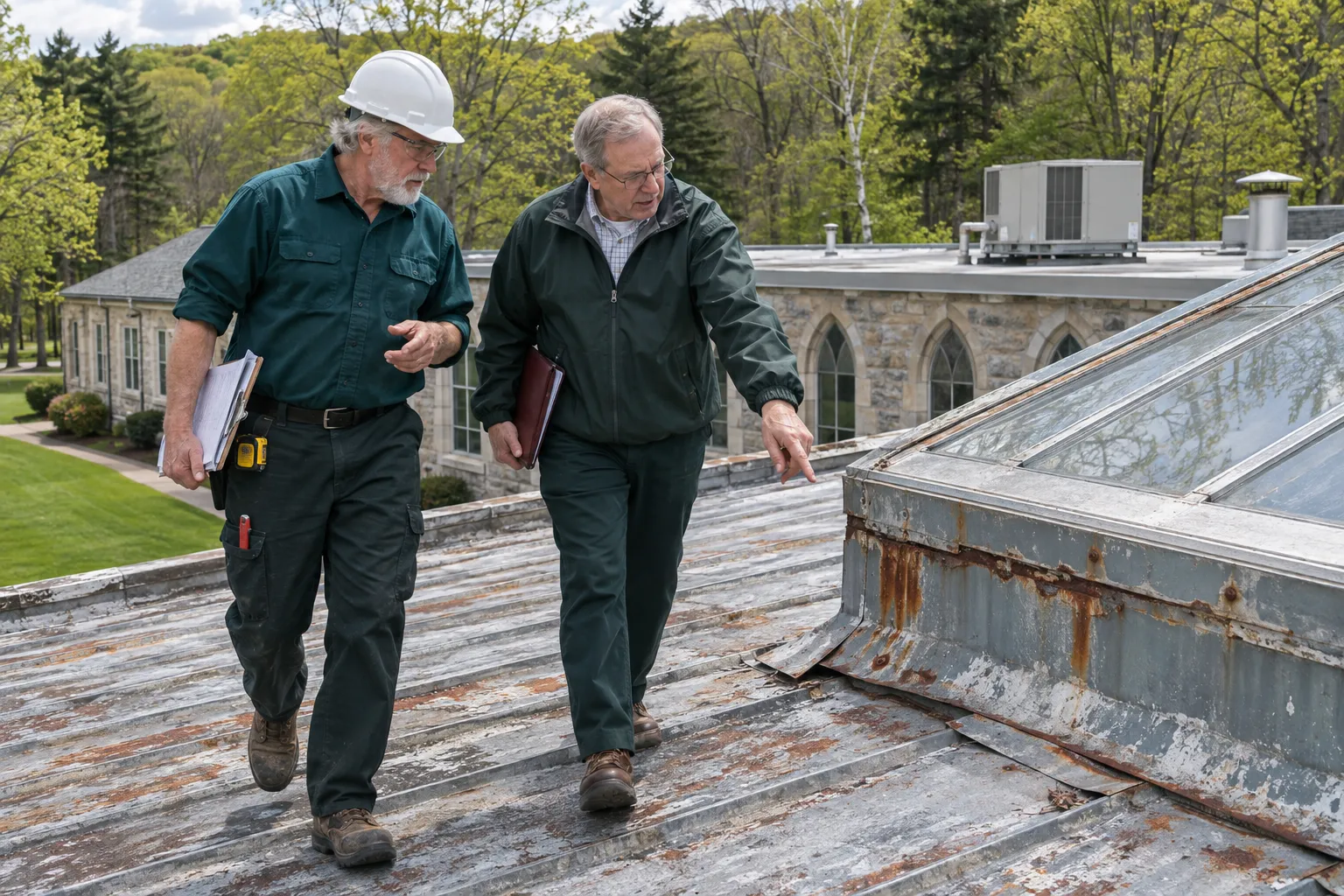
Every fastener row, lap, curb, and gutter is checked, and panel gauge is noted where rust is heaviest. Soft spots and wet insulation are marked on a roof sketch you keep.
Rusted-through sheets are replaced with matching profiles, stripped screws are upsized, and bent trim is refastened so nothing moves under the new coating.
Washing removes chalk and grime, wire wheels take scale off the worst rust, and a rust-inhibiting primer goes on every spot that shows red or bare steel.
Side laps, end laps, and ridge caps get seam tape or polyester fabric set in base coat, with extra passes at the low edge where water runs off.
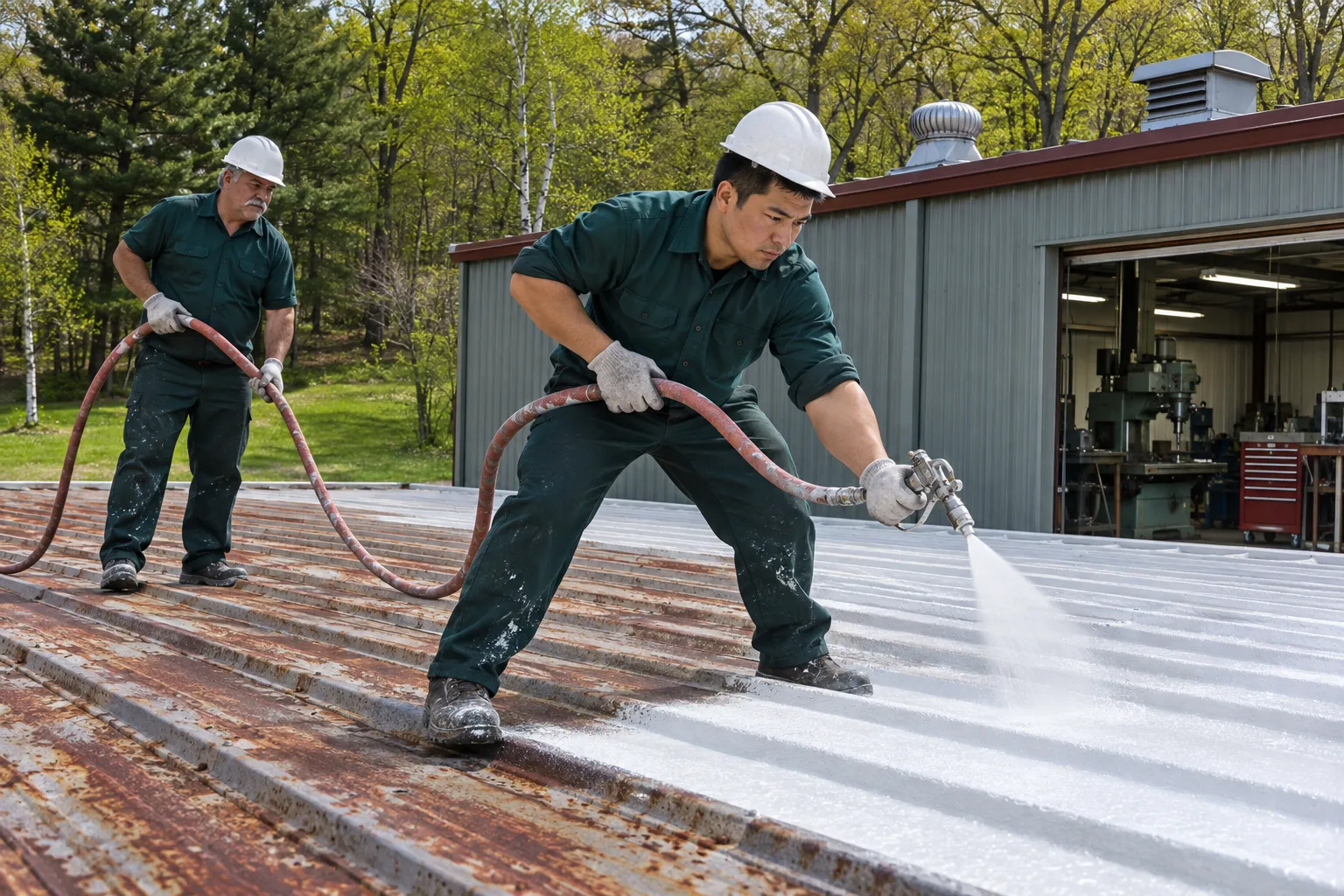
Two or more passes build the coating to the maker thickness, each one checked with a wet-film gauge and run in a different direction for even cover.
Metal roofs often pair with one of these when part of the building drains slowly or needs insulation.
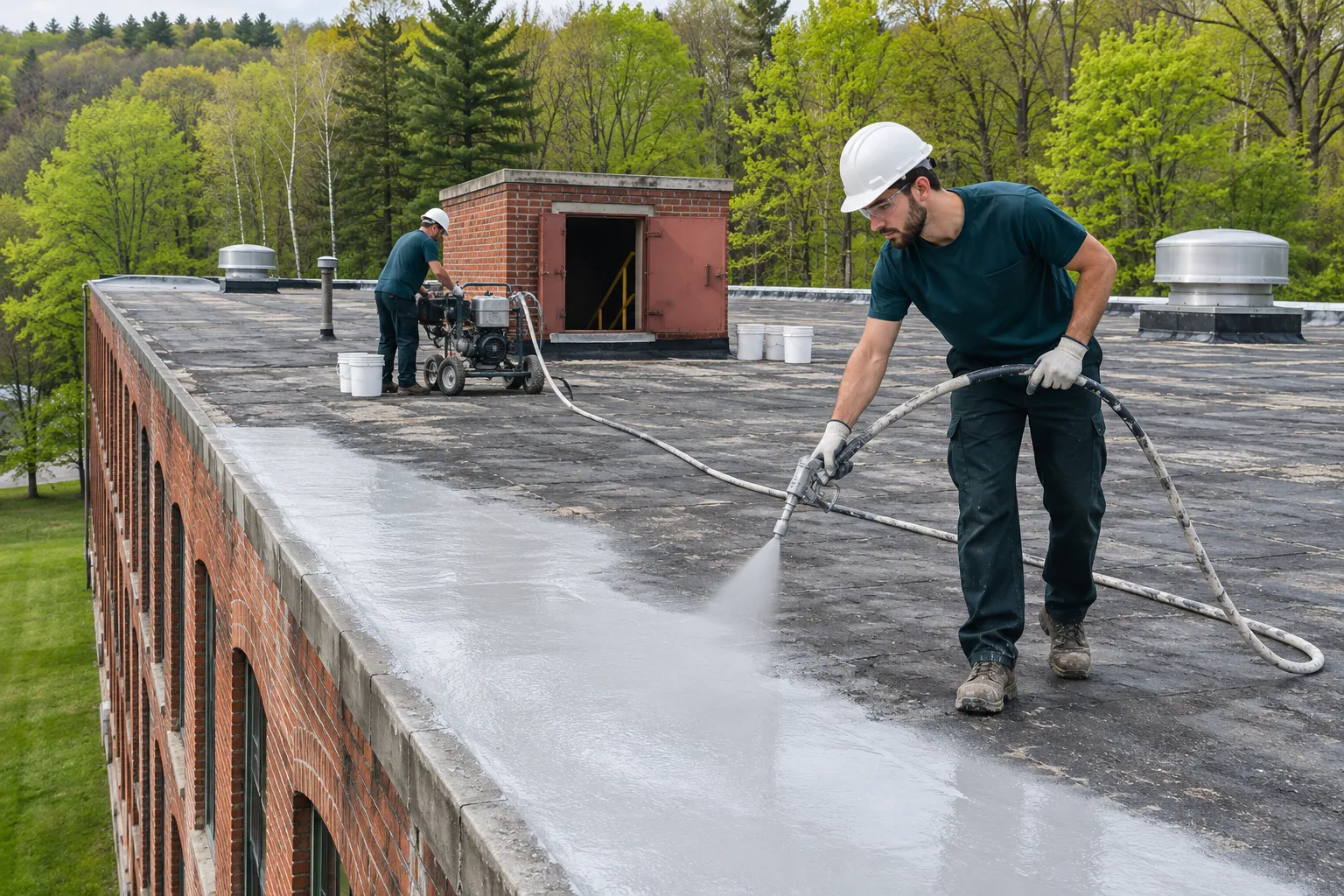
Picked for low-slope steel and box gutters where snowmelt sits for a day or two after a storm.
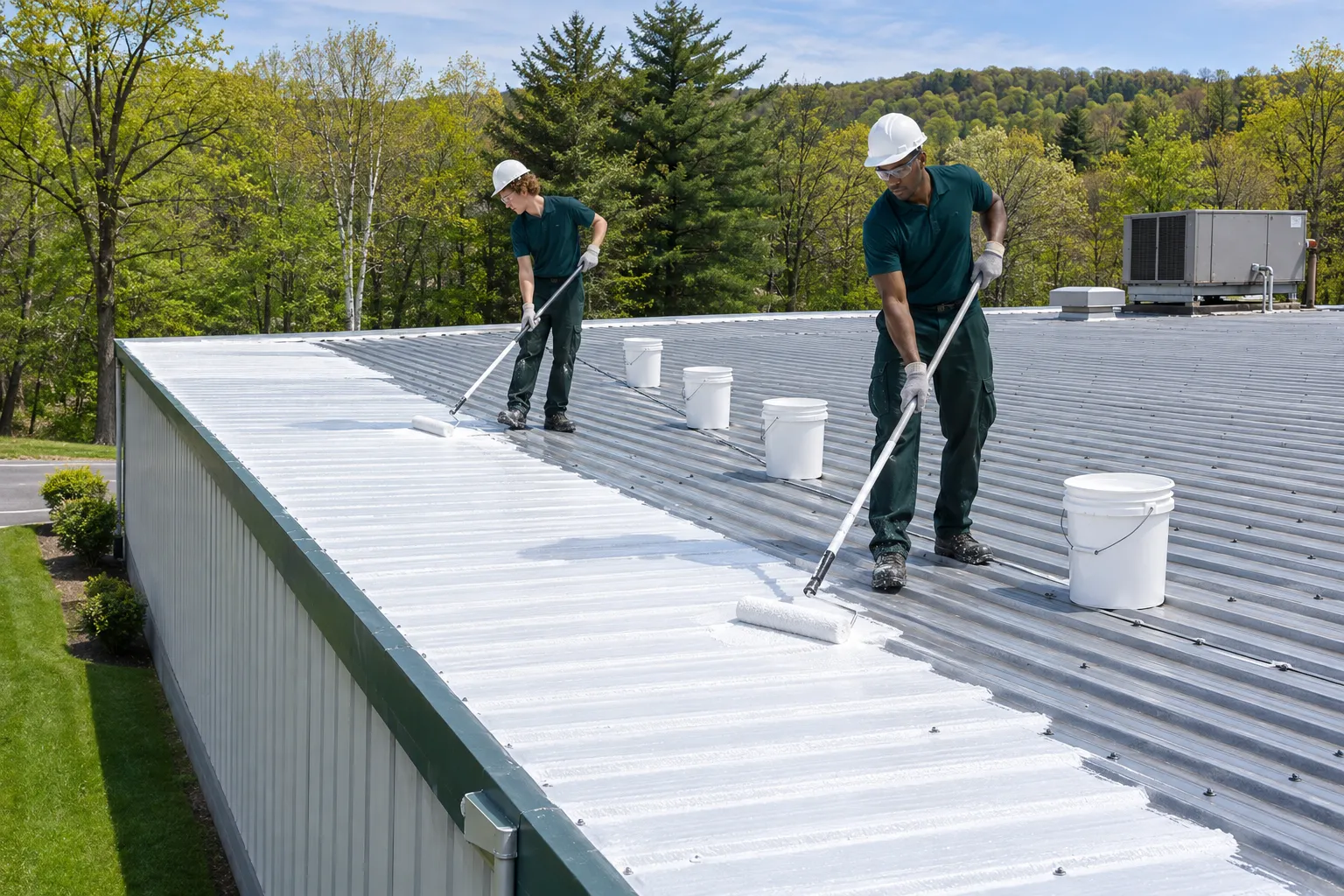
A bright, water-based topcoat for pitched panels that drain within minutes of the rain stopping.
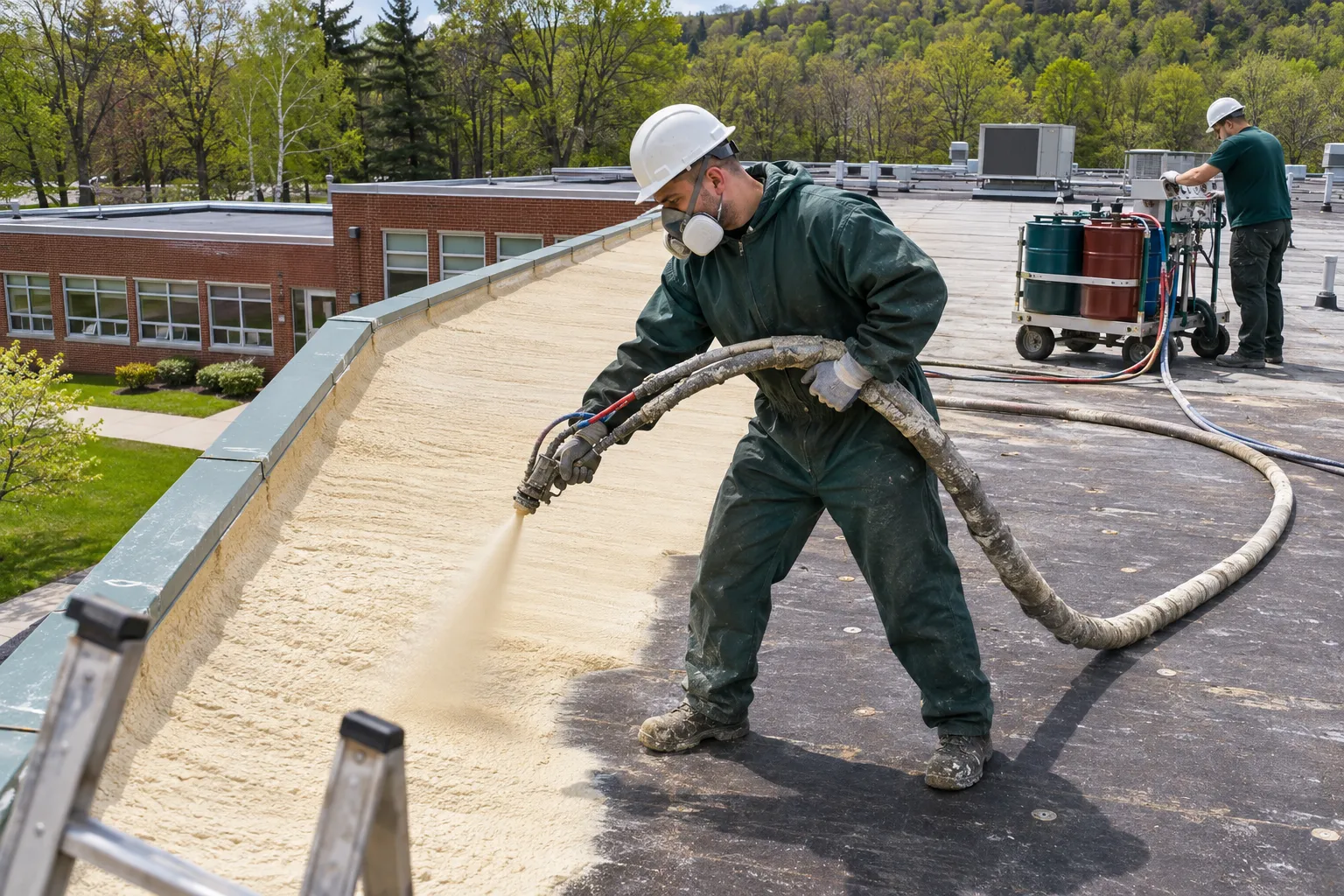
Foam fills deep ribs on near-flat metal roofs and adds insulation before its own protective coat.
Answers to the questions that come up on almost every metal roof walk.
Loose scale comes off first with washing and wire brushing, and the cleaned steel gets a rust-inhibiting primer matched to how heavy the rust is. Fastener rows, gutters, and end laps get the most attention, because a coating laid over flaking rust lets go early.
Yes, and these roofs are some of the best candidates. Backed-out screws get tightened or replaced with larger ones, each head is sealed, laps are taped, and the exhaust fans and vents typical of a machine shop are flashed before the full coat goes on.
Restoration keeps the old steel and brings it back to one solid surface. On a mill roof that means replacing rusted-out sheets, removing failed tar patches, sealing every penetration, priming, and then coating the whole roof so decades of mixed repairs sit under one system.
Prep labor moves the price most: heavy rust, open laps, and many stripped screws add hours before coating starts. Roof size, coating type, target thickness, and access by stair, hatch, or lift come next, and a big simple roof costs less per foot than a small busy one.
Large areas of rust-through, damaged purlins, or soaked insulation push a roof past coating. A few holes can be cut out and patched, but when panels fail across most of the roof, replacement is the honest answer, and we check panel gauge and screw hold before saying either.
Slope and drainage pick the system first: silicone where water lingers, acrylic where panels shed water fast. Heavy exhaust, oil mist, or chemical fallout on an industrial roof can change that choice, so we look at what lands on the steel before naming a product.
Late spring through early fall is the usual window, when the steel and air stay above the coating minimum and rain holds off long enough to cure. Short October days and morning dew trim working hours, so passes are planned around the forecast.
Send the roof size for a ballpark, or call to set up a walk of the panels, laps, and fastener rows.