Ribs
Deep Ribbed Panels
Tall ribs on older metal roofs leave valleys that hold debris and water. Foam fills them level and covers every lap and screw in one pass.

As a Waterbury spray foam roofing contractor, we spray polyurethane foam over metal and flat roofs, then protect it with a coating, on dry days with overspray controlled.
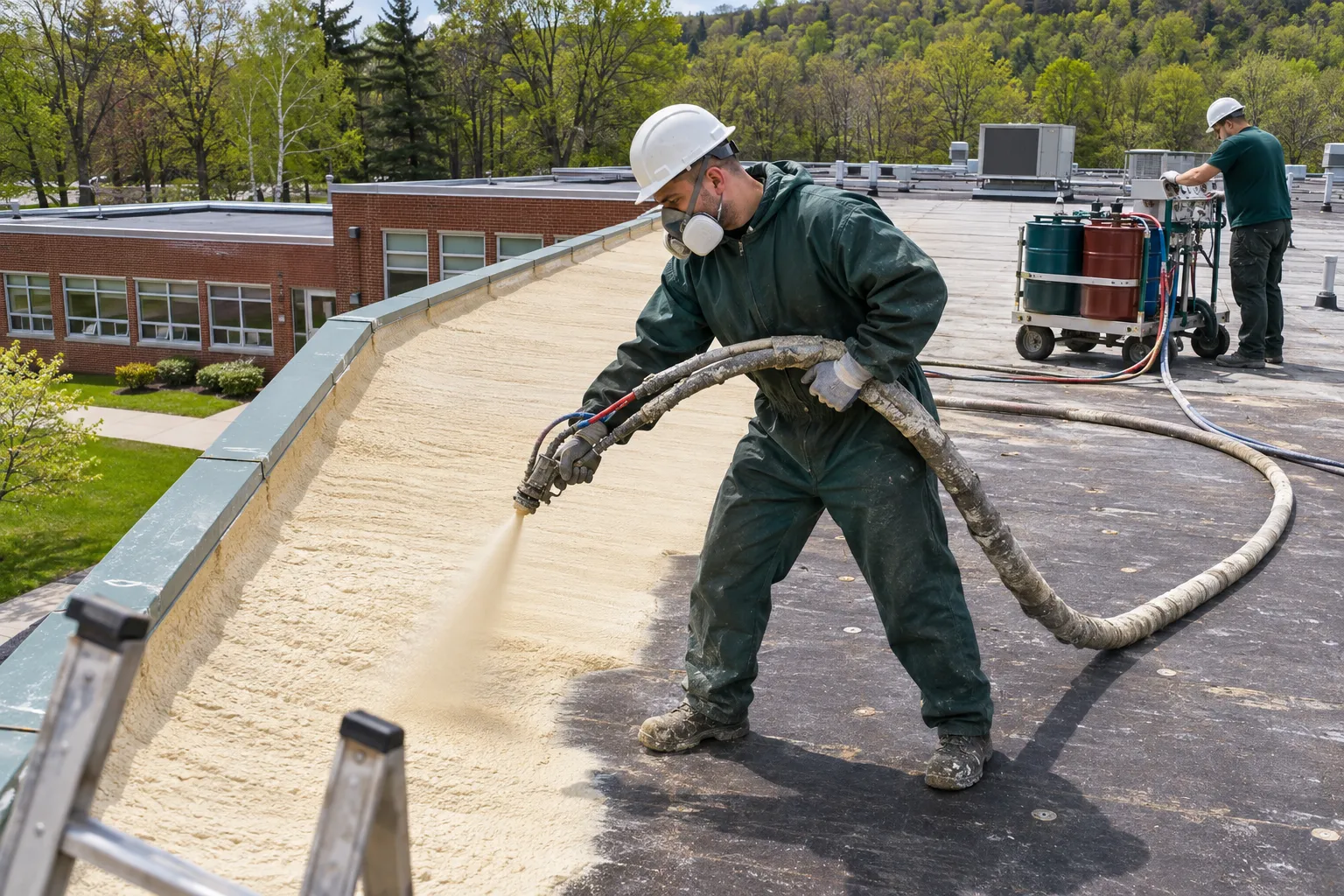
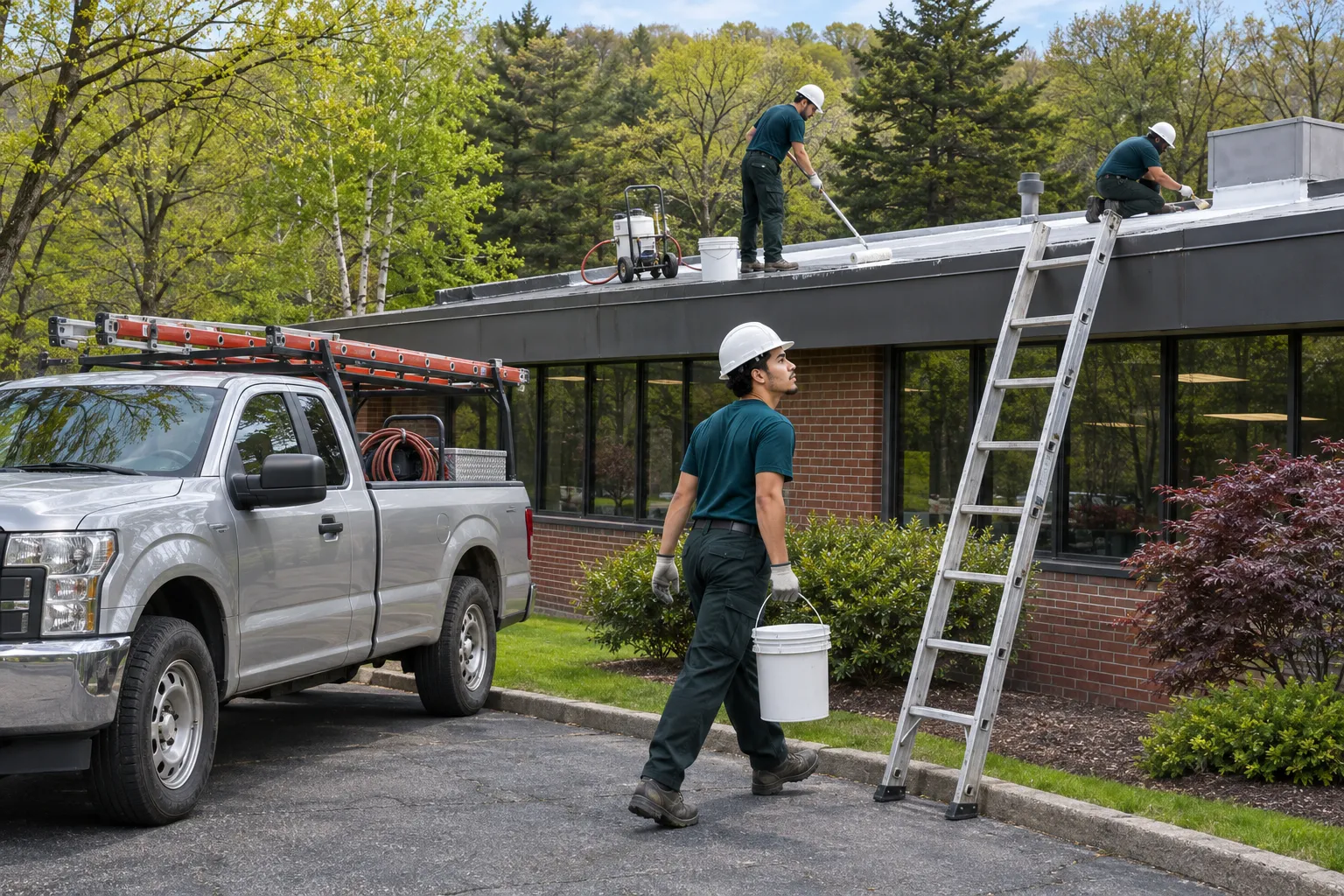
Waterbury spray foam roofing works best over a dry, solid deck. These rows show when foam is the right call and when repairs or a plain coating come first.
| Roof Condition | Spray Foam | Coating Only | Repair First |
|---|---|---|---|
| Flat or near-flat metal with deep ribs | Spray Foam | Coating Only | Repair First |
| Ponding on a flat roof with low drains | Spray Foam | Coating Only | Repair First |
| Sloped panels draining well, light rust | Spray Foam | Coating Only | Repair First |
| Insulation under the deck reads wet | Spray Foam | Coating Only | Repair First |
| Many pipes, curbs, and odd penetrations | Spray Foam | Coating Only | Repair First |
| Cars or neighbors parked tight to the walls | Spray Foam | Coating Only | Repair First |
Foam bonds to clean, dry surfaces only, so moisture readings decide whether foam is on the table at all.
Foam solves a specific set of roof problems. These are the conditions where it earns its cost.
Tall ribs on older metal roofs leave valleys that hold debris and water. Foam fills them level and covers every lap and screw in one pass.
Sprayed thicker in low areas, foam lifts the surface so water runs toward drains and scuppers instead of sitting in the middle of the roof.
Pipes, curbs, and conduit supports are hard to flash one by one. Foam wraps around each base and seals it without separate metal pieces.
Uninsulated metal over a shop or storage area lets heat escape all winter. Every inch of foam adds insulation above the deck.
Foam is a roof system with a coating on top. Here is how it compares with coating the metal directly.
| System | Adds Insulation | Fixes Ponding | Main Upkeep |
|---|---|---|---|
| Spray foam with silicone top | Adds InsulationYes | Fixes PondingYes, when built to slope | Main UpkeepRecoat the top layer |
| Spray foam with acrylic top | Adds InsulationYes | Fixes PondingOnly where foam sheds water | Main UpkeepRecoat in warm weather |
| Silicone over metal | Adds InsulationNo | Fixes PondingTolerates it | Main UpkeepWash and silicone recoat |
| Acrylic over metal | Adds InsulationNo | Fixes PondingNo | Main UpkeepRecoat as it weathers |
Foam plus a coating gives a roof three things at once: a single surface, insulation, and better drainage.
Foam sprays on as a liquid and rises into one layer, so laps, ribs, and screw rows disappear under it.
Each inch of foam adds insulating value above the deck, which a heated shop under bare steel feels in winter.
Thicker foam in low areas changes where water flows, which cuts down on puddles left after rain.
In most cases the existing metal or membrane stays under the foam, so tear-off and disposal stay off the bill.
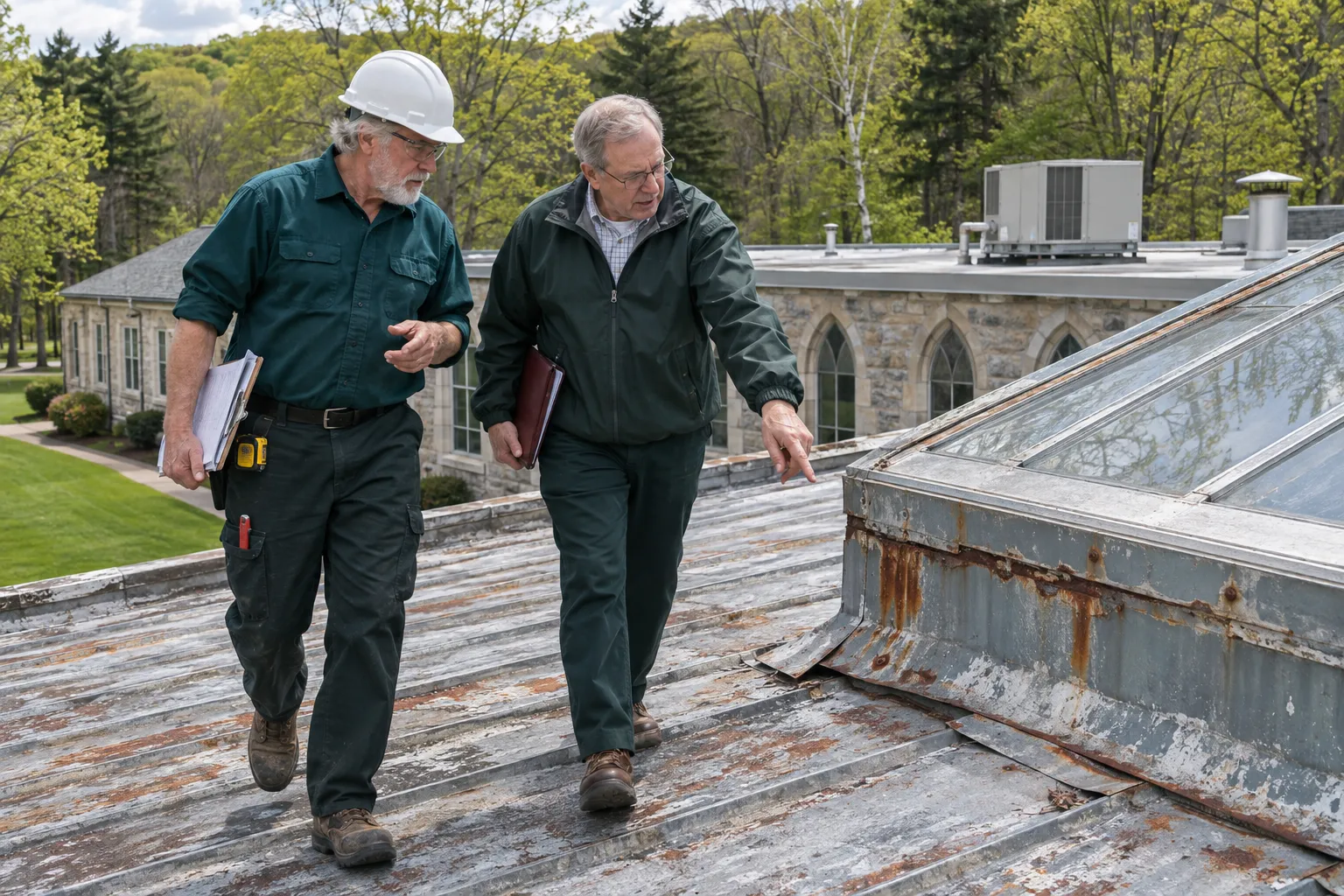
Call us before the job is scheduled. We plan parking, vent covers, and wind limits for the building so foam lands only where it belongs.
Foam is unforgiving of a wet or dirty surface, so the prep steps carry most of the work.
Moisture meters and core samples check the insulation and deck, and drains, curbs, and parapets are measured for how high the foam can rise.
Wet insulation is cut out and replaced, loose panels refastened, and rusted spots primed so the foam bonds to firm, dry material.
Air intakes are shut and covered, cars are moved, and windows and walls near the roof edge are masked against drifting mist.
Foam is sprayed in lifts to the planned thickness, thicker in low spots, with wind and humidity checked through the day.
Silicone or acrylic goes over the foam as soon as it is ready, since sunlight breaks foam down when it is left bare.
A plain coating can be the better buy when insulation and slope are already fine.
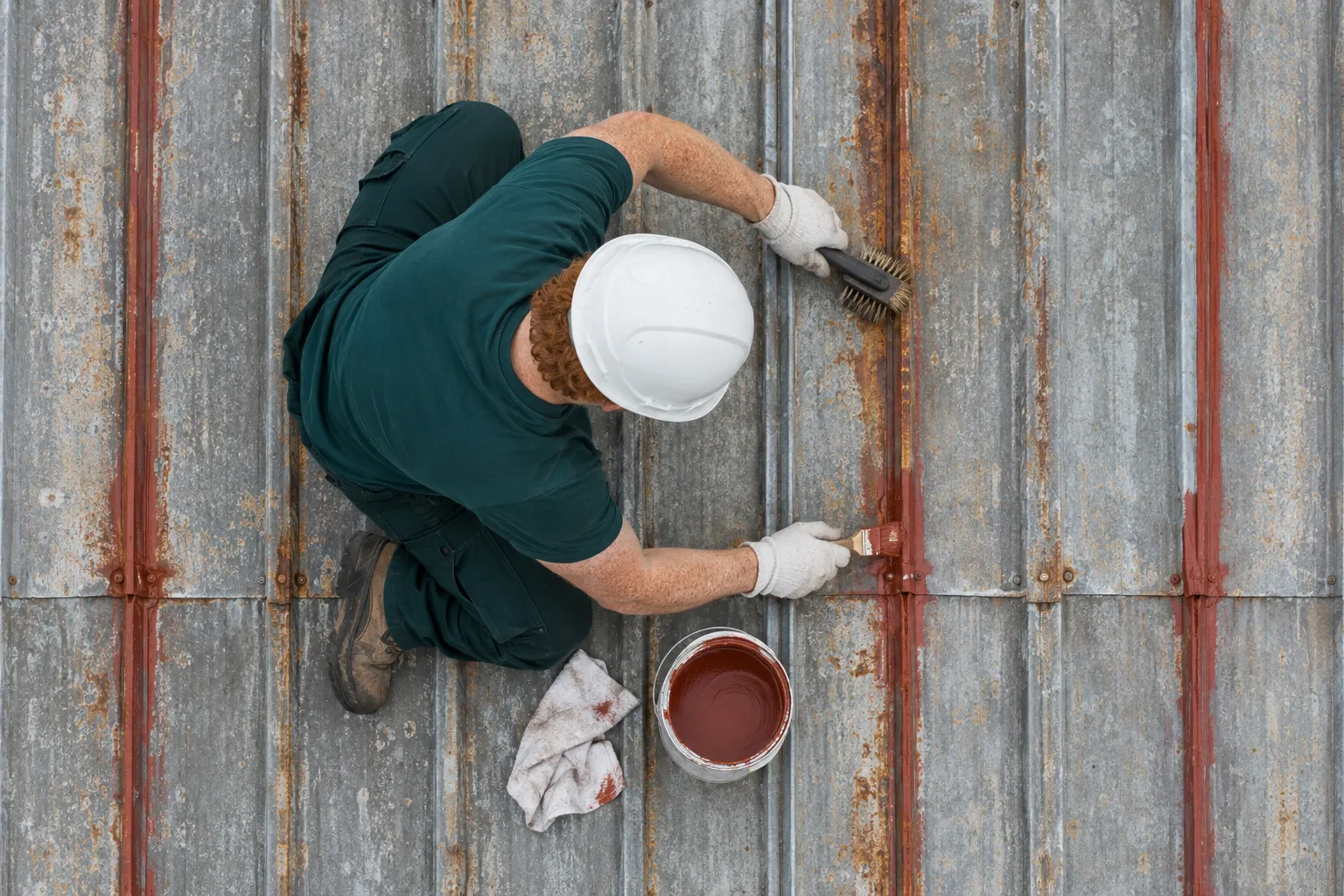
For metal roofs that drain on their own and only need rust, lap, and screw work under a topcoat.
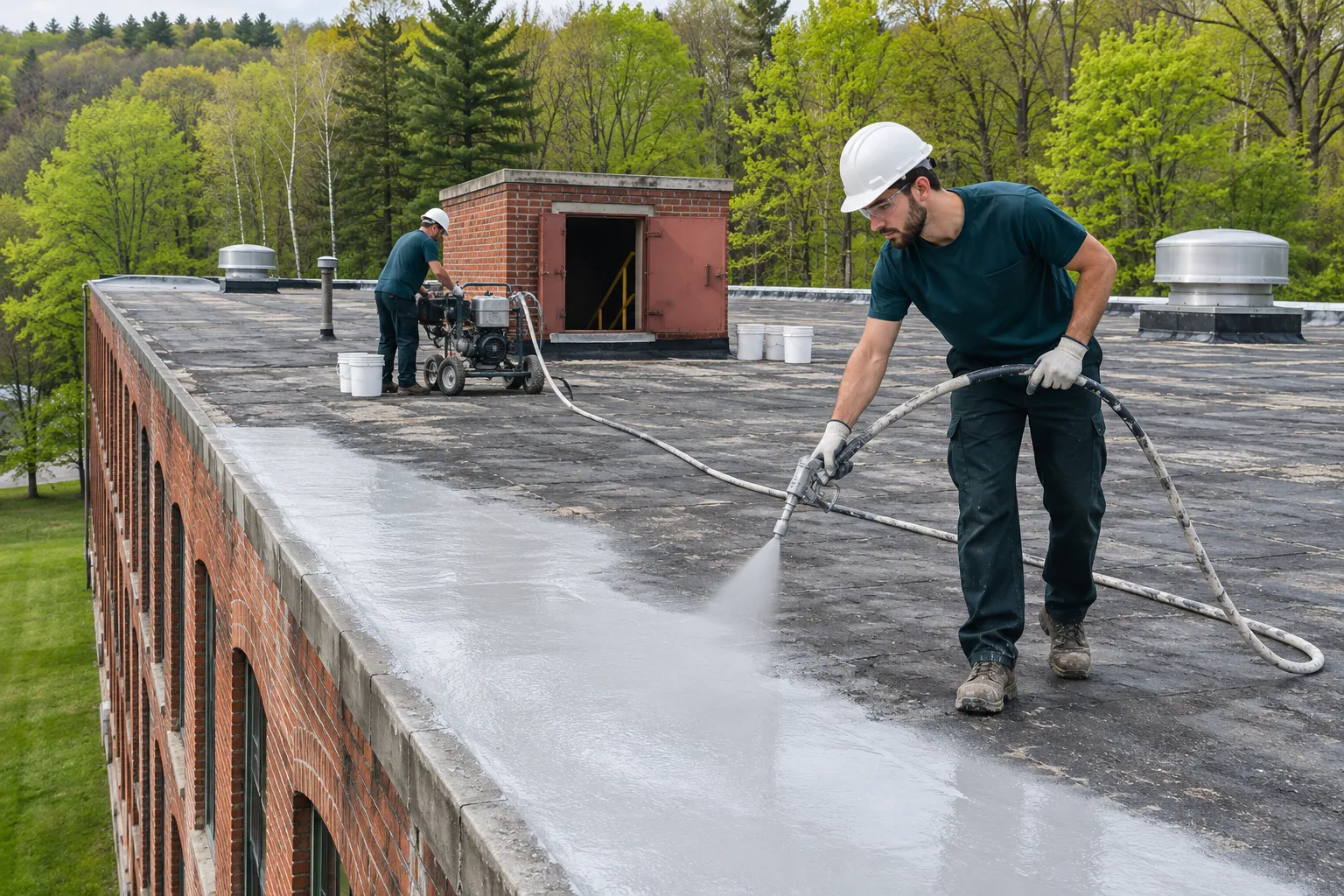
The topcoat we use most on foam, chosen for how well it handles water left on the roof.
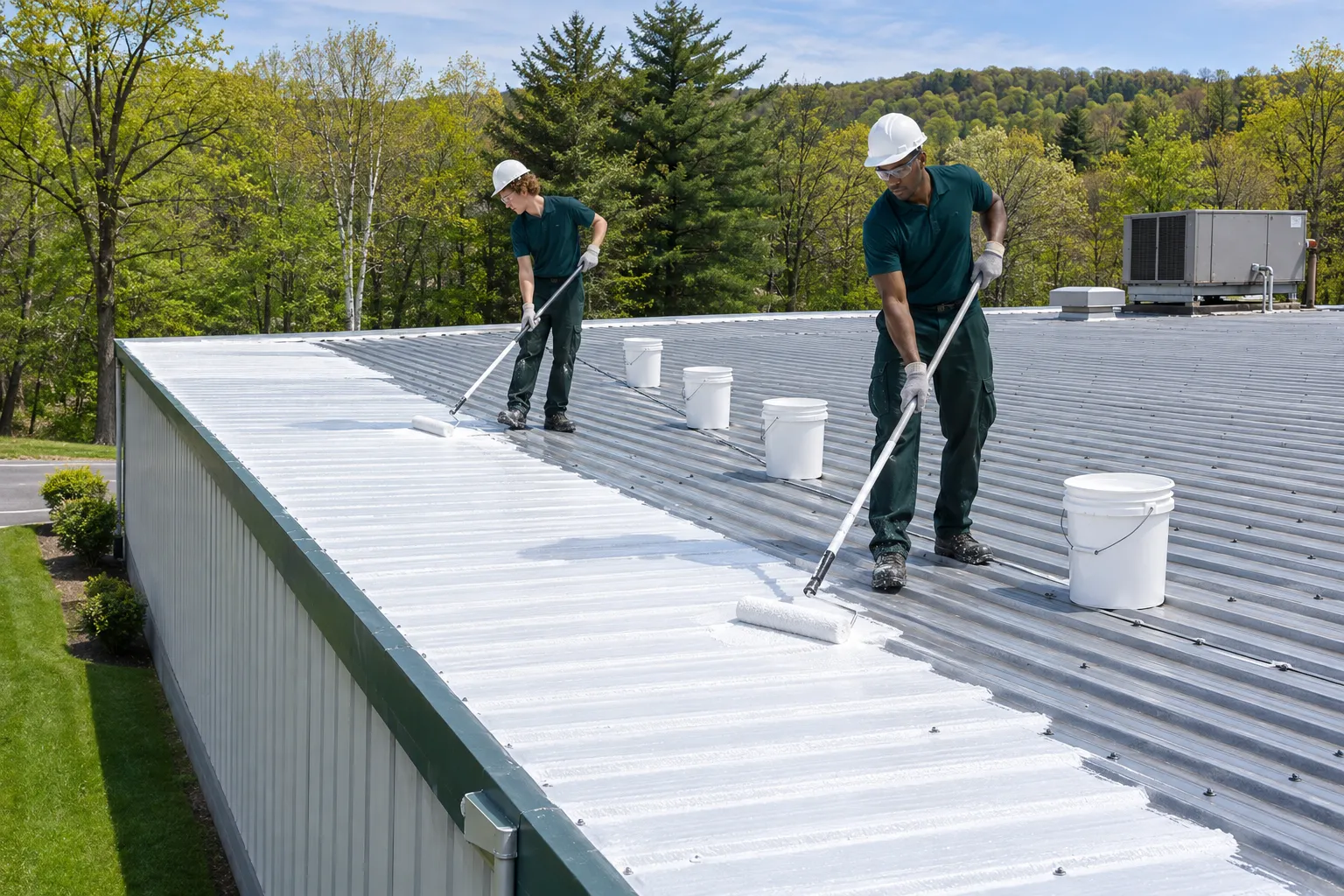
A lighter-cost option for pitched metal that sheds water and needs no added insulation.
What owners ask before putting foam on a commercial roof.
In most cases, yes. Foam goes on as a liquid, expands, and seals laps, seams, and screws under one layer. Loose panels and fasteners are fixed first, and leaks from bad framing or soaked insulation get repaired before any foam is sprayed.
A foam roof lasts as long as its top coating stays intact, because the coating shields the foam from sunlight and weather. Freeze-thaw swings, hail, and foot traffic wear on that surface, so yearly checks and recoating on schedule keep the foam below protected.
Recoating starts with a wash, then any blisters, punctures, or bird pecks are cut out and refilled with foam. A fresh protective coating then covers the whole surface. Done before bare foam shows, recoating keeps the original foam in service.
On the plus side: one continuous surface, added insulation, and slope that can be built toward drains. On the other side: foam needs dry weather and careful overspray control around parked cars and neighbors, and its coating must be kept up. Plants with many penetrations gain the most.
Often it can, once the membrane is cleaned, primed, and tested dry. Blistered or wet areas are cut out first. Foam over a dry old membrane avoids tear-off and adds insulation in the same job.
Start with a ballpark for the roof size, then book a walk with moisture readings to see if foam fits.