Mixed Ages
Roofs Built Years Apart
An original building and a later addition rarely share panel profiles or screw types, so laps between them need their own detail.
Middlebury metal roof coating for office parks, campuses, and lots with several buildings, with a condition sheet and coating order written for every roof.
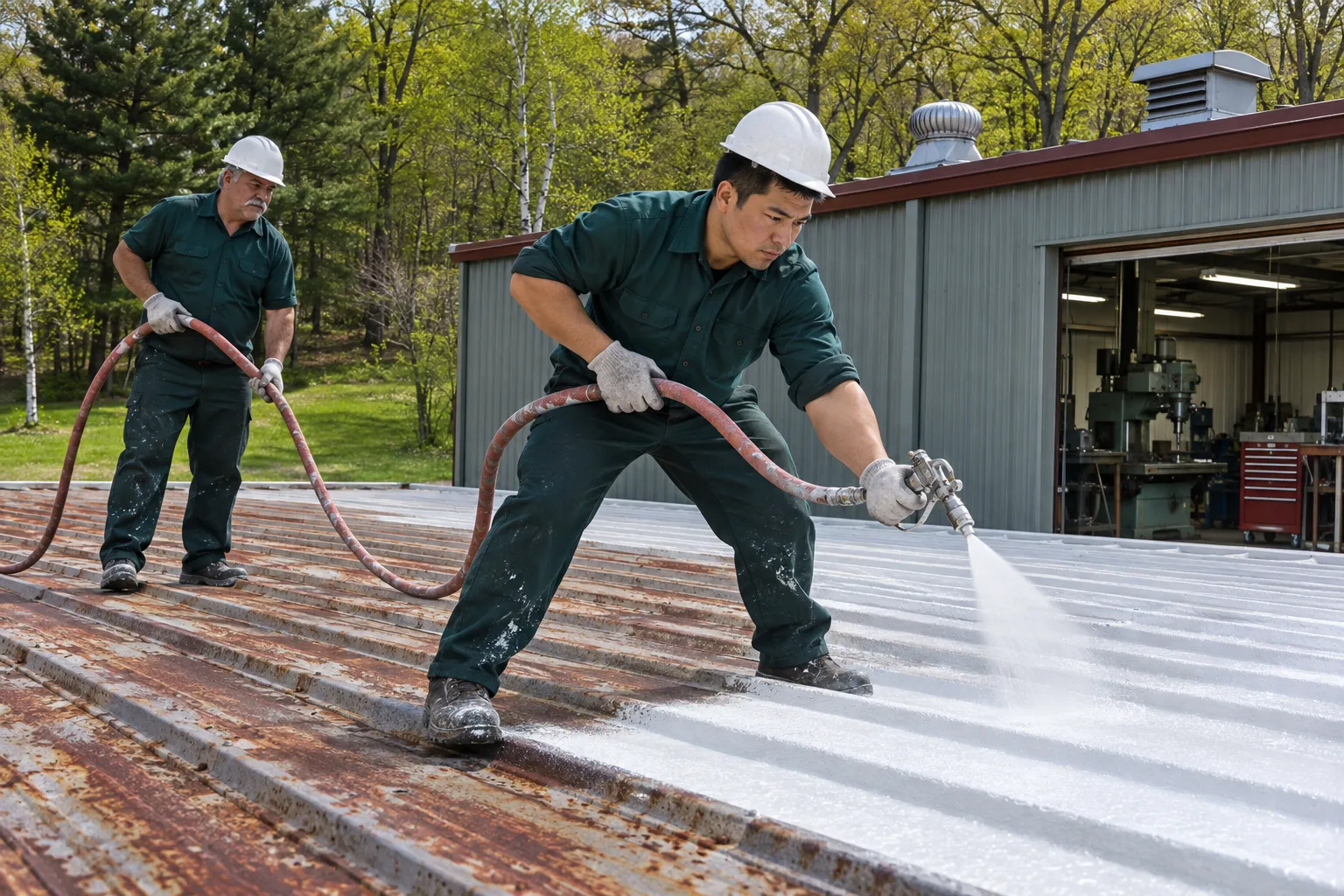
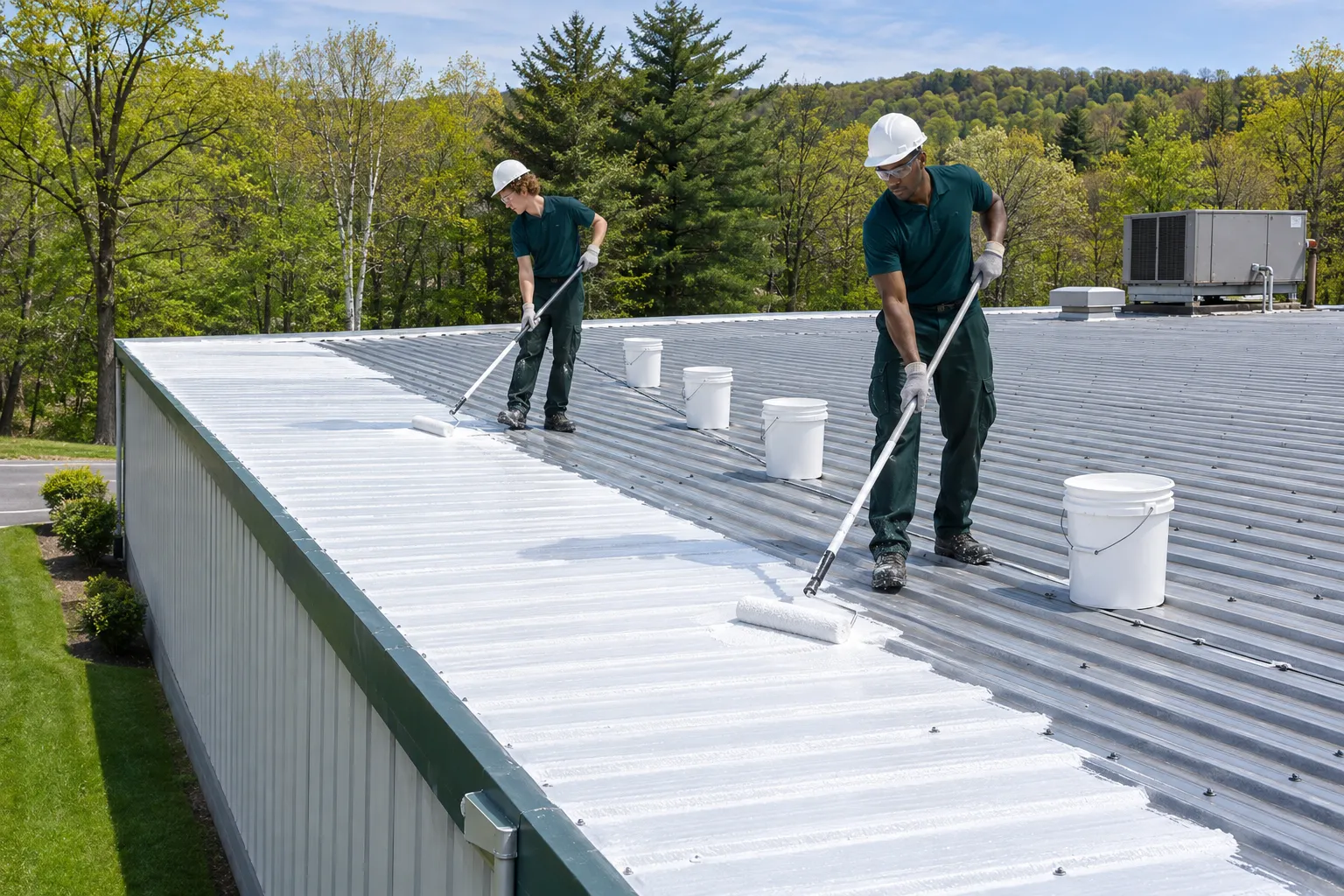
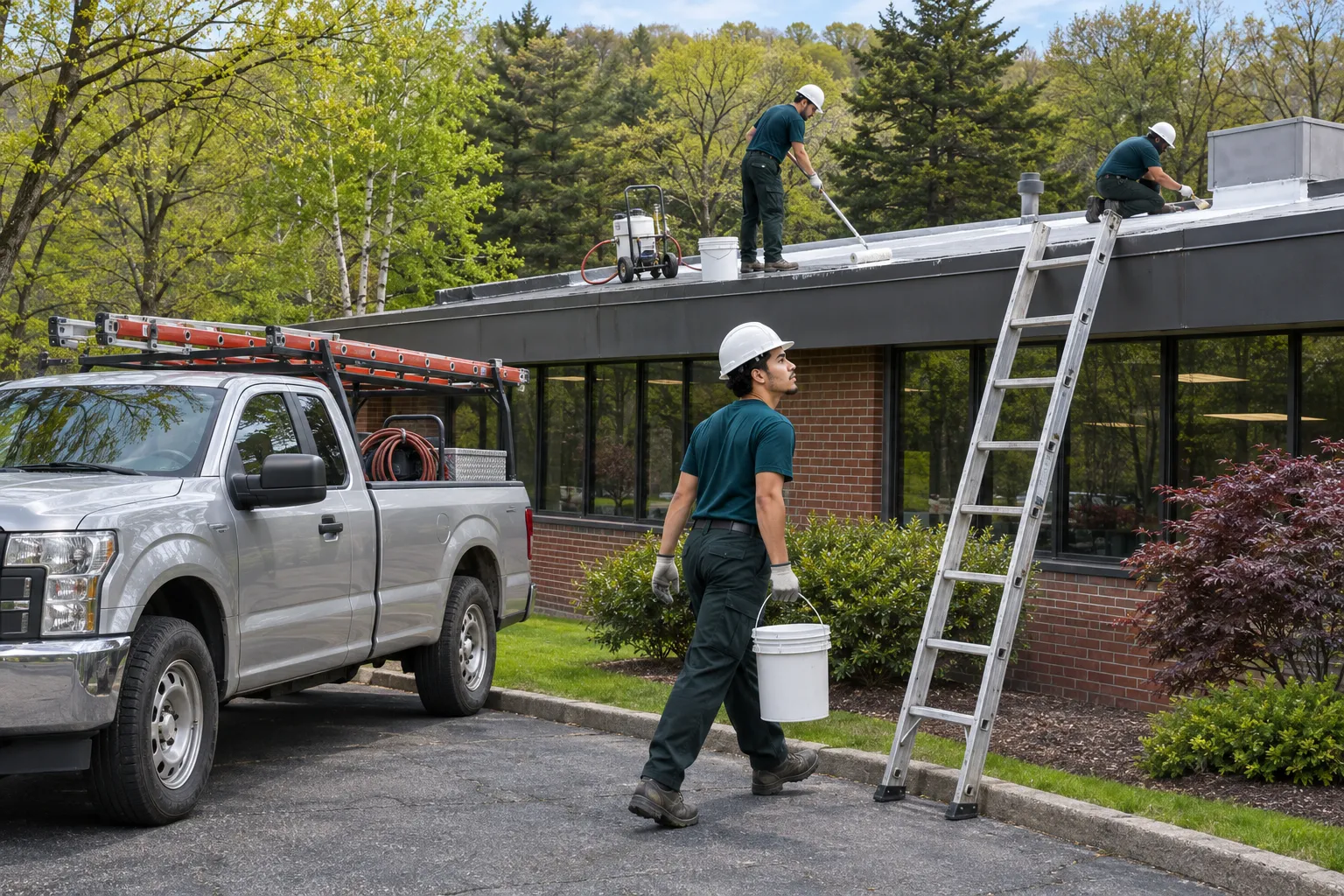
Middlebury metal roof coating on a property with three or four buildings starts with treating each roof as its own job. One may need only a wash and topcoat, while the next needs new panels at the gutter line.
We write a short condition sheet for each roof and rank them, so you can coat the worst one now and plan the rest by budget year.
Roofs on one property age at different rates. These differences shape the order we suggest.
An original building and a later addition rarely share panel profiles or screw types, so laps between them need their own detail.
Breezeways and canopies tie buildings together with flashing that pulls apart as each structure moves on its own.
Panels shaded by a taller neighbor stay damp, grow moss along the laps, and rust faster than the sunny side.
Rooftop units swapped over the years leave curbs with layers of caulk and tape that need cleaning before any coating.
A roof that drains onto a lower one sends its water into a gutter sized for half the load, and the overflow soaks the wall below.
Coating several roofs on a plan gives owners control over timing and cost.
Each building gets notes, photos, and a coating order, so nothing is forgotten when budgets open up.
The roof that leaks worst gets coated now, and the others follow in later seasons without starting the paperwork over.
Coating two roofs on one visit uses the same lift and wash setup, which trims mobilization on each building.
Work moves roof to roof, so only one tenant has activity overhead at a time.
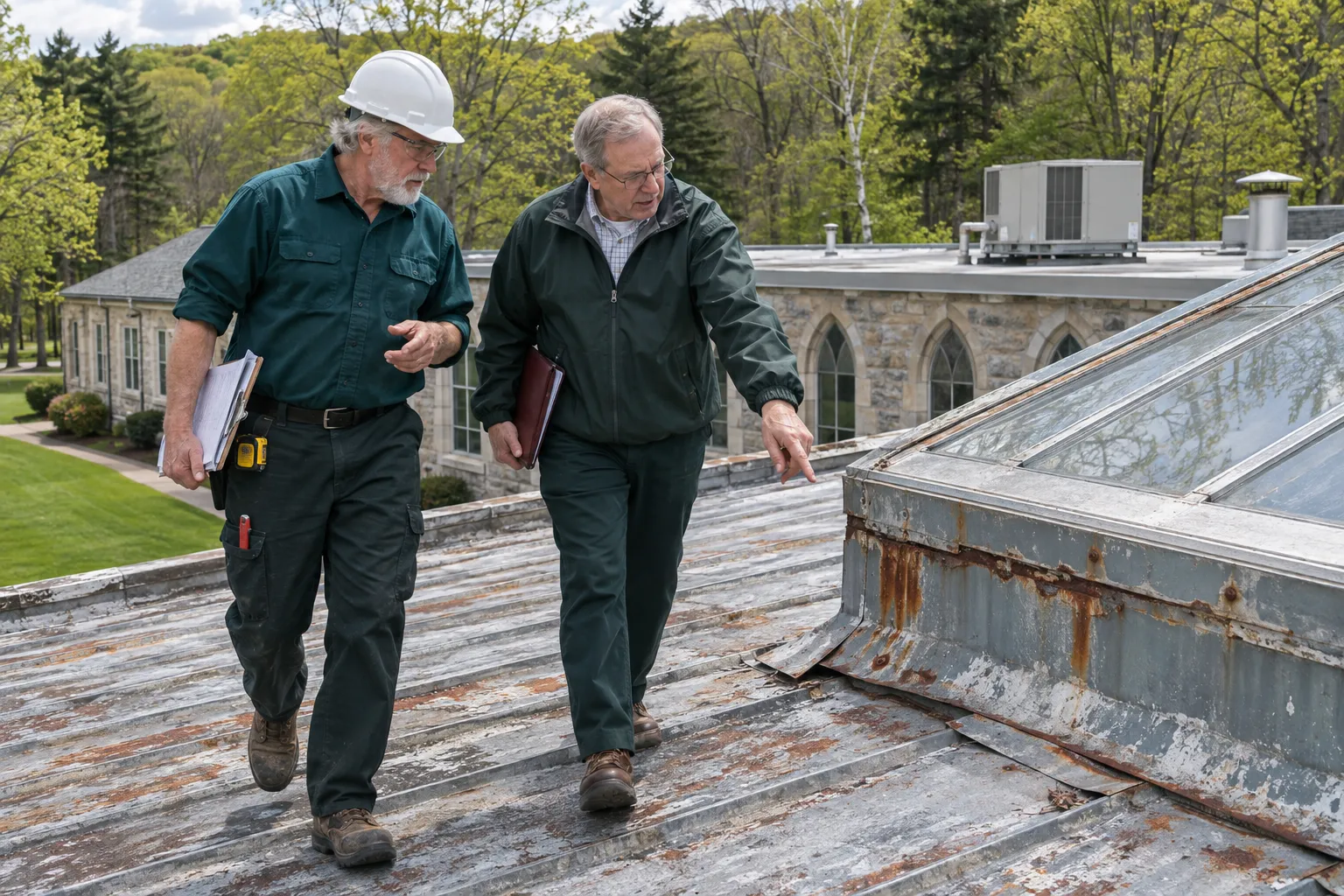
Different roofs on one lot can take different systems, chosen roof by roof.
| System | Best On | Watch For |
|---|---|---|
| Metal Roof Coating | Best OnSteel office and shop buildings | Watch ForMismatched panels at additions |
| Silicone Roof Coating | Best OnLow connector roofs and canopies | Watch ForDirt and pollen in shaded spots |
| Acrylic Roof Coating | Best OnSunny pitched roofs that drain well | Watch ForDamp north slopes that dry slowly |
| Spray Foam Roofing | Best OnFlat roofs with many unit curbs | Watch ForOverspray near parked tenant cars |
| Shingle Roof Coating | Best OnShingled office buildings on the lot | Watch ForMoss growth and loose tabs |
Call us with the building that is dripping. We start there and look over the rest of the property on the same trip.
Four steps, run roof by roof in the order you pick.
Every roof on the property gets walked, photographed, and rated, with notes on panels, screws, gutters, curbs, and connectors.
You get the condition sheets for each roof side by side with our suggested order, and you choose what goes this season.
On each roof in turn, failed panels, flashing, and gutters are fixed, moss and dirt are washed off, and rust is primed.
Laps, screws, and connector joints get reinforced, then the topcoat goes on in the color you chose for the whole property.
We bring the same coating work to each town here. Call us or send us a message for a property outside this list.
Plant and warehouse roofs with old patch layers.
Sloped metal roofs over occupied shops and offices.
Shop roofs where gutters and eaves rust first.
Factory roofs crowded with exhaust fans and vents.
Exposed-fastener shops and storage buildings.
Barns and equipment sheds with long steel panels.
Coating planned around spring rain and fall frost.
Church halls and schools coated around their schedules.
Village-center roofs with tight staging space.
Large industrial roofs coated one section at a time.
Rural roofs where materials and water are planned ahead.
Older coated roofs ready for a fresh topcoat.
What owners of multi-building properties ask us most.
Each roof gets its own number, based on size and prep, inside the ballpark of about $2.50 to $4.00 per square foot. Coating two or more roofs on one visit usually trims the setup cost on each.
Most of the multi-building properties we see have tenants. We share a schedule with them, work over one building at a time, and keep entrances and parking clear below the active roof.
Planning several roofs together is the core of how we handle a property like this. You get one walk, one set of condition sheets, and an order you can follow over a few seasons.
Only when they share the same roof type and drainage. A flat connector roof might take silicone while the sloped main building takes acrylic, and both can come in matching colors.
A short sheet per building: roof size, panel type, screw condition, rust at laps and gutters, curb and flashing notes, moisture readings, and photos. It closes with the repairs needed before coating and a rough place in the order, so a facilities team can plan years ahead.
Covered walkways and canopies get coated with the roofs they join. Their flashing to each building is reset first, because that joint moves more than any other spot on the property.
List the buildings on your property and which ones leak. We will walk them all and hand you a coating order.