Chalking
Chalky Top Layer
Sun breaks down the surface of acrylic coatings into a white powder that rubs off on your hand and must be washed away before recoating.
Warren metal roof coating often means recoating: washing an older coated roof, testing what is already there, repairing worn spots, and adding a fresh compatible layer.
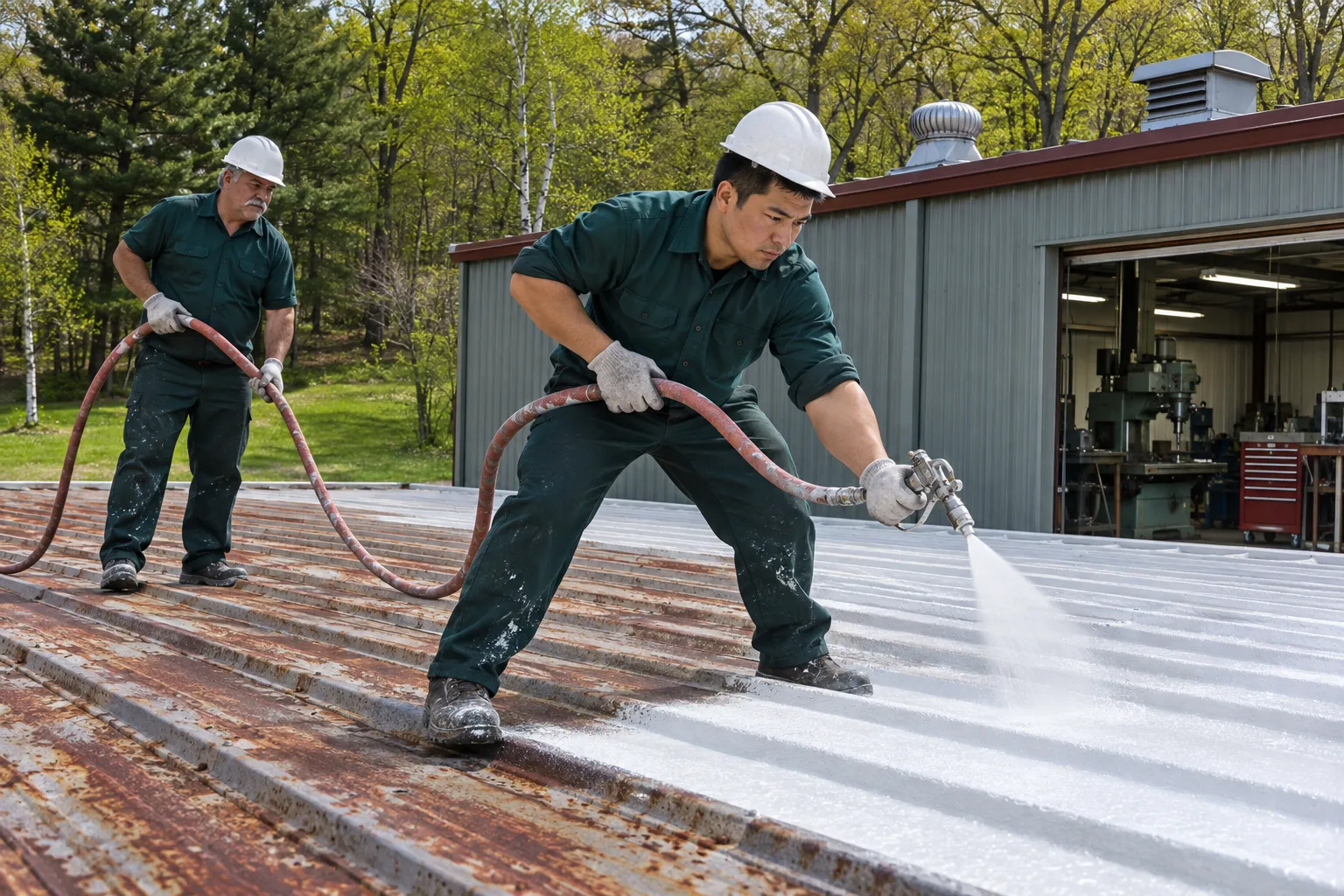
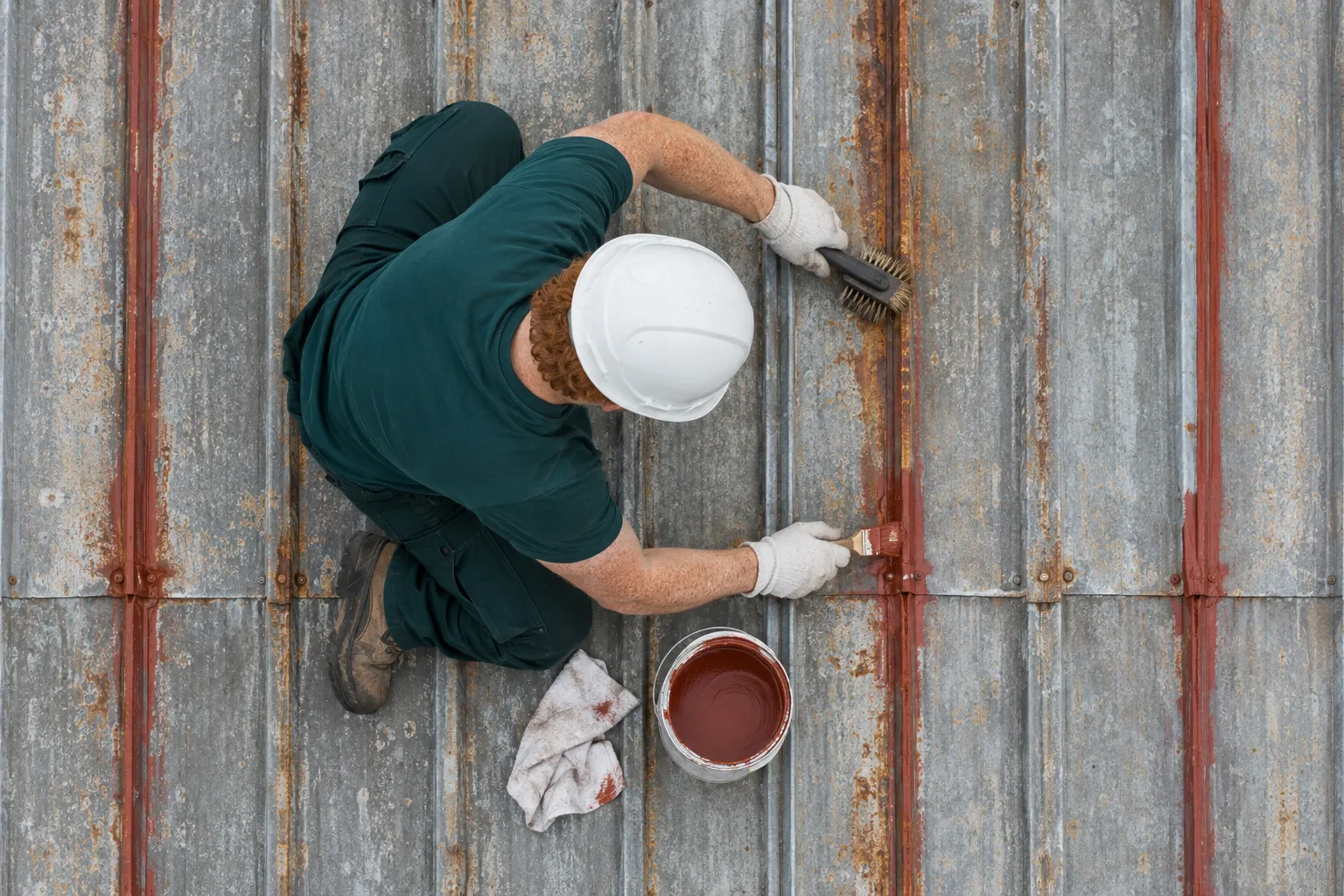
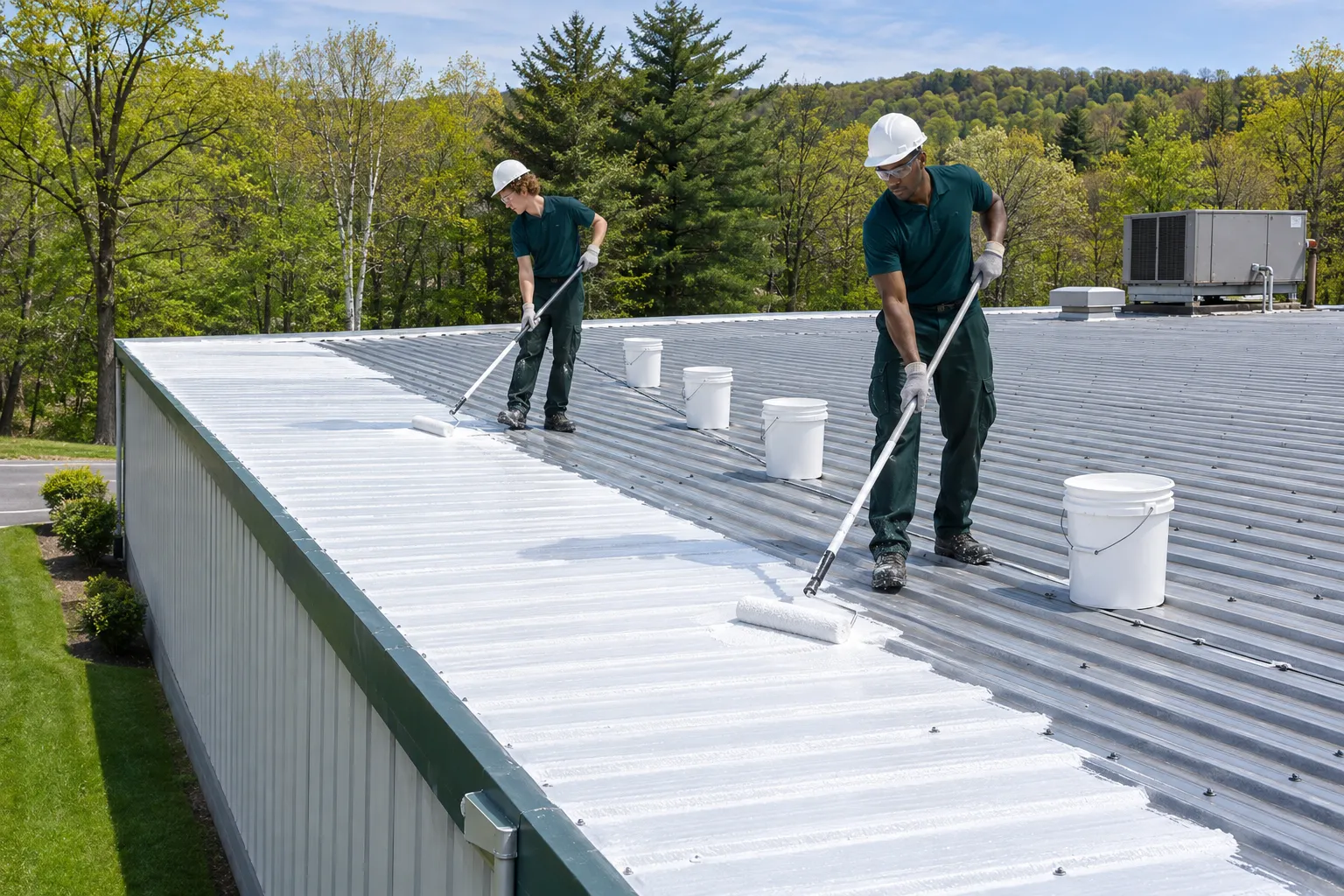
Warren metal roof coating on a roof that was coated before starts with finding out what is up there. Silicone, acrylic, and urethane coatings each accept only certain products on top, so we test a small patch first.
A tape pull shows whether the old layer still grips the steel, and a test patch of new coating shows whether the two products bond.
A coating wears unevenly over the years. These spots tell us how much prep a recoat needs.
Sun breaks down the surface of acrylic coatings into a white powder that rubs off on your hand and must be washed away before recoating.
Panel ribs and high spots lose coating first, until bare steel shows along the tops and starts to rust.
Areas where the first coat went on over dirt or damp metal peel up in sheets and need scraping back to a firm edge.
Screw heads poke through thin coating, and their washers dry out under it, so each one gets checked and resealed.
Shallow low areas hold rainwater and leave rings of grime that show where the coating has worn thinnest.
A well-timed recoat keeps a coated roof working for much less than starting over.
Firm existing coating stays in place as a base, so the recoat adds a layer instead of stripping the roof bare.
Fresh coating brings worn ribs and high spots back to the mil thickness the system needs.
Spots where steel showed through get primed and coated before rust spreads under the old layer.
Adhesion and patch results go in your file, so the next recoat starts with known products.
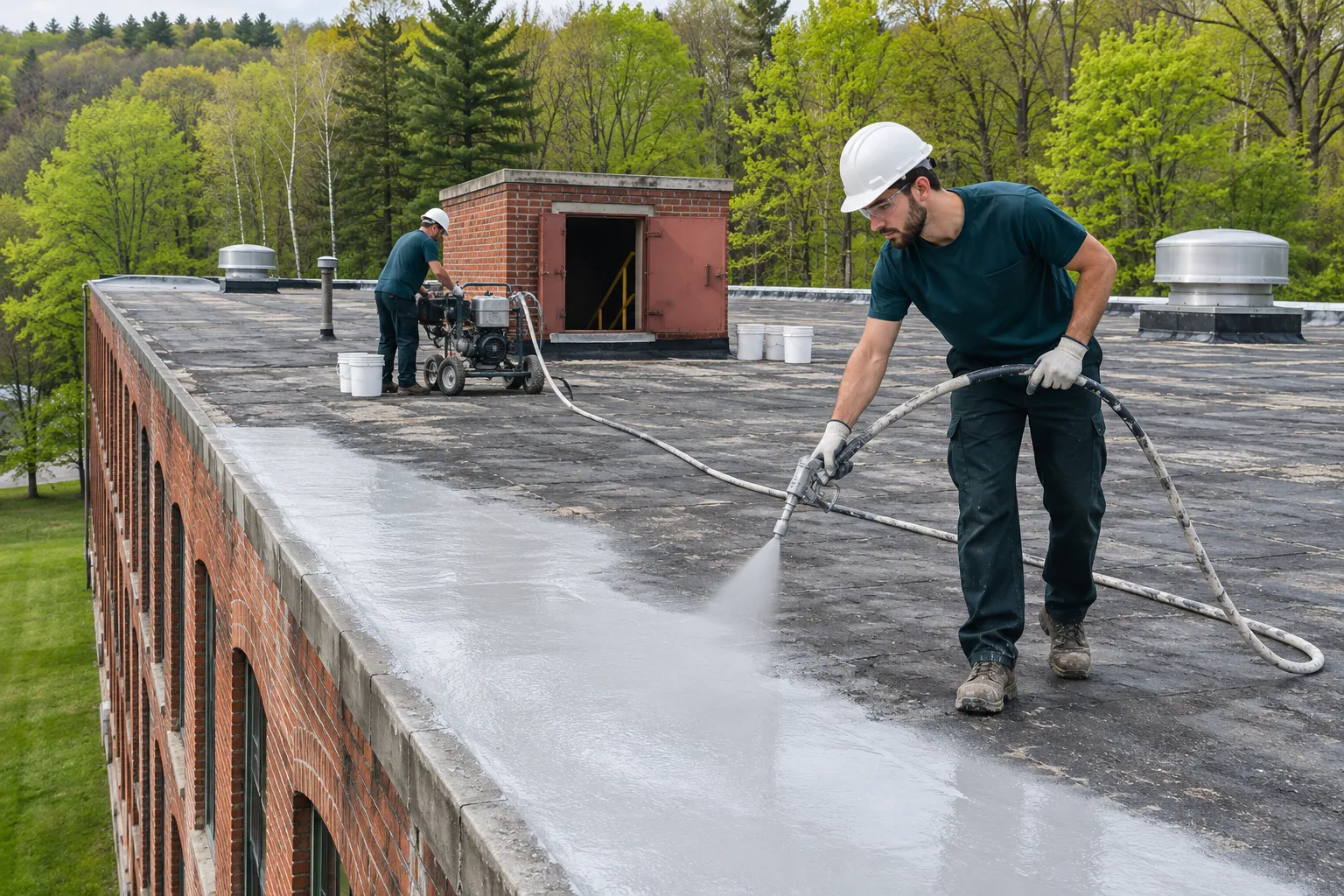
For a recoat, the old coating decides most of what can go on top.
| System | Best On | Watch For |
|---|---|---|
| Metal Roof Coating | Best OnSteel roofs with worn or chalky coatings | Watch ForBare ribs that need primer first |
| Silicone Roof Coating | Best OnRoofs already coated with silicone | Watch ForOnly silicone bonds well on top |
| Acrylic Roof Coating | Best OnOlder acrylic coatings that still grip | Watch ForChalk that must be washed off |
| Spray Foam Roofing | Best OnFoam roofs due for a new topcoat | Watch ForExposed or damaged foam patches |
| Shingle Roof Coating | Best OnShingled roofs coated once before | Watch ForGranules shedding through the old coat |
Call us and send a photo of the worst area. Peeling usually means a bonding problem we can find and fix before recoating.
Five steps, starting with tests on the coating already in place.
We walk the roof, note thin, peeling, and bare areas, and identify the old coating type from records or a field test.
Tape pulls check how the old layer grips, and small test patches of new coating cure for a few days before we commit.
Peeling sections are scraped to a firm edge, chalk is washed off, and bare steel at ribs and screws gets primer.
Screw heads, laps, and curb flashing get new sealant and fabric where the original coat wore through.
A compatible topcoat goes on in passes, built up to the thickness the coating maker lists for a recoat.
Warren sits in our coating area alongside every town shown here. If your building is farther out, call us or send us a message and we will let you know.
Plant and warehouse roofs with old patch layers.
Sloped metal roofs over occupied shops and offices.
Shop roofs where gutters and eaves rust first.
Factory roofs crowded with exhaust fans and vents.
Exposed-fastener shops and storage buildings.
Barns and equipment sheds with long steel panels.
Coating planned around spring rain and fall frost.
Church halls and schools coated around their schedules.
Village-center roofs with tight staging space.
Large industrial roofs coated one section at a time.
Several roofs on one property, each with its own plan.
Rural roofs where materials and water are planned ahead.
What owners of previously coated roofs ask before a recoat.
Recoating older coated roofs is a big part of the work we do here. Shops, offices, and farm buildings coated years ago get tested, repaired where worn, and topped with a product that bonds to what is there.
Reach us by phone or message with the address and anything you know about the first coating. We set a roof visit, run the tests, and write up the recoat plan.
Testing comes first on every recoat we take. Tape pulls and cured test patches tell us which product will hold, so the new layer stays put.
Old invoices or a product label settle it fastest. Without records, a small field test and the look and feel of the surface tell silicone from acrylic, and a test patch confirms the match.
Usually, because the base layer stays and prep is lighter. Heavy peeling or lots of bare steel adds scraping and primer, which narrows the gap.
Tell us when the roof was last coated and what it looks like now. We will test it and plan the recoat.