Old Patches
Cracked Roof Cement at Laps
Black roof cement dries, shrinks, and splits along the side laps it was meant to seal. Water gets under the hardened edge and runs along the rib.
We handle Naugatuck metal roof coating on older plant and warehouse buildings, testing old patch layers first so the new coating bonds to every panel.
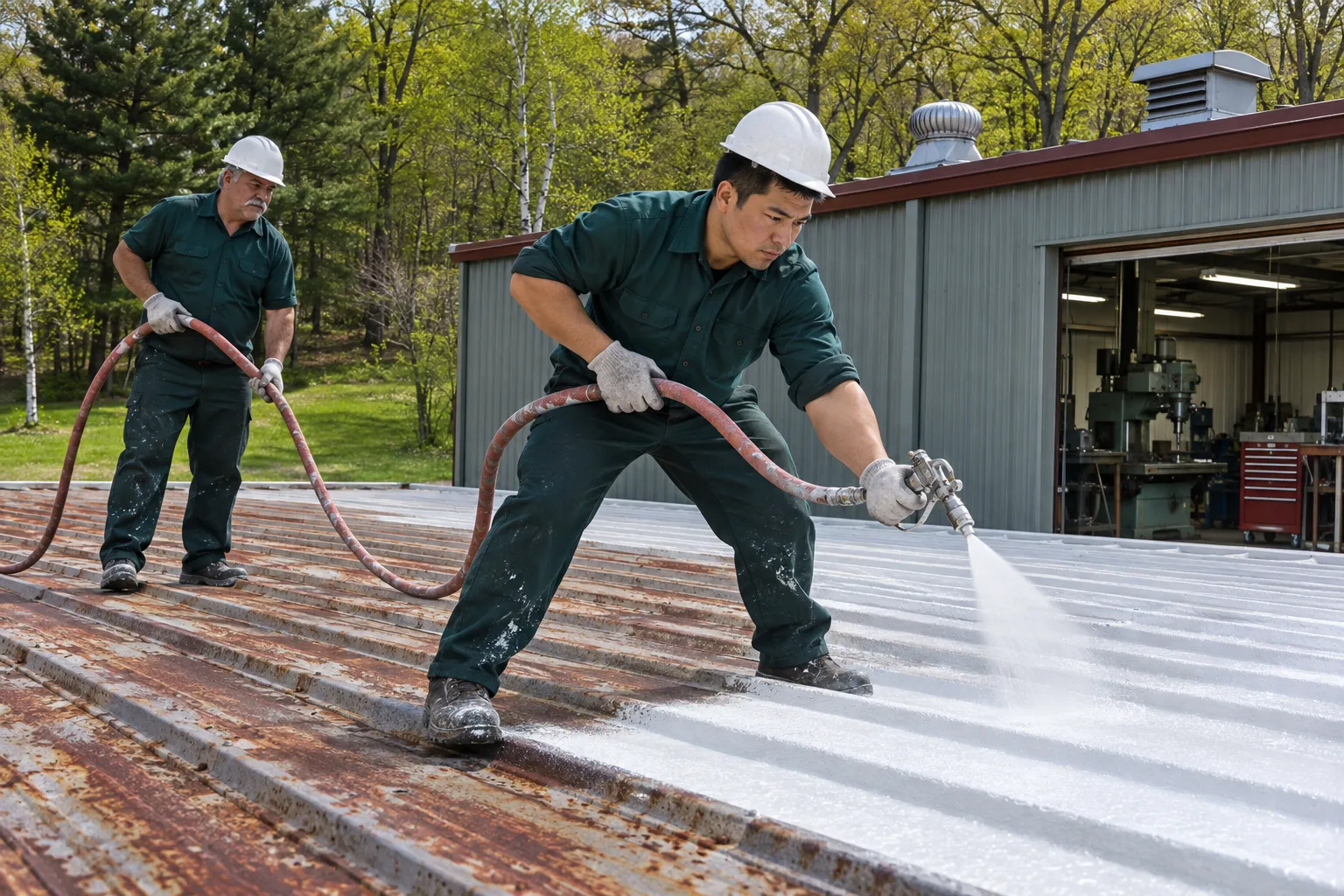

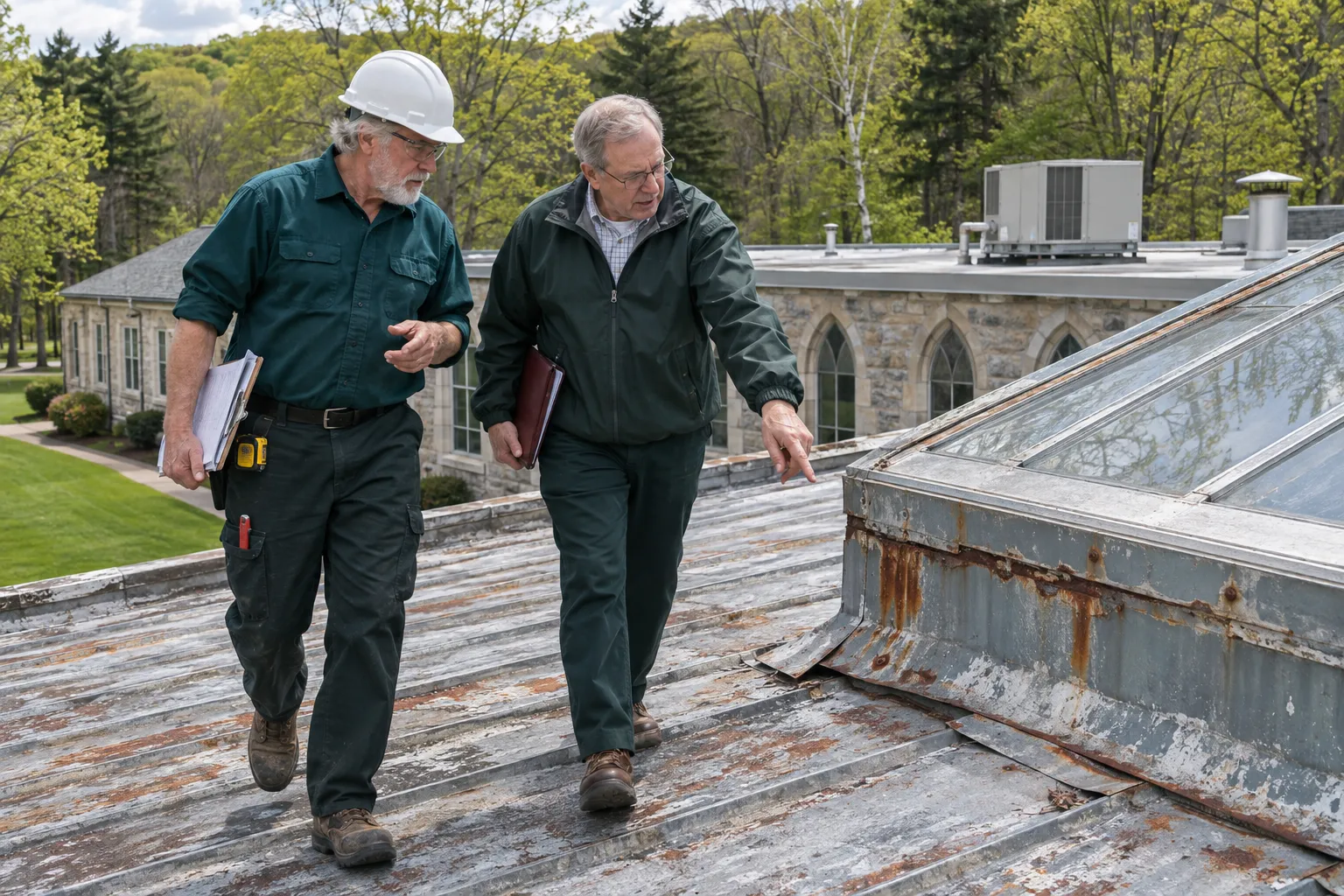
Most Naugatuck metal roof coating jobs we look at sit on plant and warehouse roofs that have been patched many times. Roof cement at the laps, foil tape over screw rows, and caulk around fans all sit on top of the steel, and each one takes a coating differently.
So we test before we coat. A small pull-off patch on each repair type shows whether the new coating grips it or lets go, and the results decide what gets scraped off and what gets primed.
Plant roofs with long repair histories fail in familiar ways. These five come up on almost every older building we walk.
Black roof cement dries, shrinks, and splits along the side laps it was meant to seal. Water gets under the hardened edge and runs along the rib.
Foil-backed tape over screw lines lifts at its corners after a few winters. Once an edge curls, every screw under that strip is open again.
Steel hidden under a patch keeps rusting where nobody sees it. Lifting the patch often shows scale that needs brushing and primer before coating.
Plants change equipment over the years and leave old vent stacks or unit curbs behind, capped with whatever was on hand. Those caps are frequent leak points.
Repeated repairs leave a mix of screw sizes and washers on one roof. Stripped holes get oversized screws with new washers so each one seals.
A coating turns years of separate patches into one surface that is checked and maintained as a whole.
Instead of a dozen patch types aging at different rates, the roof carries one coating system that grips prepared steel and primed repairs.
Reinforcing fabric runs the full length of each side lap, covering the short patched stretches and the untouched sections alike.
Because the roof has one system on it, later spot repairs use the same product and get logged against one set of records.
Coating happens above an operating floor, so production, storage, and loading continue while the roof is worked in sections.
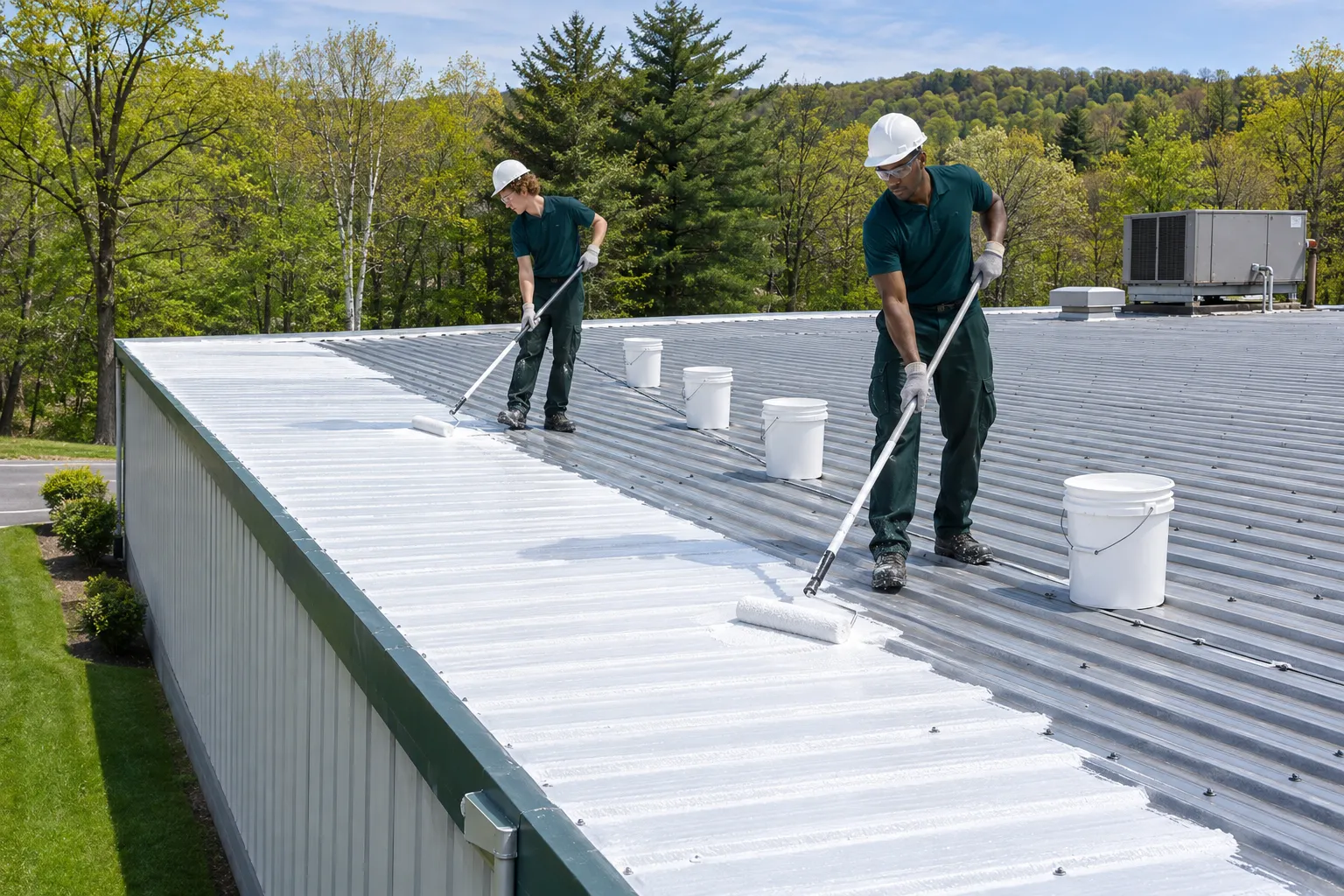
Five systems cover the roofs we see in town. Each row says where it fits and what to check first.
| System | Best On | Watch For |
|---|---|---|
| Metal Roof Coating | Best OnExposed-fastener plant and warehouse roofs with surface rust | Watch ForOld patch types that need adhesion testing |
| Silicone Roof Coating | Best OnLow-slope sections and gutters that hold water after storms | Watch ForLater recoats must stay silicone |
| Acrylic Roof Coating | Best OnPitched metal roofs that drain quickly | Watch ForCure needs warm, dry days |
| Spray Foam Roofing | Best OnFlat plant roofs crowded with curbs and pipes | Watch ForOverspray control near parking and loading |
| Shingle Roof Coating | Best OnOffice wings with asphalt shingles still lying flat | Watch ForGranule loss and soft decking |
Call us with the spot where the drip shows inside the plant. We can tell you what usually fails at that kind of repair and plan a roof walk.
On a patched roof, preparation takes longer than the coating itself. Here is the order we follow.
We map every patch, tape strip, and capped penetration, test screws by hand, and note where rust sits under old repairs before any price is set.
Small adhesion patches go down on each repair type. After they cure, a pull test shows which patches stay and which come off.
Failed cement and curled tape are scraped back to steel, rust gets brushed, and primer goes on bare metal and kept repairs alike.
Fabric in base coat goes over laps, capped stacks, and screw rows, building extra thickness where water used to get in.
Topcoat passes move across the roof in planned sections so loading docks and work areas below stay open.
We coat commercial metal roofs in Naugatuck and the towns below. If your building is farther out, call us or send us a message and we will tell you whether we can reach it.
Sloped metal roofs over occupied shops and offices.
Shop roofs where gutters and eaves rust first.
Factory roofs crowded with exhaust fans and vents.
Exposed-fastener shops and storage buildings.
Barns and equipment sheds with long steel panels.
Coating planned around spring rain and fall frost.
Church halls and schools coated around their schedules.
Village-center roofs with tight staging space.
Large industrial roofs coated one section at a time.
Several roofs on one property, each with its own plan.
Rural roofs where materials and water are planned ahead.
Older coated roofs ready for a fresh topcoat.
Answers to what plant and warehouse owners in town ask before a coating job.
Yes. Warehouses, shops, and older plant buildings in Naugatuck make up most of the metal roofs we coat in town. Each job follows the same order used in Waterbury: rust treatment, seam and screw sealing, then a coating chosen for the slope and drainage of that roof.
In most cases, work goes on above an occupied building. We coat in sections, keep materials away from doorways, and plan noisy prep such as pressure washing for times that suit the people working inside.
Some of them. Patches that pass a pull-off adhesion test get primed and coated over, while cracked or loose ones are scraped back to steel. Testing each repair type first keeps the new coating from failing at an old patch.
Call us at (475) 303-5905 and describe the roof: its size, the panel type, and where it leaks. From that we can tell you whether coating fits and set a time to walk it.
Panel thickness, screw hold, and whatever sits under old repairs. On older plant roofs we also look at purlins from inside where we can, because a coating only helps steel that is still carrying its load.
Coating runs roughly $2.50 to $4.00 per square foot of roof area. Heavy patch removal and extra rust work push a roof toward the upper end, while a clean roof with tight screws sits lower.
Send us the roof size and where the patches are, or start with a ballpark number. We will walk the roof and test the old repairs.