Wall Joints
Failed Wall Flashing
Where a metal roof butts into a brick or wood wall, the counterflashing pulls away and the mortar joint above it lets rain run down behind the panels.
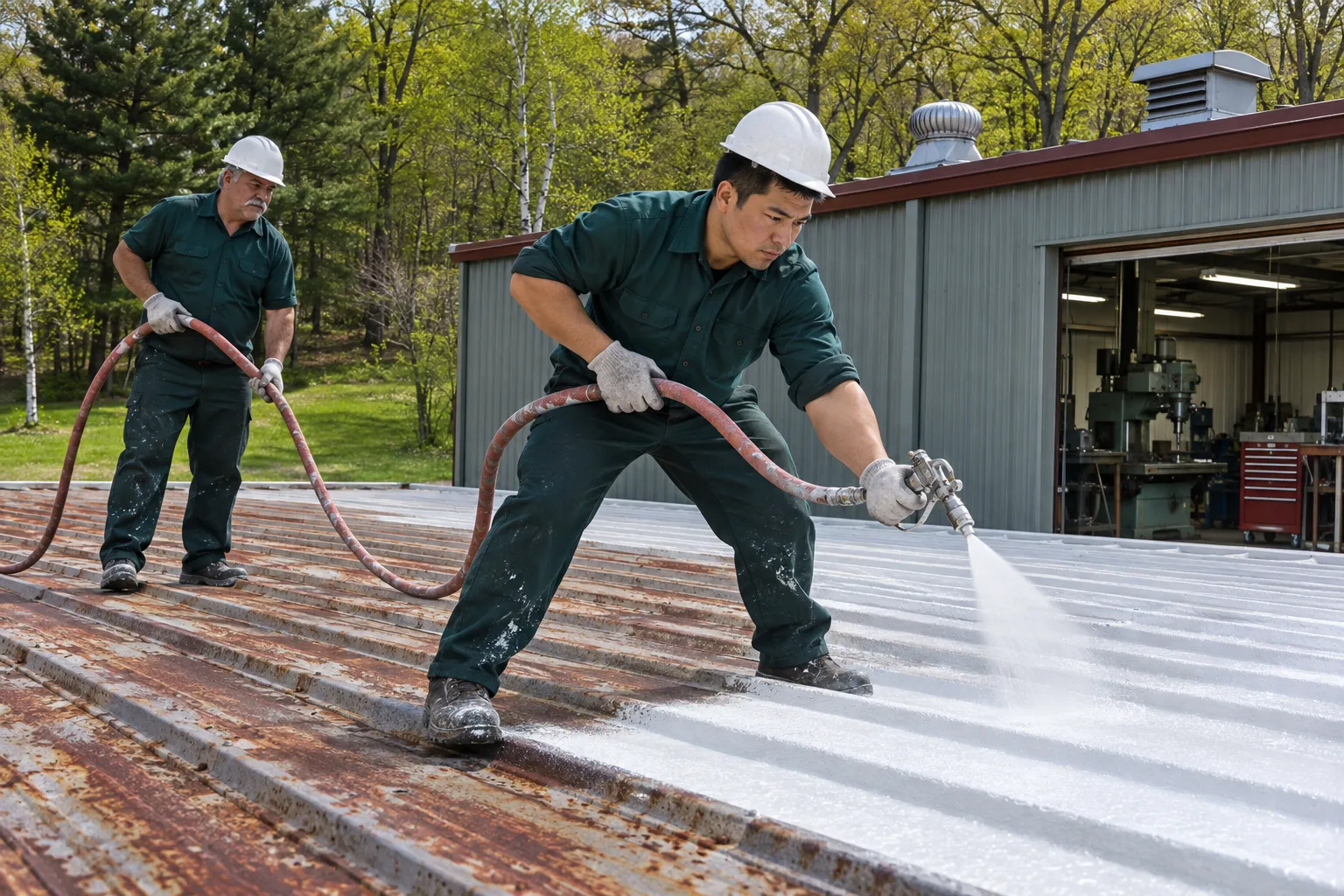
Our Washington metal roof coating work centers on older shops, offices, and storefronts where sidewalks, neighbors, and narrow drives leave little room to stage.
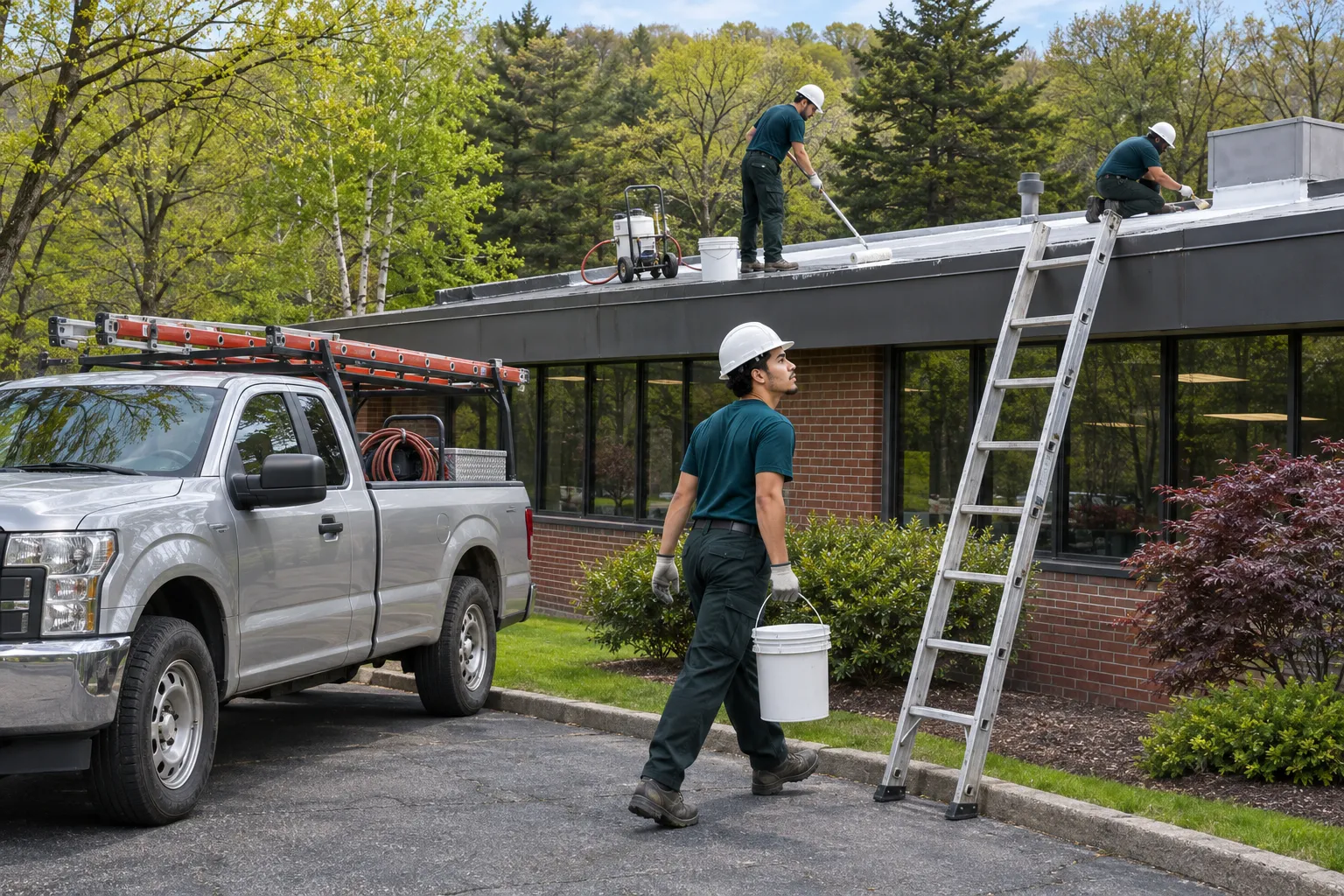
Washington metal roof coating jobs in a village center are mostly about where things go: the lift, the wash rig, the drums of coating, and the people walking past. We map those out on the first visit, before any pricing.
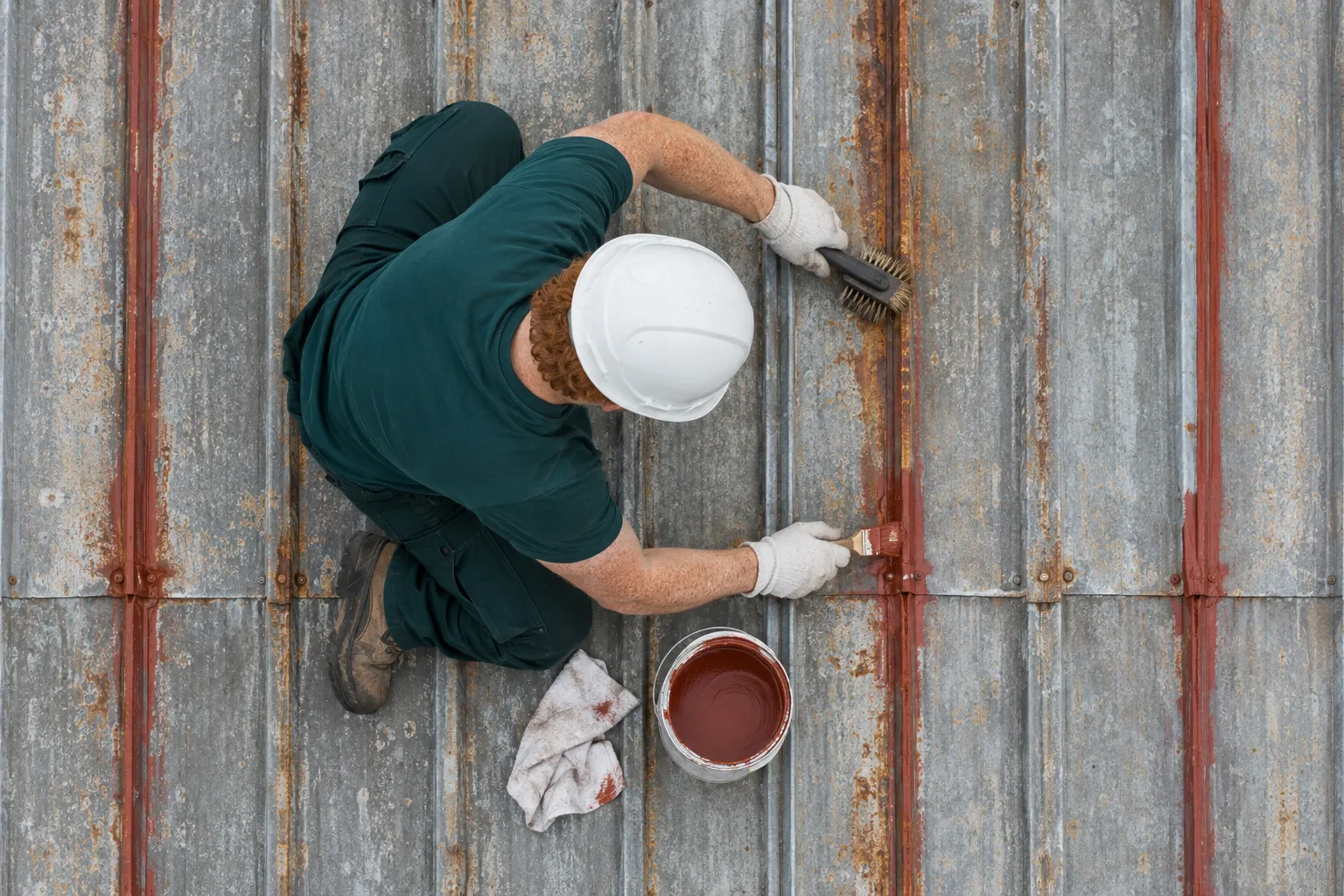
Older buildings also hide surprises at the walls, where steel roofs meet brick, clapboard, or a neighbor. Those joints get opened, cleaned, and reflashed before coating.
Older commercial roofs carry decades of small fixes. These are the trouble spots we look for first.
Where a metal roof butts into a brick or wood wall, the counterflashing pulls away and the mortar joint above it lets rain run down behind the panels.
Many older steel roofs were painted more than once, and the top layers flake off in sheets that a coating would peel away with.
Brick stacks and vent pipes through the roof carry old tar collars that crack every winter and drip into the room below.
Two roof planes meeting in a valley carry all the runoff from both sides, so valley metal rusts through well before the field panels.
Gutters hung over a sidewalk or shop entry drip on customers once their hangers rust, and the fascia behind them starts to rot.
On an older building, coating keeps the original roof in place and the street outside open.
Coating seals the panels you have, so the roofline and look of an older storefront stay the same.
With no tear-off, old roof panels never fill a dumpster on the street, and far fewer truck trips run through a busy village center.
Reflashed wall joints plus coating stop the water that ran down behind the panels at brick and wood walls.
Tenants and customers come and go while the roof is worked on, with walkways kept clear below the edge.
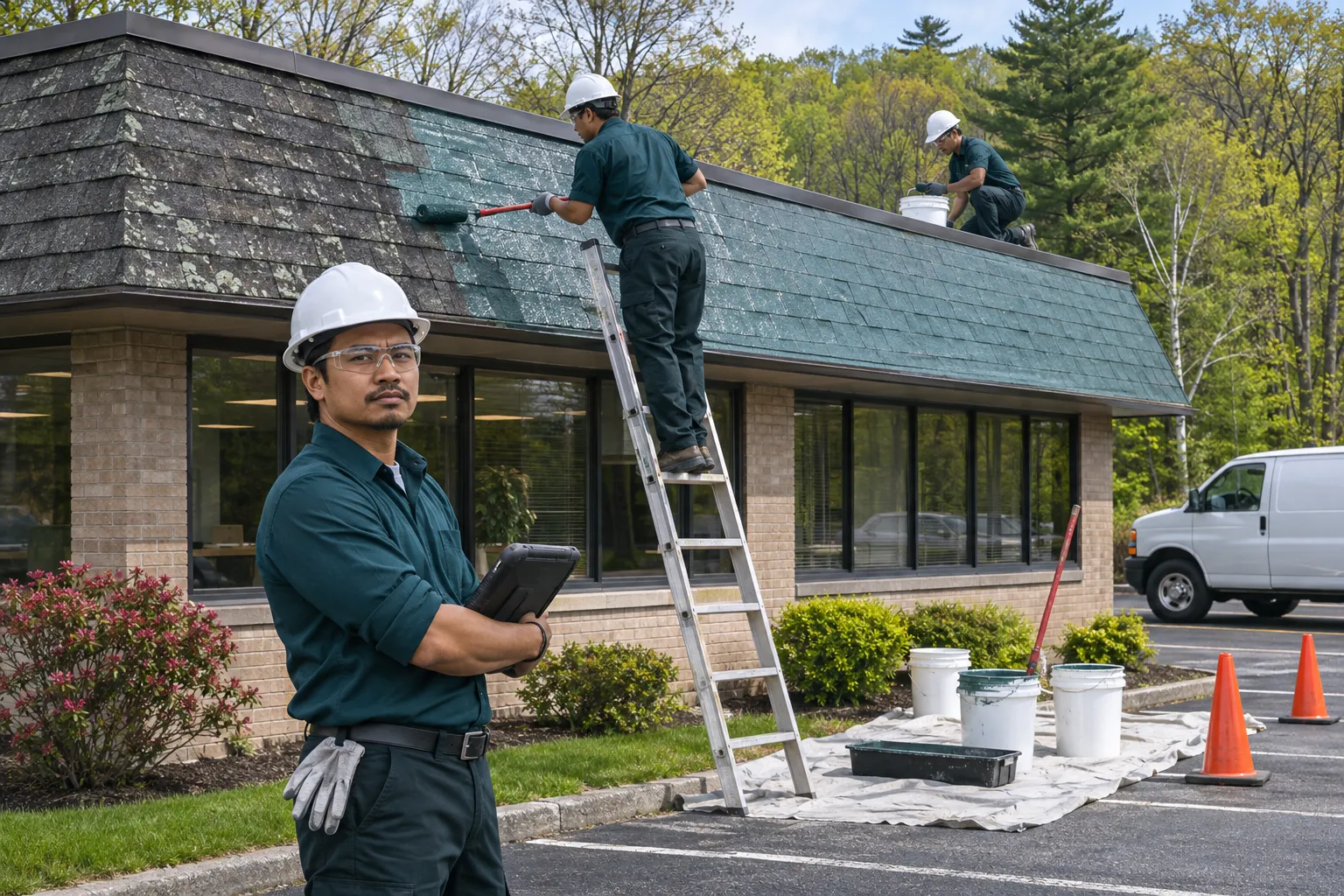
Each system suits a different older roof. We match it to what the inspection turns up.
| System | Best On | Watch For |
|---|---|---|
| Metal Roof Coating | Best OnPainted steel roofs on shops and offices | Watch ForFlaking paint layers that must come off first |
| Silicone Roof Coating | Best OnLow rear additions behind storefronts | Watch ForDirt pickup on a roof under trees |
| Acrylic Roof Coating | Best OnPitched metal roofs that drain quickly | Watch ForCool nights that slow curing |
| Spray Foam Roofing | Best OnFlat back sections with many pipes | Watch ForOverspray near cars and neighbors |
| Shingle Roof Coating | Best OnShingled offices and small inns | Watch ForBrittle shingles or several old layers |
Call us and describe which wall and which room. Wall joints are some of the fastest leaks to trace and close on an older building.
Five steps, with staging worked out before the first one.
We check panels, paint layers, wall joints, stacks, and gutters, and measure where a lift and hoses can sit without blocking the street.
Flaking paint is scraped and washed off down to a firm layer, because new coating only holds as well as what sits under it.
Counterflashing at brick and wood walls is reset or replaced, and cracked tar collars at stacks are cut away and rebuilt.
Rusty valleys and laps get primer, then fabric set in base coat across seams and screw rows where the panels move.
Coating goes on one roof plane at a time, so the sidewalk under the active section can be roped off and the rest stays open.
Washington is one of the towns we serve for commercial roof coating, and so are these. Call us or send us a message if your property is outside them.
Plant and warehouse roofs with old patch layers.
Sloped metal roofs over occupied shops and offices.
Shop roofs where gutters and eaves rust first.
Factory roofs crowded with exhaust fans and vents.
Exposed-fastener shops and storage buildings.
Barns and equipment sheds with long steel panels.
Coating planned around spring rain and fall frost.
Church halls and schools coated around their schedules.
Large industrial roofs coated one section at a time.
Several roofs on one property, each with its own plan.
Rural roofs where materials and water are planned ahead.
Older coated roofs ready for a fresh topcoat.
What owners of older commercial buildings ask before a coating job.
Older shops, offices, and inns are a large share of the roofs we see in town. Their steel or shingle roofs get the same inspection, repair, and coating steps, with extra care at wall joints and old paint.
Give us a call or send the address. We visit, look at the roof and the street around it, and come back with a written plan covering repairs, the coating system, and where equipment will sit.
That is how we plan every job in a village center. Coating runs one section at a time, noisy steps go early in the day, and walkways below the active section stay roped off.
Yes, after the loose layers come off. We test how well the old paint holds with a tape pull, scrape and wash away what fails, and prime what remains so the coating has a firm base.
Shared walls get their own flashing plan. We talk with the neighbor when the joint sits on their side, reset or add counterflashing, and seal the edge before coating our side of the line.
Tell us about the building and the street out front. We will plan the staging along with the roof.