Freeze-Thaw
Screws Loosened Over Winter
Repeated freezing and thawing makes panels grow and shrink. By spring, screws along the purlin lines have backed out and their washers no longer seal.
Bethlehem metal roof coating gets booked around the weather: repairs early, coating in the warm, dry weeks, and every pass timed to cure before dew or frost.
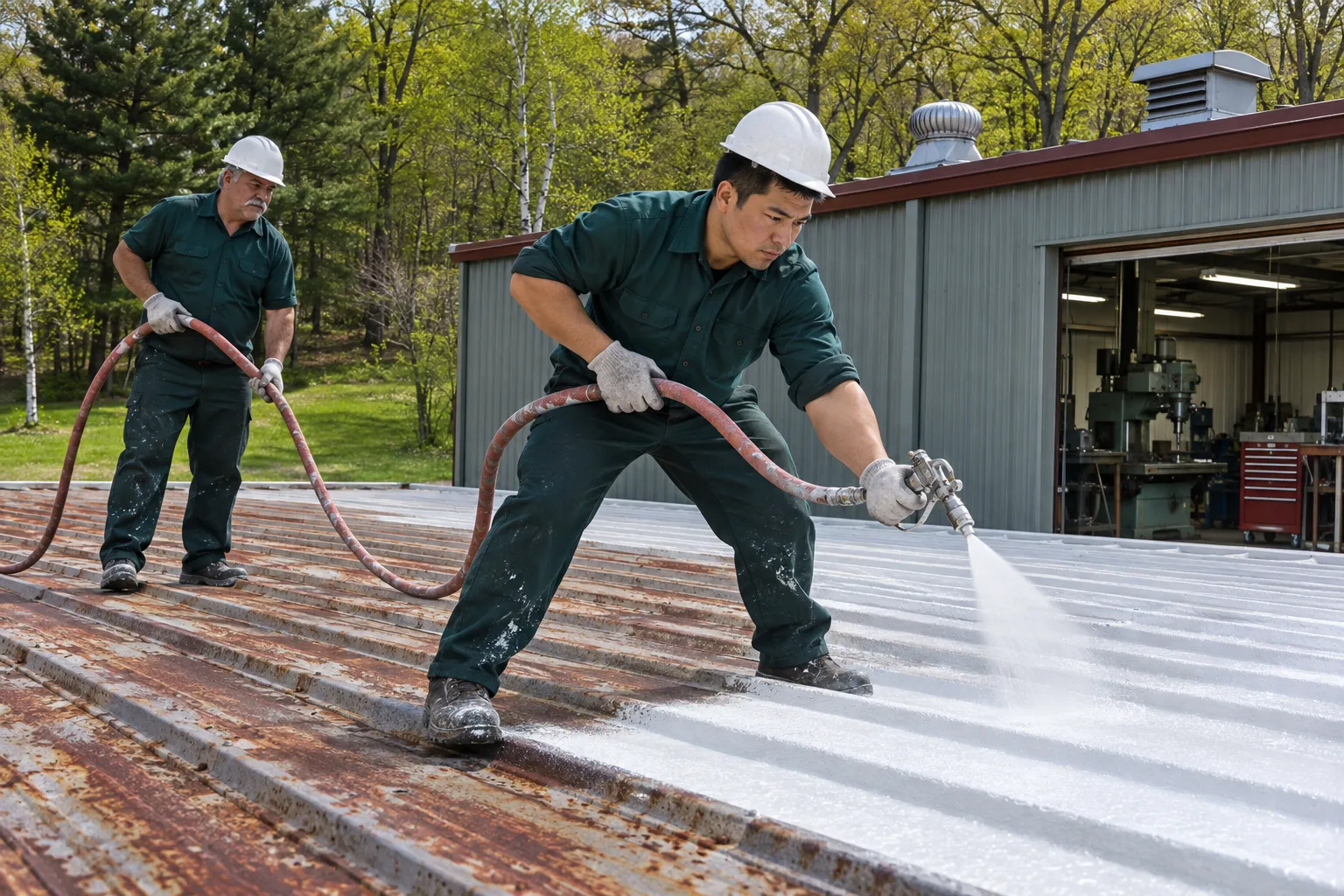
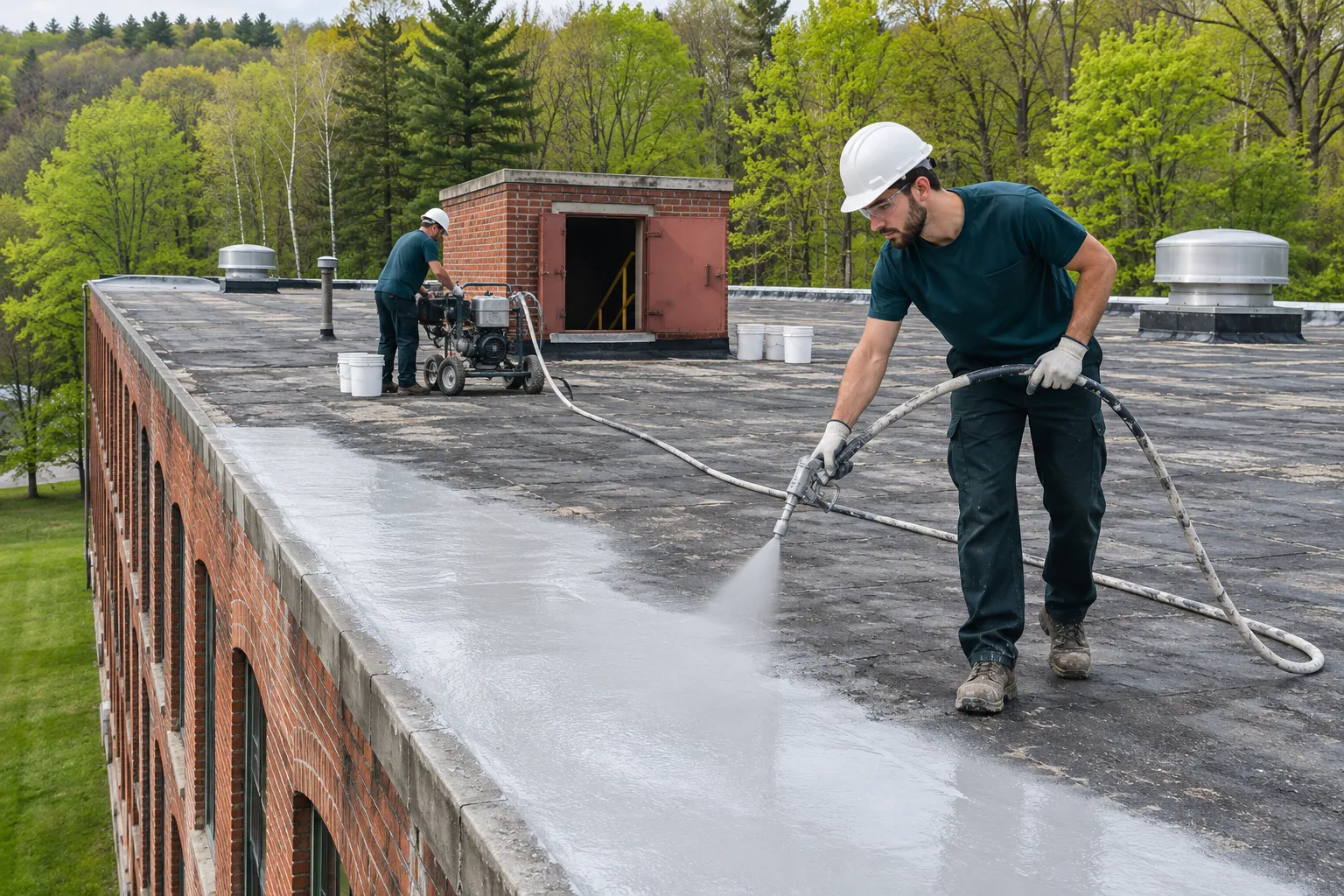
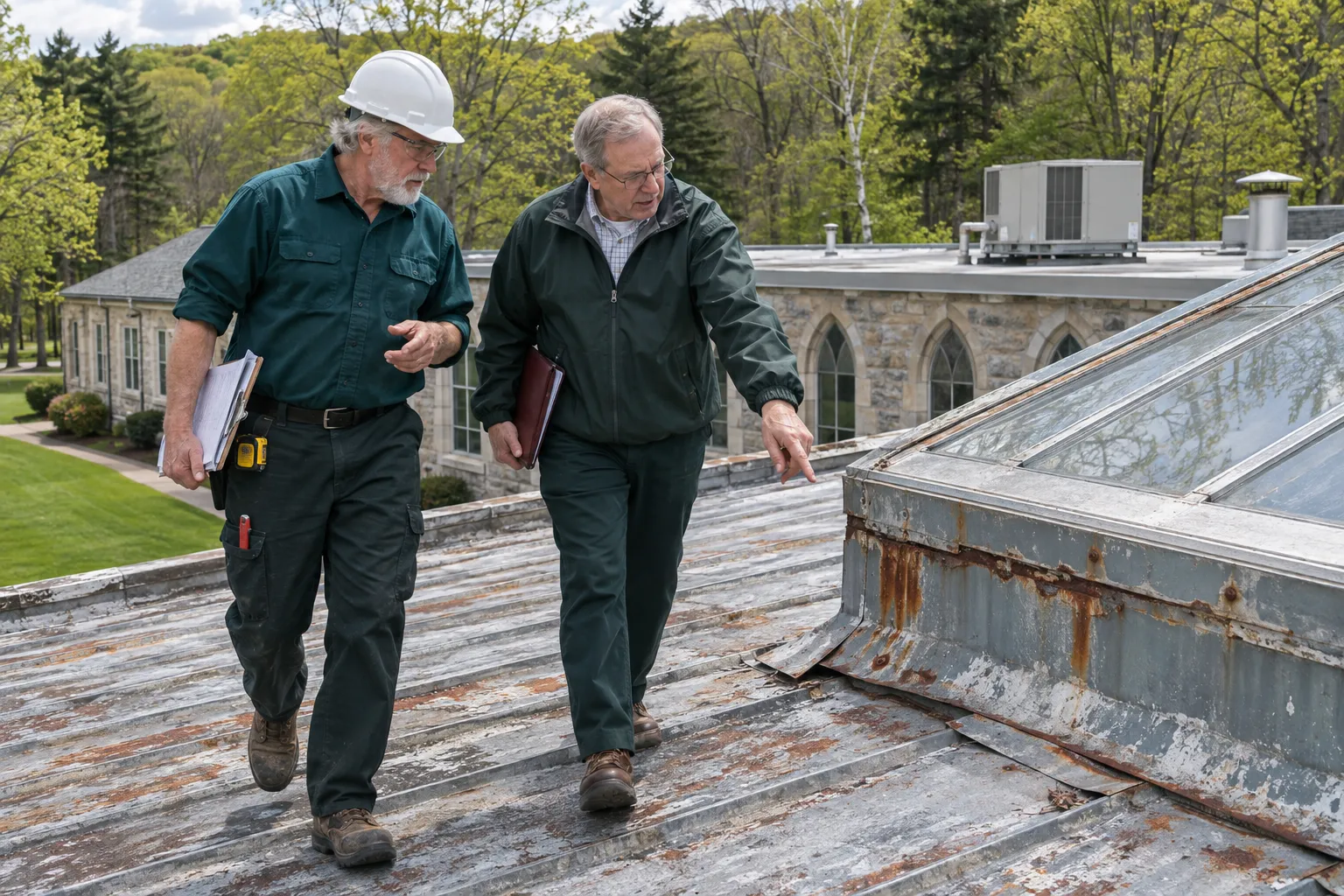
A Bethlehem metal roof coating job lives or dies on the calendar. Most coatings need the air and the steel above a minimum temperature and several dry hours to cure, so wet spring weeks and short fall days narrow the working window.
We split the work by season. Repairs, screw replacement, and rust treatment can start early, and the topcoat waits for a stretch of warm, dry days.
Winter does most of the damage on small commercial and farm roofs. These are the signs we see each spring.
Repeated freezing and thawing makes panels grow and shrink. By spring, screws along the purlin lines have backed out and their washers no longer seal.
Ice in the gutters bends hangers and pulls on the eave trim. Meltwater then backs up under the lowest end laps.
Steel that stayed damp through a rainy spring shows fresh orange rust at scratches, cut edges, and around screws.
Summer sun breaks down the original paint into a powdery chalk. Coating sticks poorly to chalk until it is washed off.
Coating in one good season protects the roof through the winters that follow.
A roof coated by early fall goes into winter with laps sealed and screw heads covered, where freeze-thaw does its damage.
New screws with sealed heads hold their seal through cold snaps better than dried-out washers left exposed.
Primed and coated steel keeps the rust that started in a wet spring from spreading across the panels.
Most coatings can be washed and recoated in a later dry season, so upkeep fits the same calendar.
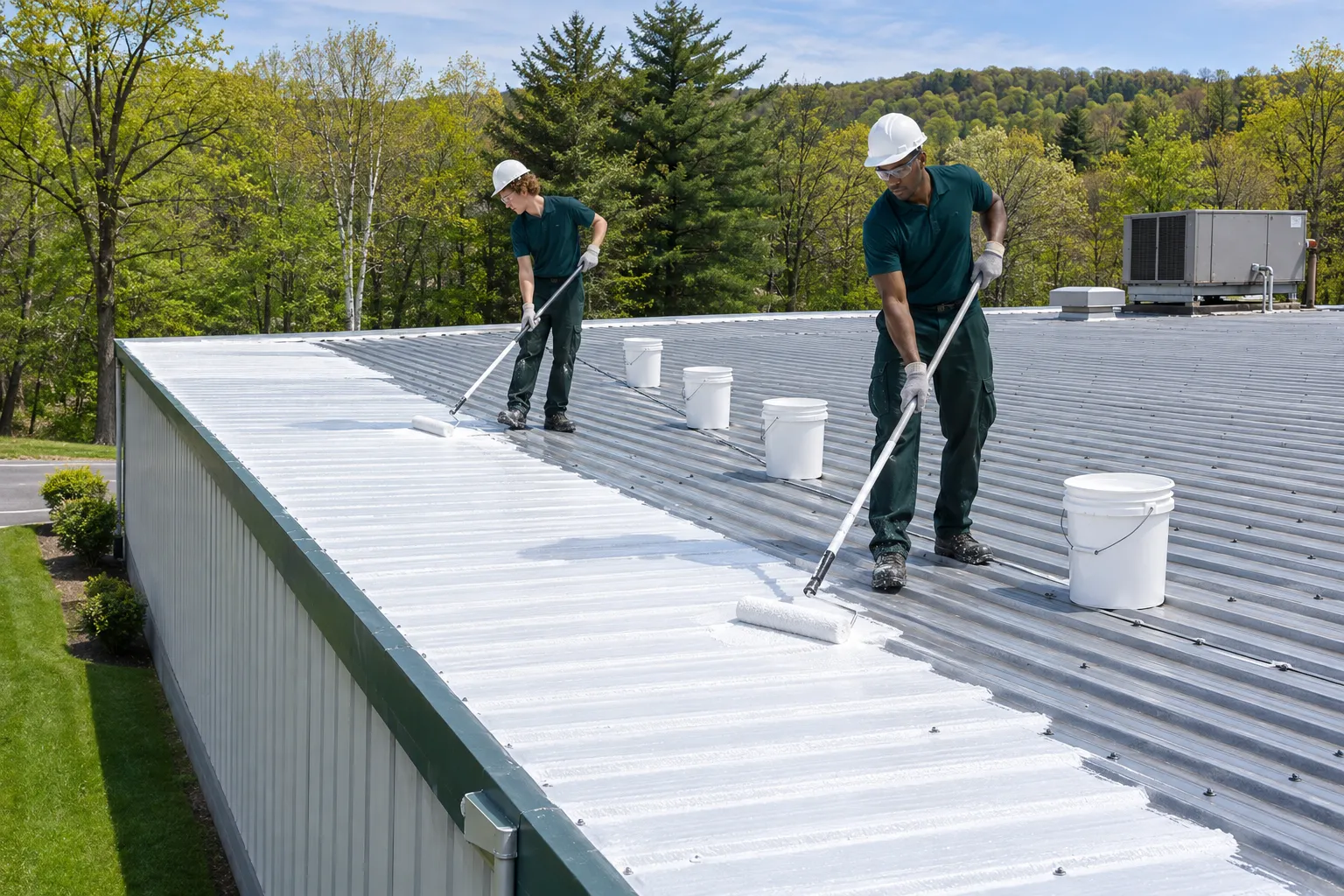
Each system has its own weather needs. Here is how they compare for a local roof.
| System | Best On | Weather Needs |
|---|---|---|
| Metal Roof Coating | Best OnExposed-fastener commercial and farm roofs | Weather NeedsDry steel and mild temperatures |
| Silicone Roof Coating | Best OnLow-slope sections where water sits | Weather NeedsHandles light moisture after it skins over |
| Acrylic Roof Coating | Best OnSloped roofs that drain quickly | Weather NeedsWarm air and no rain until cured |
| Spray Foam Roofing | Best OnFlat roofs that need slope and insulation | Weather NeedsDry surface, low wind, moderate humidity |
| Shingle Roof Coating | Best OnSmall offices with flat-lying shingles | Weather NeedsSeveral dry days in a row |
Call us now and we will walk the roof, list the repairs, and hold a slot in the dry-weather schedule for the coating passes.
The steps follow the season, with repairs first and coating in the warm weeks.
Early in the year, we walk the panels, test screws, and note winter damage at eaves and gutters to build the repair list.
Screw replacement, trim fixes, and panel swaps go ahead on dry days before the coating season opens.
Washing removes chalked paint, and brushing plus primer handles the rust that showed up over spring.
Seam fabric and topcoat passes go on during warm stretches, started after dew dries and ended well before evening.
We serve Bethlehem and the towns shown here for metal roof coating. Anywhere else, call us or send us a message and ask.
Plant and warehouse roofs with old patch layers.
Sloped metal roofs over occupied shops and offices.
Shop roofs where gutters and eaves rust first.
Factory roofs crowded with exhaust fans and vents.
Exposed-fastener shops and storage buildings.
Barns and equipment sheds with long steel panels.
Church halls and schools coated around their schedules.
Village-center roofs with tight staging space.
Large industrial roofs coated one section at a time.
Several roofs on one property, each with its own plan.
Rural roofs where materials and water are planned ahead.
Older coated roofs ready for a fresh topcoat.
What local owners ask about timing and cost.
Roof area is the starting point, at about $2.50 to $4.00 per square foot. Winter damage repairs, rust treatment, and how easily equipment reaches the roof move a job inside that range.
Repairs and rust work can start in early spring on dry days. The topcoat usually waits until nights stay above the product minimum and rain clears, which in Connecticut means late spring at the earliest.
Calling in winter or early spring gives time for a roof walk and repair list before the dry-weather weeks fill up. Later calls still work, with the coating slotted into the next open stretch.
Early fall, yes, while days are still warm and dry. Short days and heavy dew late in the season leave too few curing hours, so we plan to finish before frost arrives.
We watch the forecast closely and stop before rain reaches the roof. A pass that gets caught is checked once dry, and any washed area is cleaned and recoated.
Silicone tolerates light moisture sooner after it skins over, which helps on low-slope sections when dry days are scarce. Acrylic needs warmer, drier weather but suits well-drained sloped steel. The roof walk and the calendar decide which one we plan.
The steps are the same: washing off chalk, priming rust, resetting screws, and sealing laps. A small roof just moves through them faster, so one good stretch of weather can finish the job.
Book the roof walk now to get on the dry-weather schedule, or start with a ballpark number for the roof area.